

“We think the best course of action is to discontinue discussions concerning this opportunity.” Just like that, MGM Resorts International left Wynn Resorts at the altar, trying to find a new beau for Encore Boston Harbor.  Backlash in Springfield seems to have played a hand in MGM’s volte-face, for it stated, “We are committed to our Springfield community and proud of what we have accomplished including thousands of jobs and millions of dollars of revenue for small businesses in the area … We have noted the anxiety raised by various stakeholders regarding a transaction and this troubles us at MGM.”
Wynn, for its part, had to walk back its very public rebuff to the people of Everett. “After careful consideration, we have agreed to cease discussions with MGM Resorts. We remain committed to opening and operating Encore Boston Harbor as only Wynn Resorts is able to do,” a commitment that will be tested in the month or two to come. It certainly wouldn’t have been an easy matter for MGM to simply add Encore to its portfolio. It would have to find a new buyer for MGM Springfield, with Wynn, Penn National Gaming, Mohegan Sun and banned-in-Boston Caesars Entertainment out of the running. That’s a lot of chips off the table. Nor would MGM Springfield be likely to draw an attractive cash-flow multiple in a sale, as it has been a revenue underachiever to date.
Meanwhile the clock is running on Wynn Resorts’ May 31 deadline to settle with the Massachusetts Gaming Commission. The issues hanging fire are apparently not the $35.5 million in fines but the requirement that 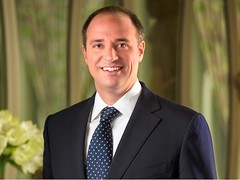 CEO Matt Maddox undergo sensitivity training and that the company be placed under the oversight of an MGC-appointed, three-year monitor, a stricture at which Wynn chafes. As company spokesman Michael Weaver said, Wynn is “working with the commission to understand the intent of the monitor condition in their recent decision.” Adding insult to injury for Wynn, it would have to pay the costs of the monitor, who would have a special brief to focus on human resource, Wynn’s Achilles’ Heel. It could have been worse—some MGC members wanted Maddox fired.
Boston College professor Richard McGowan blamed Maddox for the delay: “what you’re seeing here a little bit of a temper tantrum by the CEO of Wynn. I’m sure he’s miffed by the stipulations that were put on him.” He wasn’t surprised by the collapse of the Wynn/MGM talks. “It is exactly the way I  thought it would end. There is too much political opposition and MGM could not obtain the finances. Plus the Wynn brass has cooled off and become rational.” Wall Street analysts were divided over Wynn’s high dudgeon. “Did they really think they were going to get off scot-free?” asked Gaming USA CEO Alan Woinski. But Global Market Advisors senior partner Andrew Klebanow took Maddox’s side: “That is a pretty insulting message to the CEO of one the most successful casino companies and one that had previously received awards and accolades as great places to work … While there are not many opportunities to develop new casinos in the United States, most casino companies will probably look at other jurisdictions for opportunities or, if they are intent on growing rapidly, look at acquisitions.”
Woinski believes that Wynn’s inch-deep commitment to the Bay State will hurt it in the short term.: “Given all this I also believe it lessened the chance of Wynn being successful if they decide to appeal next week.” Even if the monitoring requirement is dropped, Wynn has gained a self-appointed 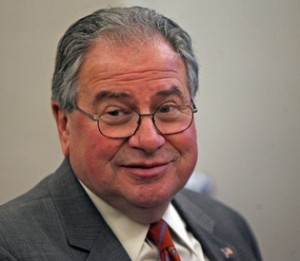 monitor in Speaker of the House Robert DeLeo (D), who says he will be “closely” following events. As for MGM, it could probably not own Encore Boston Harbor, even in part, through MGM Growth Properties since that would give it an indirect stake in Encore, which Massachusetts law forbids. It would have to completely divest itself of Springfield, at a time when there seems to be little appetite for putting such a $2 billion megaresort on the open market. Even if a REIT runaround would stand up in court, the MGC is still empowered to reject transactions “disadvantageous to the interests of the commonwealth,” which in this case are keeping concentrations of ownership to a minimum. The cherry on the sundae is that Everett could veto any transfer agreement. Mayor Carlo DeMaria wanted a Wynn-branded resort and, by golly, he’s going to stick to that.
MGM opted to take the high road, stating, “We only wish to have a positive  impact on communities in which we operate. We think the best course of action is to discontinue discussions concerning this opportunity.” In other words, it didn’t play in Springfield. As Mayor Domenic J. Sarno put it, he was “in a position of leverage and power to extract anything if anybody was to leave, and to also extract anybody who was going to come in.” Now Wynn can hope against hope it will wrest concessions from the MGC by the end of the month, whereupon both it and MGM can shift their focus to Japan. Not that they will find casino regulators in Nippon easier to mollify.
* MGM is using the SEC to float an $800 million settlement of all Mandalay Bay Massacre litigation, saying it hopes to have everything wrapped up by a year from now. The company has $751 million on  hand in insurance proceeds to fund aforesaid settlement. Plaintiffs’ attorney Robert Eglet was unimpressed. “We’re not even close to resolving all the terms and issues before we have a settlement,” he told Fox Business. “It’s true that a settlement is possible. But I will tell you it’s not probable. Nothing is signed. We have a long way to go before we have an agreement.” MGM responded that it was in the best interests of all concerned—including Eglet’s 4,000 clients—that the matter be settled so that the “healing process” could resume. It might resume even faster if MGM would stop suing the 1,000-plus victims it has targeted for a pre-emptive litigation strike.
