

 Legislators are pressing for a free-market solution to debacle that was Foxwoods Philadelphia. Typical of Pennsylvania‘s overhasty implementation of casino gambling, nobody bothered to codify A) what to do with licenses that get revoked or B) whether to refund or retain the $50 million fee that accompanies aforesaid license. Which means that Comcast Chairman Ed Snider and his bumbling fellow investors may be out 50 mil — or not. The state could, of course, repay Snider’s consortium out of the money raised by reauctioning the Philly license, but somehow I think solons will want to keep Snider’s cash and scare up $50 million more. It’s their nature.
There’s also the small matter of undoing the 2004 set-aside that juiced Philadelphia into two of the state’s slot parlors. And, in the brilliant glare that is 20/20 hindsight, letting the Pennsylvania Gaming Control Board choose the precise location of the casinos within Philadelphia was a usurpation of civic prerogatives that caused no end of trouble and didn’t satisfy anybody. Since the Valley View Downs racino never got out of the starting gate, Keystone State lawmakers could have two casino licenses to shop around, permitting the City of Brotherly Love to get back in the game and still give Johnstown or Altoona a shot at Class III gambling. However …
SugarHouse has flopped. This is the most compelling market-based argument against going to the well yet again in Philadelphia. Per slot/per day, Neil Bluhm‘s waterfront casino (1,599 slots) is doing 26% less business than Parx Casino and 15% less than Harrah’s Chester Downs. Consider that Parx has 3,300 one-armed bandits and Harrah’s has 2,900, and SugarHouse‘s numbers leave a very sour aftertaste. In light of this data, Caesars Entertainment‘s (now-rescinded) wish to build yet another casino in the Philadelphia looks less like bad judgment and more like delirium. The dollars just aren’t there. Putting the Foxwoods Philly license up for statewide bidding would also help remove the taint of cronyism from the selection process. Using casinos as gratuities for political supporters has much to do with the snares that tripped up these projects in Pittsburgh and Philadelphia alike.
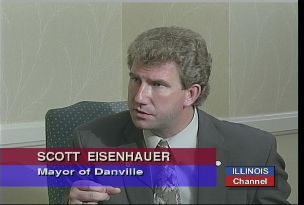 The case for Danville. If legislators in Illinois vote next month for yet another gambling expansion in their state, Danville Mayor Scott Eisenhauer thinks his city has a compelling argument to be one of the beneficiaries. So would the mayor of any Land of Lincoln metropolis that doesn’t already host a casino or two. But before one says, “Like, duh!”, consider this: Danville is relatively isolated and would theoretically constitute a market unto itself. (Unlike, say, Galesburg, which would siphon business from established markets Peoria and Rock Island alike.) Several other casino-less regions of Illinois adjoin border areas where rival casinos sit just across the state line, dimming the chances of success.
However, even a Danville casino would have to pull business from Indiana, which is a pretty unlikely proposition. A combination of bad state policy and poor economic conditions has sent the Illinois casino industry into a steep tailspin, and Danville would still have to contend with the double whammy of usurious tax rates the state’s smoking ban. It could pencil out but it’s not a business challenge to be taken lightly.

Champaign (which is 37 miles west of Danville) would be the largest city closest to Danville. The University of Illinois is in Champaign and the entire Champaign-Urbana area might have around 150,000 people. Around 45,000 or so attend the the University Of Illinois and most of them are under 21 so they cannot gamble legally. Heading east into Indiana from Danville there are some small towns and that is about it so Danville’s primary market would be Champaign-Urbana.
I suspect that Mayor Eisenhauer’s gaze is fixed upon the Indianapolis market but, if so, that’s wishful thinking on his part.
After I read the article (which I should have done before I made a comment) Indianapolis is the target market which happens to be 87 miles from Danville. Indianapolis has a population of around 800,000 people. That is over an hour drive at least (while speeding) so I think Danville is probably geographically undesirable for a casino location.
I don’t know why anyone would want to operate in Illinois!