

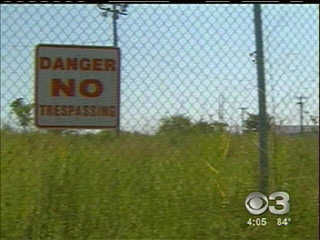
 Barring a huge reversal from the Pennsylvania Supreme Court, the long and mostly inept saga of Foxwoods Philadelphia has finally come to a conclusion. The politically juiced-in trio of Ron Rubin, Lewis Katz and Comcast Chairman Ed Snider (collectively known on S&G as Sniderkatz) got a 6-1 thumbs-down from the Commonwealth Court. Sniderkatz was one of several parties whose suitability for a casino license in Pennsylvania appeared to owe far more to Democratic Party fealty than to actual competence. Choosing soon-to-be-insolvent Foxwoods Resort Casino as a partner would effectively doom the project — subsequent flirtations with Steve Wynn and Gary Loveman notwithstanding. Four years and three designs later, all Sniderkatz has to show for itself is a vacant lot.
Fiscal prospects for the casino didn’t look great, either. Parx Casino, Harrah’s Chester Downs and SugarHouse are already gnawing on each other’s Philadelphia femurs. Keystone State regulators will get to erase some of the cronyism that has marred casino development in Pennsylvania — and one certainly hopes we don’t get a repetition of the Don Barden and Sniderkatz fiascoes.
 One factor that will have to be computed into where the orphaned Pennsylvania license goes is the prospect of new competition from western Maryland. A Lyle Berman-led consortium is pitching a $62 million, 850-slot casino for failed Rocky Gap Lodge & Resort, a ward of the state. Bidders were enticed by means of financial incentives, including a 10-year reduction of the tax rate to “only” 50%. Berman (right) has a much larger project in mind than rival Nathan Landow, who’s structured his proposal so as to dodge the $3 million application fee.
That doesn’t instill confidence. Nor does the fact that Landow, after proudly touting designs that were “intended to steer every single visitor directly to the casino,” in the words of the Baltimore Sun, abruptly flip-flopped. When the Video Lottery Location Commission balked at the idea of families with children being ushered straight into the midst of 500 slot machines, Landow blithely replied that “the design could be changed.” He doesn’t sound like a guy who’s thought things through. But he’s got one ace to play: Landow is the former chairman of the state Democratic Party (among other claims to fame). It will be a pleasant shock if he doesn’t prevail.
 October’s revenue haul from Maryland’s one casino and sole racino ($13 million) won’t knock anyone’s socks off. But it’s worth noting that Penn National Gaming‘s slot house in Perryville, once considered a disappointment, grossed as much as did the lowest-performing casino (Golden Nugget) in Atlantic City. That’s not bad for a grind joint whose owners wanted to ditch it, fully completed, if they could get Laurel Park instead.
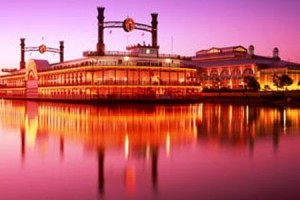 Is Lou Lang on coke? The casino-crazed Skokie legislator is certainly making some goofy projections about the financial effect of doubling the number of Illinois casino licenses and increasing gambling positions by 260%. In 2010, the Land of Lincoln’s gross gaming revenues were slightly below $1.4 billion. Lang says that could easily go to $2.4 billion under his prescription. He seems to be counting upon $700 million from the downtown Chicago casino alone. Illinois’ top-grosser, Grand Victoria Elgin (left), didn’t crack the $300 million threshold last year and won’t do it this year either.
But … if you have 100% more casinos, and 260% more slots and tables yet revenues increase by 71%, tops, that doesn’t seem like an awful lot of buck for the bang. Of course, if we apply the Penn National Rule (namely, that gaming proponents tend to overestimate revenues by 25%-40%), Lang’s bonanza is more likely in the $180 million (worst case) to $750 million range, which still assumes a degree of elasticity that Midwest states simply aren’t demonstrating. But hey, keep enjoying whatever you’re on, Lou.

Illinois gaming is a joke (and the operators are not at fault). I feel bad for anyone operating in that state.