

In a particularly stunning departure from American Gaming Association tradition, new prexy Geoff Freeman took a jab at Las Vegas Sands CEO Sheldon “Nuke ‘Em” Adelson in the pages of USA Today. Of course, Freeman didn’t mention Adelson explicitly. But those who have been following the debate over Internet gambling knew exactly for whom his words were intended. “Online gambling is here to stay. That is the reality,” began Freeman’s stemwinder. He pointed out that even in its illegal form it was a $3 billion/year industry.
 “Pretending we can eliminate online gambling only places Americans at continued risk,” Freeman wrote, invoking the failed experiment of Prohibition. (Adelson was four months old when the Volstead Act was repealed.) “Ignoring the lessons of history and pretending that outlawing something — despite market demand — will make it disappear leads to negative consequences,” he continued. Given Adelson’s long history of playing the victim, expect him to cry foul. However, he threw the first punch in this fight, so he was fairly asking for Freeman to deck him on behalf of the AGA’s constituency, especially when Adelson’s crusade may well go nowhere legislatively but could have a chilling effect on the legitimate i-gaming industry.
Competing for the Brass Balls Award, New Jersey state Sen. Raymond Lesniak (D) told Adelson to “get a life.” It must be particularly galling for Garden State citizens to have someone who’s never invested one thin dime in Atlantic City trying to dictate what forms of gambling they can and cannot have. Anyway, balking banks may constitute a greater impediment to ‘Net betting than does the Sultan of Sands. Caesars Interactive CEO Mitch Garber predicts the recalcitrant banks will come around … in three years or so.
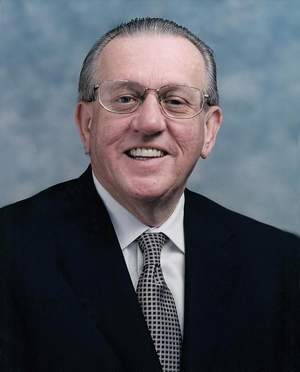 Try, try again. Casino gambling has been just around the corner in Kentucky so long that some of us have given up. One who almost has — but not quite — is state Rep. Larry Clark (D, right). He’s introduced a bill that would allow five racinos and three stand-alone casinos in the Bluegrass State. He’s projecting revenue at a sensibly conservative $286 million. Fifty million bucks would buy you a five-year license (not a bad investment). Churchill Downs is heading a rival effort, Kentucky Wins, which would not grandfather any tracks into casino status, unlike the Clark bill. The former’s proposal would provide a tax incentive (30% taxation, if you call that an incentive) for racinos vs. 44.5% taxation for off-site facilities. The successful launch of keno in Kentucky puts some fiscal wind at Clark’s back. However, previous legalization attempts showed great promise, only to fall short, so an abundance of caution is warranted.
The ubiquitous Ira Lubert got his Valley Forge Casino Resort into trouble, to the tune of 200 grand. Gamblers must be paying guests of the resort in order to play there. Lubert’s people devised a promotion that, deliberately or otherwise, skirted the rules, offering free and discounted admission. This really isn’t the sort of thing Lubert wants to have on his resume when he’s pursuing a casino in downtown Philadelphia, now is it?
Saratoga Springs, New York, may not want a casino but the citizens of nearby Rensselaer seem just fine with one. U.W. Marx Construction Co. has the requisite land and “officials acknowledged there’s a casino operator who’s taken an interest in the shovel-ready site that’s a short distance from the nation’s ninth busiest railroad station and linked to Albany and its network of interstate highways.” (Penn National Gaming, maybe?) The city council is unanimously in favor, so it looks like Albany will soon have yet another casino proposal to consider.
Columbia Sussex overlord William J. Yung claims that bad tax advice was the undoing of his (overleveraged) casino empire. And if you believe that one …
