

Editor’s note: This roundtable was originally conducted for Casino Life magazine. For reasons unrelated to content, it was ‘put in turnaround,’ as they say in Hollywood. Rather than waste a perfectly good exchange between gaming executive Yaniv Sherman and sportswriter Jeffrey Goldberg, I am posting it here. Enjoy!
It was the week that changed everything. On March 11, the National Basketball Association suspended its 2020 season after Utah Jazz player  Rudy Gobert tested positive for Coronavirus. That same day, the National Association of Broadcasters pulled the plug on its Las Vegas convention and the dominos started to topple. The next day the National Hockey League suspended its season as well. College basketball games played to empty auditoriums, then March Madness was canceled entirely. Major League Soccer first banned spectators, then games. Major League Baseball pushed back the start of its season by at least two weeks. The Masters golf tournament was postponed indefinitely, and the Boston Marathon and Kentucky Derby were pushed back to September. NASCAR canceled its season, the PGA canceled golf tourneys left and right, and even the Monte Carlo Grand Prix was scrapped.
Sports betting was kneecapped. Especially in states like Illinois and Michigan, where it had just gone live on March 9 (Illinois) and March 11 (Michigan). Not only did Covid-19 fears empty out sports books, there was precious little to bet upon anyway: Australian-rules football and rugby, Mexican soccer, the Brazilian UFC. As South Point Casino sports book director Chris Andrews told USA Today, “in our racket, people like to have action, so they’re getting some there.” Turkish football was said to be blowing up, too.
Pretty soon people didn’t have the leisure of sports books, either. On March 13, Montgomery County in Pennsylvania closed Boyd Gaming’s Valley Forge Casino Resort, the first private-sector casino  to go dark in what would become a tsunami of closings sweeping most gambling-enabled states. Nevada tried to hang tough for a while but, on March 17, Gov. Steve Sisolak bowed to the inevitable and shut down the state’s casinos for 30 days, later extended to six weeks. In a week, U.S. gaming had gone from a boom era, with double-digit revenue increases in many states, to a ghost industry.
In the meantime, punters were encouraged to stay how and try Internet gambling. Unfortunately in the United States, this is just a Band-Aid. Only 10 states have it and it is mature in virtually only one of them, New Jersey. Last month, online casinos in the Garden State grossed $52 million, with Tilman Fertitta’s Golden Nugget bagging more from online play than terrestrial action. Whether that’s the start of a trend remains to be seen. In the meantime, Casino Life huddled with two experts, 888 Holdings Senior Vice President for Business Development Yaniv Sherman, and veteran sportswriter and author Jeffrey Goldberg. Here’s what they had to say about our not-so-brave new world.
What’s it like out there?
Sherman: These are very troubling times. We’re seeing a lot of things for the very first time and we are focused, first and foremost, on protecting our operations. We made sure that our employees are safe and healthy, and now we have the organization on a pretty new itinerary. We can now look at adjusting our operations. Sports betting has been essential to us now and will be for the foreseeable future so these are very troubling times.
How has the Coronavirus outbreak impacted the betting industry as a whole?
Goldberg: Obviously it’s taken just an enormous toll. There’s not a whole lot for people to bet on. The most interesting development of the last couple of days is that Bovada, the betting Web site, is now offering bets literally on the weather. That’s all that’s left to bet on: Whether it’s going  to be rainy or the over/under on the temperature. From a betting perspective, you have to search pretty far and wide to find anything to actually bet on. There’s some international soccer that’s being played. But you look at a site like DraftKings or FanDuel, the daily fantasy sites. They’re down to offering only e-sports because there’s no physical sports left to be played other than an occasional Turkish soccer match. Everything’s wiped out. So from a sports-betting standpoint, it’s really a difficult time. That is probably not a situation that is going to be alleviated anytime soon. I don’t think we’re going to see major sports leagues come back—maybe even at all—for this season. The NFL in September, there’s no guarantees they’re going to start on time, depending on how this continues to unfold.
Sherman: You can separate that between retail and online. The vast majority of operators online are predominantly sports operators. So if you follow the market, there’s been a host of announcements from the larger operators about the potential impact of the current situation on them, which could be quite negative if it persists. We are in a special situation  because while day-to-day sporting is our second-biggest vertical, our biggest vertical is casino gambling. We are a gaming operator by nature so the effect will probably not be as dramatic. The land-based operators are at the center of the current storm. Atlantic City has closed, Pennsylvania has closed most, if not all of its casinos and Las Vegas is closing down pretty rapidly. They’re suffering from a much bigger problem, between the conventions and the casino floor. The toughest impact would be on land-based operators, then on retail and online, then on online. In that regard we have sport revenues but we’re working as much as we can to mitigate that and ramp up our gaming division.
Goldberg: The betting industry now is just looking for alternative ways to find ways to keep their clientele engaged because there’s just not a lot of options for them to have betting. Even the political sites are probably idle right now because the Democratic race is pretty much over. So you can’t even bet on that anymore. There’s not a lot going on! And that makes it a really, really difficult challenge to try and stay afloat.
Are you seeing movement from sports betting over to online casino gaming?
Sherman: We’re seeing a bunch of it on the casino-gaming side, both poker and casino. We were starting to see a shift there. You can’t fully compensate for the absence of sporting events. It’s basically a whole vertical that has ground to a halt. We’re trying to carefully adjust our operation accordingly.
How much of a spike in online-gambling activity has there been and where is it happening geographically?
Sherman: You mean globally? It’s pretty much across the board. We don’t see much of a difference in the territories in Europe. Overall, Europe  is slightly like the U.S. in terms of the severity of the situation. Roughly 90% of our revenue used to come from Europe, so naturally the effect there, in the territories that we’re looking at, is more apparent. But there’s a bigger issue that we’re looking at right now, making sure that our employees and their families are safe. Places like Italy and Spain seem to be suffering more than places like the United Kingdom or Denmark, or the other territories that we’re operating in. So we’re just making sure that we provide business continuity and any help that our employees or players are looking for.
Goldberg: It’s hard for me to say. I write for a sports-gambling Web site, so we don’t do a lot with online gaming per se. But I imagine it has to have, just because with everyone being forced to work from home, anyone that’s a casino player you really have no alternative now. We see what’s 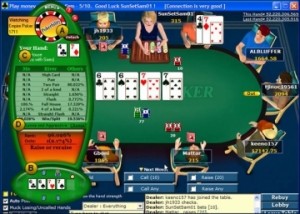 happened in Vegas. That’s obviously the most extreme example of casinos closing but casinos have been closing across the country before Las Vegas made their closures. So if you are a casino player, you really have no choice but to go online to play if you want to play at all. Just by default the online-gaming situation has probably increased pretty dramatically—as opposed to the betting aspect of it, where there’s really nothing. Now you’ve got all kinds of choices for online-casino gambling, whether it’s blackjack or poker or slots. Those options are pretty plentiful. I imagine they are definitely seeing a spike.
With so many events postponed, suspended or canceled outright now, what is there for the sports bettor to bet upon?
Sherman: The short answer is, not a lot. The only things that are out there right now are Russian soccer league, which is still active, and futures betting, where you’re betting on events that are months away, into the NFL season and so forth. Right now, if you go into the major New Jersey sports books and also the global sports books it is a very slim-picking time. The offshore books are not bound by the same constraints and are offering weather and political betting, but it doesn’t really matter because people want to bet on current events and the more popular ones.
In terms of online gambling in the United States, there are a few jurisdictions like New Jersey that are mature. That may be the only one. Are we going to see movement toward the online sector in America?
Sherman: What this demonstrates to the physical casino industry is that online is important and will grow in importance. Something that we’re looking to see in five or 10 years is online business being expedited and that it’s important to develop a digital strategy, not least for these situations. The legislation is probably slowing down due to bigger issues, because the administrations and the states are now very busy with the virus and the crisis itself. But I can only see online regulations being expedited when we’re done with the current crisis. It’s pretty apparent that it is only helping the physical casinos and also providing additional tax dollars to the state.
Goldberg: California is interested in legislation to make it legal but of course no one’s working on that right now. Any states that were in the process of doing it, I would imagine at this point any sort of legislation of that caliber is probably being put on the back burner while the states are  dealing with the obvious, ‘We need to figure out how to keep our people alive.’ Online gaming and online-gaming legislation is just not important right now, and probably won’t be for some time. If a state does not have it I don’t think you’re going to see them getting it anytime soon, just because it’s so not a priority. But there are other states: I want to say Missouri recently passed legislation to make it legal. There are a handful that are. But I would think from a national standpoint any sort of legislation involving that … you can just imagine the look. ‘Why are you focusing on making sports gambling legal when hospitals are filling up with patients?’ It just would be a bad look.
What about states that were banking heavily on sports betting as a source of tax revenue? What’s the outlook for them?
Sherman: Depending on how many products they licensed and what is the tax scheme, states like New Jersey are going to collect a fair amount of tax dollars. The rest have a balance of taxes imposed, regulations and how competitive the landscape is. The states that would enable or allow for more competition will see more tax dollars. Those that are limiting the products or imposing higher taxation or entry barriers will see less tax dollars. More competition means more dollars invested in the market and yields more taxes.
Do we have any insight into how long the terrestrial casinos are going to be closed?
Goldberg: I think that they are going to be closed as long as the restrictions are being put on communities to limit crowds. Any state where they’re recommending it or just coming out and ordering it, where you can’t have groups of 50 or even as little as 10 people gathering, you’re not going to see casinos being able to operate. Some are still trying to do it but as long as crowds are being discouraged in restaurants and bars are 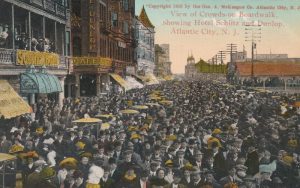 continuing to be closed—having people gather at a casino is no different than at a bar or a concert. As long as those things are being discouraged or outright banned that’s not going to change. They’re recommending now eight weeks so we’re talking about until the middle of May and that may be optimistic. We just don’t know because we don’t know where the future of this is going to go. When are we going to hit the worst of it? I wouldn’t be surprised to see this go well into the summer. With the lack of testing, we don’t know where the virus is or how many people are infected. They’re going to be erring on the side of caution for quite some time, I think. I would imagine Vegas is going to be shut down for quite a while. It would last pretty well into July, August maybe. As we’ve seen all along here, one day’s optimism is replaced by the next day’s reality. Who would have ever
  guessed that all major sports would stop playing? Who would ever bet that we would be in situation where we would be told, ‘Don’t go to a restaurant’? We’re seeing some extreme measures that need to be done in order to stop the community spread and people are starting to understand that this is going to take awhile. This is not something that is going to be a quick and easy fix. It’s going to go on for quite some time. So places like casinos are just going to have to kind of roll with it because we can’t afford that kind of group gathering. We have to stop the spread and that’s always going to come first. It remains to be seen but I would say the worst is not over. Whatever your estimates are, I would add a couple of months to it.
What are your expectations for the balance of 2020?
Sherman: Right now, I would hope—being realistic—that we would be able to resume with sporting events in late summer. Now with the Euros being postponed into next year, I would hope we would get over the  hump, and we will curtail and contain the Coronavirus, so I hope that we will have more clarity. Within a few weeks we’ll have a better view of what the rest of the year will look like and, to be optimistic, to have the premiership in the U.K. and the NFL in the U.S., if they resume their original timing—I have no idea if that’s feasible or not. That’s my point about clarity: The main thing that we’re looking for over the next few weeks is that we’ll have more clarity if the end is in sight of this current situation, because we’re at the height of uncertainty, which is not good.
