

China is calling for the Philippines to crack down on its gambling industry, which Beijing considers a lawless enterprise, rife with human trafficking and  worse. “It said citizens’ rights were being violated and dozens were kidnapped, tortured and physically abused by local employers who confiscated their passports,” reports Reuters. Also of concern to China is the vast amount of money being siphoned off by its neighbor to the south. In an official statement, the central government called for “concrete and effective measures to prevent and punish the Philippine casinos … and other forms of gambling entities for their illegal employment of Chinese citizens and crack down [on] related crimes that hurt the Chinese citizens.”
Reuters calls the Filipino gaming industry “opaque,” its size “almost impossible to measure,” like the iceberg, most of whose mass is below the surface. Greater restrictions on visas may be one way Beijing can fight back, though an official response to the problem hasn’t yet been formulated. The problem dates back to 2016, with the election of strong man Rodrigo Duterte and the concomitant rise in Internet gambling in the archipelago. Chinese work permits quadrupled in two years. Compared to 600 U.S. nationals working in the Philippines or even 5,000 Japanese, China was represented by 110,000 expats.
So far, China’s pushback has consisted of negative media coverage and a sternly worded official communiqué. Still, the government has reason to be concerned. Some 40% of the VIP wagering in Philippines casinos is ‘proxy betting,’ phoned in from the Mainland, $400 million worth. Not only is the Chinese government worried about problem gambling, it’s also concerned that proxy betting may be facilitating money laundering. It seems that few have forgotten that $81 million in stolen funds from Bangladesh were rinsed through Philippine casinos. Beijing is calling for joint action with the Duterte government but we’ll believe it when we see it.
Meanwhile, Wynn Resorts is hand-waving unrest in Hong Kong as a passing unpleasantness that won’t seriously affect business in Macao. Said CEO Matt Maddox, “when you have hundreds of flights canceled out of Hong Kong and 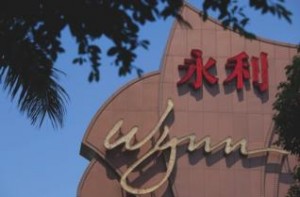 some reluctance to travel, I do think that is impacting the premium end of the business.” He added, “However, that, to me, feels very temporary and has really nothing to do with our business and everything to do with what’s going on in the region,” which is a fair assessment, Wynn Macau CEO Ian Coughlan, however, seemed to take the matter more seriously, saying, “There’s been disruption to people movement between Hong Kong and Macao, and that looks like it’s going to continue for the next few weeks at least.”
Wynn took comfort in the early results from Encore Boston Harbor, which is making the competition “quite nervous,” according to Maddox. He said the company would be “reacting to what our slot customers are telling us,” which it should have been doing from the get-go, as well as “understanding what promotions work and how points translate to comp dollars and what prizes and gifts are working.” Somewhere down the line, Wynn will be announcing its plan for 11 vacant acres at Boston Harbor, possibly an augmentation of its hotel inventory, maybe something more diverse. Global Gaming Business‘ Frank Fantini is convinced Wynn is planning to sell the place, which would be crazy in light of the revenue it’s generating. Besides, Fantini hasn’t read the fine print whereby both Everett and the Massachusetts Gaming Commission could veto a sale, which Everett Mayor Carlo DeMaria is certain to do.
* Every day brings more bad news for Crown Resorts. Now its ongoing acquisition by Melco Crown Entertainment is going to become the subject of scrutiny. The latter is denying any connection, official or otherwise, with Stanley Ho. If the Australian government is worried about that, it needn’t. The last time Stanley Ho was seen in public he was a vegetable and we doubt the passing years have made him dramatically sharper. “[Stanley Ho] does not exercise any influence on any financial and operating policies or other matters of these companies,” Melco said, somewhat superfluously. Still, a $1.2 billion acquisition may hang in the balance … and bring Crown back into play, especially as its scandal continues to depress stock price.
* The forces behind a British problem-gambling slogan (“When the fun stops, stop”) are pushing back against a study that found it ineffective, a determination that engendered high-profile media coverage. The study’s mythology is subjected to a five-point demolition, concluding “only The Guardian noted this lack of statistical significance and that was halfway through the article.” Whatever the validity of the study, we hope the awareness campaign is indeed working and helping U.K. gamblers become more aware if they’re at peril.
* Florida‘s other gaming-enabled tribe, the Miccosukee, are in the news, albeit as victims of a theft ring. Eight people have been indicted for allegedly fiddling with TITO slot machines and pocketing $5 million as a result. It was a subtle scheme, running for over four years before being detected. How did they get away with it? It was an inside job, as half of the accused were casino employees. “Prosecutors say the money was used for things such as purchases of real estate, investments, vehicles and even children’s prepaid college funds.” If so, the indictments are pretty bad news for the kids.
* Apple is getting into the credit card business. But you won’t be able to gamble or play the lottery on the annual-fee-free Apple Card.
