

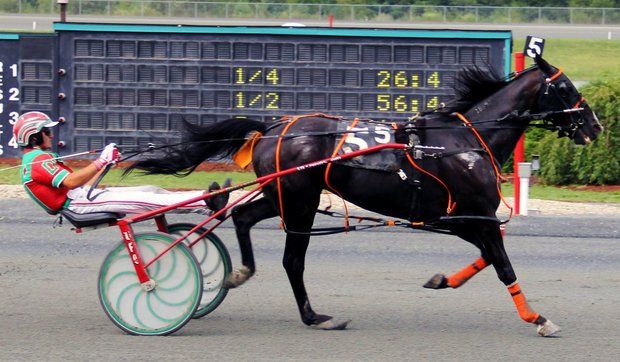
 Three casino firms got ready to rumble yesterday, as the Massachusetts Gaming Commission heard pitches from all slot parlor applicants. It was a day characterized as filled with “glitzy renderings and plenty of big promises … soaring music, testimonials, and pictures of good-looking people enjoying a good time at a casino.” More germane was what each company offered to bring to the table. Penn National Gaming‘s deal with Plainridge Racecourse would make it “the last line of defense” between Massachusetts gamblers and Twin Rivers racino across the border. Penn also promised to keep harness racing alive in the Bay State and touted its Doug Flutie affiliation, including periodic rights to display Flutie’s Heisman Trophy. Raynham Park developers offered to create a “soft landing place” for harness racing if they got the slots license. They also promised a quick revenue fix, dangling the prospect of a temporary facility that could open within six months. Cordish Gaming touted the geographical isolation of Leominster, as well as its ability to finance project from free cash flow. All talked up the environmental friendliness of their proposals. As MGC Chairman Stephen Crosby said, “a very tough choice” awaits the board. One theoretical strike against Raynham Park is that the Mashpee Wampanoags‘ tax obligation to the state drops from 17% to 0% if its regional exclusivity is breached. That would seem like a point in Leominster’s favor but this horse race is too close to call.
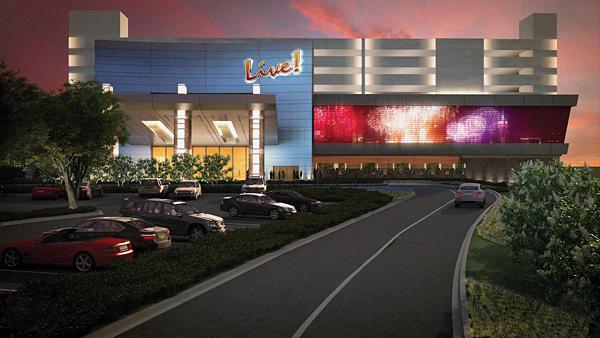 If Cordish had wanted to brag, it could have pointed to the revenues from its Maryland Live! casino, beating the competition to a pulp with the added power of table games. Its poker is also sucking the action out of both Penn National’s Hollywood Casino in Perryville and its Charles Town, W.V., racino. Only Commerce Casino, in California, sees more action at its card tables. Cordish raked in $50.5 million of last month’s $65 million haul (down a bit from August’s record high), a 45% vault from last year. When Horseshoe Baltimore opens, its hardest task will surely be to wean Maryland players off the Cordish habit, which is obviously proving benignly addictive.
New York is promising $430 million in revenue-sharing from casino expansion. If we apply the Penn National Rule, that will be more like $325 million. Think tanks and casino developers alike have a history of tossing blue-sky numbers around.

Just a quick point re: state’s take of Mashpee revenue and the slots licenses. The state takes 21% of the Mashpee revenue if there’s no competition anywhere in MA. That drops to 17% if a resort casino opens anywhere in the state. The rate is shaved 2% if a slots-only facility opens in Region C (Bristol or Plymouth counties). The rate only drops to 0% if a full resort casino (say KG Urban’s proposal in New Bedford) opens in the same region. So Raynham Park’s proposal (and Penn/Plainridge’s) reduces the state’s share by 2%, but Leominster’s has no impact. And it would be a moot point if the MGC issues a commercial resort casino license in the same region.
See: http://www.mass.gov/legis/journal/desktop/2013/H3375.pdf.
Whew! Thanks for the clarification.