

 Dan Gilbert‘s descent upon the Baltimore market, in tandem with Caesars Entertainment, isn’t exactly news but the revelation that it will operate under the Harrah’s imprimatur (relegated to tertiary status by Caesars CEO Gary Loveman) certainly is. Gilbert’s undergraduate career as a bookie at Michigan State University might also throw a monkey wrench into the works, although Crain’s Detroit Business reminds us that ex-Spartan’s lawyers were able to negotiate a sweetheart deal that “relaxed” Maryland regulations sufficiently for the Quicken Loans founder to wriggle through.
 Since the Cleveland Cavaliers owner (right) has long since paid his debt to society and had the conviction expunged from his records, the fact that it still could have barred him from casino development in Maryland shows that the rules were too tight from the start. However, the timing of the ‘relaxation’ — coming last month, when the Baltimore slot-parlor license had gone unclaimed for three years and Gilbert was the only rescuer on the horizon — strongly suggests that a mix of pragmatism and desperation prompted the clemency Rock Gaming‘s boss received. Gaming policy in Maryland remains an expedient hodgepodge, not a logical framework.
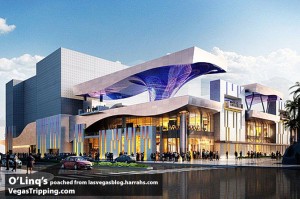 Closer to Caesars HQ, if you’re fond of taking the back way into the Flamingo/O’Shea’s/Imperial Palace/Harrah’s Las Vegas cluster, avoiding Strip traffic, you can forget about it. As of today, those little back streets that bear the names Audrie, Ida and Winnick will be closed. Yes, construction is actually starting on Project Linq, Caesars’ half-billion wager that two of its gamier Strip casinos can be remade as a warren of mid-market retail and dining, effectively ridding us of O’Shea’s and rebranding Imperial Palace in the process. (Anybody betting against “Horseshoe Las Vegas”?) As capital projects go, it’s more apt to the cautious tenor of our times and indescribably more realistic than the preposterous CityCenter knockoff (“Epicentre”) that Loveman envisioned at the height of the real estate bubble. In certain respects — less Strip construction and overseas adventurism, more domestic expansion — the Great Recession arguably saved Caesars from itself and returned it to its roots.
 When the musical chairs stopped … M Resort found itself with a new CFO, former Hollywood Casino Joliet general manager Jon Johnson. Although Penn made a public display of confidence in the M management it inherited, it only makes sense to have someone familiar with Penn’s corporate culture in a watching post on the company’s Vegas frontier. Johnson’s Joliet vacancy is filled by Wayne Smith, late of Empire City Casino at Yonkers Raceway. Smith is to be doubly congratulated, both for coming up in the world (Empire City may be considerably larger, but it’s less prestigious than Hollywood Joliet) and for being rid of the headache of having to fend off Resorts World New York. Then again, with Neil Bluhm‘s nearby Des Plaines casino hammering the competition, Smith may have simply exchanged the frying pan for the fire.
 Support continues to snowball for a tribal casino in Hardeeville, South Carolina. Backers of the project stress its mixed-use nature and that it would require no taxpayer dollars. However, attempts to minimize its casino-ness encounter a cognitive dissonance when its proposed scale is likened to Sands Bethlehem, an $800 million-plus megaresort that nearly put Las Vegas Sands in the tank. Proximity to the popular links and beaches of Hilton Head (and very clement winter weather) are considerable advantages, however, that the Palmetto State project will have over its Pennsylvania role model. Although the casino-resort is projected to generate $92 million annually in salaries and almost $21 million in tax revenues for the state, a spokesman for Gov. Nikki Haley (R) sounds an ominous note. Sniffs, he, “[Haley] believes South Carolina does not have to settle and that there is a better way.” Is there now? We’re all ears.
