

 Smashed entrance doors, overburdened and broken escalators, and 40,000 customers … it was all in a day’s work when Sands Macao opened — can it really be 10 years ago next week? Time flies when you’re Sheldon Adelson. Although Stanley Ho vented some private, xenophobic remarks about Adelson, publicly he told reporters something very prophetic. “The cake is going to be bigger and bigger, and we all could have a share,” he said — and he was right. Adelson’s accomplishments included taking the aura of sleaze off Macao, upgrading customers’ expectations of a casino property and elevating the importance of the mass-market player. Or, as legislator Jose Maria Pereira Coutinho puts it, “Sands brought us a different way of gaming. It brought color, cultural exchange and an example for other operators of a path for doing something different.”
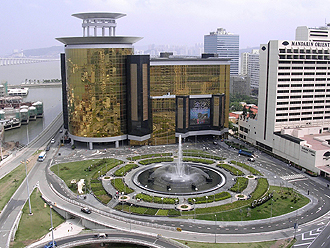 Some downplay the magnitude of Adelson’s accomplishment. “The benchmark in Macao at that time was so low that Sands blew people’s minds and raised their expectations,” says investment banker Morgan Parker. David Green of Newpage Consulting is even harsher. “I think practically anyone could have opened a Sands Macao and made it work,” he says — a sentiment that will not endear him to Adelson.
In Adelson’s next territory of priority, Japan, the national pastime (pachinko) is contemplating competition and — worse yet — taxation. Considering that more than 15% of Japanese play pachinko, it’s surprising the government has left so much money on the table for so many years. But taxation confers legitimacy on the dubiously legal industry … something the Diet is loath to do. Somewhat like U.S. Internet cafe-casinos, pachinko players vie for prizes that can be redeemed for monetary value.
Legalizing casinos in Japan would mean bringing pachinko in from the cold, too. Dynam Japan Holdings Chairman Yoji Sato, a major pachinko mogul (and casino aspirant), actually welcomes the government regulation that this would bring: ““Any industry that cannot be accepted or understood by society will cease to exist.” But with 4,000 companies in the industry, governmental oversight is more easily mooted than accomplished. But the pachinko audience in graying and shrinking, and upscale casinos look like the coming thing.
 When Adelson arrives, he’ll find that Neil Bluhm has already been there, cultivating relationships. In a ‘big, swinging dick’ moment, Adelson vowed to spend as much as $10 billion Tokyo megaresort (even though that price tag would likely depress ROI well below Adelson’s preferred 20%). Bluhm, who prefers Osaka, is unfazed. “Sometimes people like to throw big numbers around in order to get picked,” he told Reuters. He also thinks he’s more tractable to working with joint-venture partners than the big-name American companies will be. Osaka also has the lure of more land and at far lower prices than in Tokyo, particularly Yumeshima, a 170-acre landfill. Developers who choose Osaka or Yokohama face much better odds than in Tokyo, where the local government needs to fish or cut bait.
 Penn National Gaming pulled out the flamethrower and aimed it at the Iowa Racing & Gaming Commission, calling the latter’s determination to close Argosy Sioux City a “complete and utter sham.” (“Traveshamockery” would have been even better.) They could have added “We’ll see you in court,” too, because that’s where this kerfuffle is headed next. Penn, however, seems to be throwing in at least part of the towel, dispatching General Manager Lance George to Massachusetts to head Plainridge Park Casino. George may feel like he’s gone from the frying pan to the fire, though.
George Carney, owner of jilted Raynham Park, is suing the Massachusetts Gaming Commission, demanding it revoke the license it granted to Plainridge. His contention that Ourway Realty, which was displaced by Penn during the application process, still stands to profit from the racino. (Plainridge President Gary Piontkowski was found to be helping himself from the till.) Carney claims that the purchase agreement between Penn and Ourway will, “in perpetuity” give Ourway a share of Plainridge’s cash flow: “Springfield Gaming’s failure to disclose Ourway’s interests, the nature of such interests and the names and addresses of all members of Ourway on its application rendered its application false and misleading…”
Penn replied that the contentions were “legally and factually deficient.” Penn spokesman Eric Schippers added pertinently, “Given that the Carney proposal did not garner even a single vote [from the MGC], I’m not sure what they’re ultimately trying to accomplish.” Indeed, two votes went to a Cordish Gaming proposal for Leominster and three to Plainridge, none to Carney. A revote is extremely unlikely to get him what he wants.
