

 If you want a vexing test of one’s intellectual consistency, try the Maryland casino industry on for size. It’s not growing fast enough to suit the state Legislature, which is chafing at the constraints imposed upon it — with not a little legislative help — by Maryland voters when they approved five slot parlors in 2008. It’s not as though the electorate wasn’t generous to , imposing an incredibly punitive 67% tax rate on the slot houses.
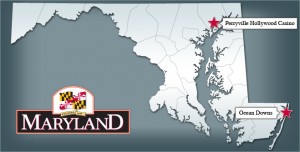 Not surprisingly, the casino goose has been slow to lay golden eggs. Early casino revenues were scarcely a blip on the radar, compared to neighboring states. One slot parlor and one racino have opened — and Penn National Gaming‘s decision to set up a puny, perfunctory facility in Perryville, practically on the doorstep of superior facilities in Pennsylvania and Delaware, is more of a head-scratcher every day. Cordish Gaming‘s 4,750-slot Maryland Live! behemoth is still a month away from opening. A low-budget, rural casino at Rocky Gap Lodge & Golf Resort has only just been approved. A Rock Gaming/Caesars Entertainment joint venture in Baltimore is just getting into the starting blocks, even after some rather expedient ‘clarification’ of the rules under ambiguous circumstances for Dan Gilbert‘s benefit. (The operative question is, What did Maryland regulators know about Gilbert and when did they know it?)
Legislative impatience will likely result in solons reconvening in August (at no small expense to taxpayers) to potentially carve loopholes in the 2008 accord, and I doubt any lawmaker who’s in favor of it has the stones to tell John Q. Public, “Y’know, that casino referendum you approved four years ago? We asked you for X but, on second thought, we really want Y.” In the meantime, the inconsistencies continue to pile up alongside the roseate revenue projections of operators-to-be.
 Already Rocky Gap has been gifted with a special tax break and some fee waivers to increase its viability (and unload the license, which had been gathering dust). Further compromises could include: A) a sixth casino license, earmarked for Prince George’s County, starting in July 2015; B) table games for all; C) a reduction of the tax rate to 60%; D) tax table games at 10%; E) offload the actual ownership of slot machines to casino operators themselves and further reduce taxes to 52%; F) craft an exception to the one-casino-per-operator rule, bringing Penn’s Rosecroft Raceway into play; and G) perhaps even authorize a tables-only casino at National Harbor, but that’s a long shot. Did you get all that? Dizzying, isn’t it? It gets even more so with Largo-sited Capitol Centre Boulevard preparing to crash state Senate President Thomas V. Mike Miller Jr.’s party.
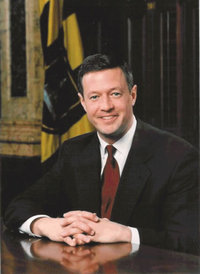 Gov. Martin O’Malley (D, right) gets the intellectual-consistency prize for maintaining that the 2008 framework needs to be seen to fruition before legislators start tacking on additional licenses and types of games, as though decorating a Christmas tree. However, had he and his legislative colleagues exercised superior foresight back in 2007, much of this 20/20 hindsight could be avoided. One particularly sympathizes with those operators who have been in it for the long haul, including Caesars, only to get blindsided by state Senate President Thomas V. Miller Jr., who steamrolled opponents last month, only to lose traction in the House.
Amid so many moving parts, it’s easy to lose sight of the big question that the Rocky Gap exemption begs: If a 50% tax rate is good enough for Rocky Gap, why should anybody else pay a thousandth of a percentage more? What began as an orderly regime may end as a crazy quilt of varying tax rates and one-off special arrangements for politicians’ pet causes.
Before anyone goes spending $1 billion on a National Harbor casino, they might want to pay a visit to Pittsburgh. Despite having some of the largest revenues in the state of Pennsylvania ($343 million last year), Rivers Casino has turned out to be a money pit for Neil Bluhm and his Walton Street Capital. This mastodon, which cost at least $780 million — and possibly close to $905 million — generated only 55% of projected revenues for its first year. An already meager 11% ROI forecast (and these are best-case figures) shrank to a tiny 2.5% return on investment. Yikes!
 Things were so bad, reveals Bluhm colleague Ira Schulman (right), that Walton Street pondered putting Rivers, “a terrible investment,” into bankruptcy. Citing the imminent threat of competition from Ohio, Schulman is asking for deep cuts in Rivers Casino’s tax assessment. The City of Pittsburgh countercharges that the assessment should actually be increased by at least 25%. Whether Bluhm and Schulman get their wish or not, it’s extended karmic payback for the series of juice jobs that got them Rivers in the first place.
It began when a viable-looking Forest City/Harrah’s Entertainment proposal was passed over in favor of “george” Democratic Party donor Don Barden. Being well capitalized was less important than being in good odor with then-Gov. “Fast Ed”  Rendell (D), which both Barden and Bluhm (left) were. When Barden’s money ran out, Bluhm’s political connections smoothed the path to taking over a construction project that Schulman now deplores as “extremely extravagant and oversized.” (Talk about 20/20 hindsight!) Thus was Bluhm able to gain the foothold in Pennsylvania’s two largest cities that the state explicitly balked at giving to Harrah’s. Walton Street’s Pittsburgh plunge looks like the classic case of a decision made in haste, to be repented at leisure.
When is a casino too small? In the case of a project recently rejected in Gulfport, it’s when your “$77 million” casino turns out to be only budgeted at $35 million. Come back when you’re ready to spend more, said city fathers.
