

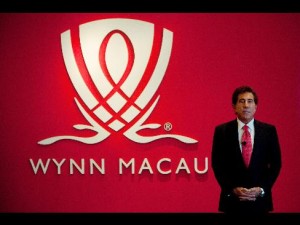
 OK, so it’s called “paying a premium,” but Steve Wynn finally pried 51 acres of Cotai Strip™ landfill real estate loose from Macao by forking over $193 million ($3.8 million an acre), plus annual lease payments. In return. he’s got to get $2.5 billion, 1,400-room Wynn Cotai up and running by 2016. Since Wynn has to queue up behind everybody else who’s got a project in progress, when it comes to getting a share of Macao’s limited labor pool, he’s somewhat the mercy of how quickly or slowly (*cough*Sands China*cough*) can complete their erections. However, the Macanese administration leapfrogged his project past ones bankrolled by homeboys Melco Crown Entertainment and sluggish Sociedade de Jogos de Macau, so El Steve’s $193 million was well spent.
J.P. Morgan analyst Joseph Greff predicts similar approvals soon for Sands and long-suffering MGM Resorts International. One can’t fault the government’s logic. It knows it has casino developers over a barrel, saw a chance to make a lot of money on the quick and took it.
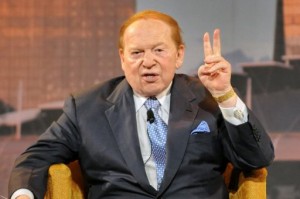
What Wynn couldn’t do and Sheldon Adelson™ failed to accomplish in Florida may have been achieved by Genting Berhad. So argues state Rep. Erik Fresen (R). He’s planning to introduce a still-further-scaled-down version of casino legalization over the next fortnight. With Genting, already a significant force in the South Florida economy, having recently invested $236 million in Miami real estate and with gambling springing up at Internet cafés across the Sunshine State, even erstwhile casino opponents are seeing the light.
 Among the proposal’s reductions in scope, it would now call for three casinos — not five or six — and bunch them all at the south end of the state. (Projected investment has been downsized to a more realistic $5 billion-$6 billion.) Miami-Dade and Broward counties, having already approved slot machines at parimutuels, are the likely winners. Other counties that want in on the fun will have to submit the issue to a local vote. Opponents are expected to include: A) parimutuels, already fighting each other in earnest, who foresee themselves being wiped out by Vegas carpetbaggers; B) the Seminole Tribe, who compact with the state is cheerfully being trampled underfoot; C) legislators who don’t want to gamble away $250 million in annual Seminole taxes against an unknown amount of private-sector revenue; D) and Las Vegas Sands, which still clings to its silly exclusivity-zone concept (henceforth known as the “Line of Death”). Religious zealots will wring their hands, no doubt, but the bill is crafted in such a manner as to keep gambling far from their upstate precincts — and distant from those parts of Florida that are beholden to Disneyworld and its offshoots.
 Since Florida solons now look to the Las Vegas Strip for campaign dollars, the industry’s influence is on the rise. As for the dog track, fronton and racino owners … one of the GOP selling points for the bill is that it will drive them out of business and that it’s a good thing. In other words, the only way to get rid of small casinos is to authorize some big casinos. “A net reduction in gaming” is what it’s called.
Speaking of which … let’s have a moment of silence for casinos in Ecuador. They’ll have to shut down by mid-March, due to an anti-casino backlash at the ballot box. North American companies are traditionally skittish toward the South American market and this latest setback is a good example of why that is the case.
