
If Japanese casinos must be majority-owned by local companies, that suits Sega Sammy Holdings just fine. The company is challenging the likes of Galaxy Entertainment, Las Vegas Sands and MGM Resorts International for one of the initial casino licenses. Of 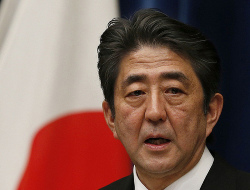 course, we could see — in fact, are likely to see — a Sega Sammy scenario in which the company takes the majority position in a megaresort project and one of the gaijin casino developers, like Wynn Resorts, holds a minority stake. Galaxy and Hard Rock International have already embraced this possibility, without explicitly naming any prospective partners.
“We definitely want to take a bigger stake in Japan—not just the entertainment part, but the whole resort,” remarked Sega Sammy COO Haruki Sitomi and the company knows whereof he speaks: It already controls 45% of the Paradise City casino-resort in South Korea. So the notion of Sega Sammy steering a Nipponese megaresort is hardly far-fetched. But the Japan’s casino dream could be receding, along with Prime Minister Shinzo Abe‘s popularity ratings, which are deeply underwater, as is public support for casinos. “Continued negative coverage of the Abe administration, coupled with political losses for the Liberal Democratic Party may reduce support for the gaming agenda, which already has only limited public support,” said analyst Vitaly Umansky.
Although the Japanese romance with betting on pachinko is waning along with the pachinko-playing demographic, the country still has  11,000 hole-in-the-wall pachinko parlors. According to Global Gaming Business, that’s 4.5 million pachinko machines. The Land of the Rising Sun continues to prefer that time-honored form of gaming, along with other traditional wagering contexts such as horse racing. And some of the big U.S. investors are hemming and hawing about their commitment to Japan, hedging their bets with courtship of Brazil. Both Caesars Entertainment and Las Vegas Sands told the Las Vegas Review-Journal that their commitment to Japan is now contingent on what the casino-regulation bill — itself not guaranteed of passage — looks like. That’s scarcely a ringing endorsement. Neither is the sentiment of MGM’s Alan Feldman, “Any of us who are involved in Japan see the potential. We’ve just got to have legislation that permits that to happen.” That’s a bit of a shift from the pay-any-price rhetoric of yore.
Referring to the possible imposition of Singapore-like constraints on the size (15,000 square meters) of casino floors, Feldman added,  “They’re almost, without intending to, enforcing a slot-box kind of mentality, which is far worse and isn’t going to meet their objectives which relate to tourism and investment. They’re not going to get what they think they’re going to get.” Steep admission tariffs could also make players feel like they’re in the hole before they’ve even hit the casino floor. Instead of a robust casino industry, Japan could find itself with an emaciated one — or the issue could just quietly go away. The auguries are not auspicious at this point.
* The American Gaming Association‘s sports-betting coalition just got an infusion of oomph — $30 billion-plus worth. The National Indian Gaming Association has signed on, although NIGA Chairman Ernie Stevens Jr. framed it as a self-protection issue. “Of chief concern to  NIGA is to ensure that tribal interests are protected, particularly avoidance of any negative impacts on existing compacts and exclusivity clauses,” he said. As far as the nationwide legalization of sports betting, AGA CEO Geoff Freeman said NIGA’s participation was “critical to making it happen.” With 13 state legislatures considering legitimizing sports betting and a Congress that needs put some numbers up in the “win” column, Freeman may be right.
The AGA and NIGA also joined forces with other trade associations to publish a new code of conduct for responsible gaming. The new code requires AGA members to have 800-number help lines, to have self-exclusion policies in place and to make “diligent” efforts to prevent 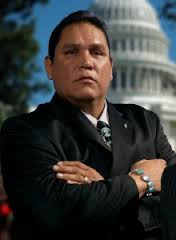 underage gambling, among various and sundry bullet points. “In Indian Country, we do not take any type of addiction lightly,” said Stevens. “Our tribes have prioritized and developed programs on addressing the disease of gambling addiction since the inception of our industry.” One of the Obama administration’s legacies — increased health coverage for pathological gambling — recently survived a near-death experience on Capitol Hill, so the AGA’s vigilance and proactivity on the issue is welcome. As National Center for Responsible Gaming Executive Director Russell Sanna put it, “Our collective efforts to constantly improve responsible gaming will provide for a healthy industry that benefits local communities and our nation.”
In other AGA news, there’s speculation that AGA majority-owned Global Gaming Expo will be sold to Clarion Events. At the very least, Freeman could see minority partner Reed Exhibitions‘ stake bought out. It’s difficult to envision the AGA forfeiting such an important platform.
* Sen. John McCain (R) has been in the news a great deal lately and although the headlines haven’t focused on his role in the MGM-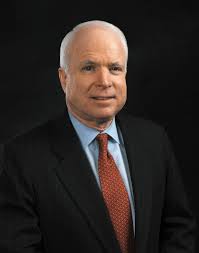 vs.-Connecticut skirmish, he’s been one of the threads in that subplot. MGM is using a McCain letter to the Bureau of Indian Affairs as a catspaw to try and block a tribal casino in East Windsor. The Obama administration had already issued a positive opinion on the project and McCain is urging the Trump administration from following in those footsteps, writing that the Obama letter “is being construed as the department’s tacit approval for their project.” However, the clock is running on Bureau of Indian Affairs final approval of the off-reservation casino and a binding opinion is due in six weeks.
* Madrid should brace itself to be hit with a lawsuit from Cordish Gaming over the former’s rejection of the latter’s proposal 4,000-room resort. The city fathers of Madrid deemed the project too casino-centric (how else are you going to make a resort of that scale pencil out?) and gave it the thumbs down, thereby earning Cornish’s wrath.
* Unless you count St. Regis, the heavyweights of the casino world are showing surprisingly little interest in gaming development in Bermuda. In addition to the in-progress St. Regis, it looks like Hamilton Princess and two other hotels will get the initial grant of four licenses all to themselves … barring any managerial expertise that might get jobbed in at a later date.
