

 Not wasting any time, CEO Gary Loveman put Caesars Entertainment Operating Co. into Chapter 11 today, filing the motion in Chicago to circumvent a Delaware lawsuit. (The reason for the Windy City filing may go a lot deeper than proximity to Harrah’s Joliet; legal precedents in that district could allow Caesars to stiff its creditors.) The company provided this handy primer as to which assets were and weren’t in the doghouse. In a video message, Loveman promised business as usual, including the preservation of all Total Rewards point accruals and procedures. Laudably, he also vowed not to claw back any salaries or benefits. He did try to shift the blame for Caesars’ crash-and-burn to the Great Recession and away from his truly reckless LBO, which crushed the company under unsustainable debt.
In the end, Loveman got the support of 80% of bondholders, well more than the 67% he needed. Leaving aside Caesars Palace, the bulk of the casinos in the CEOC bankruptcy are relatively small fry in markets like Lake Tahoe and Tunica. You can see why junior creditors were sore about the Caesars Growth Partners jiggery-pokery that 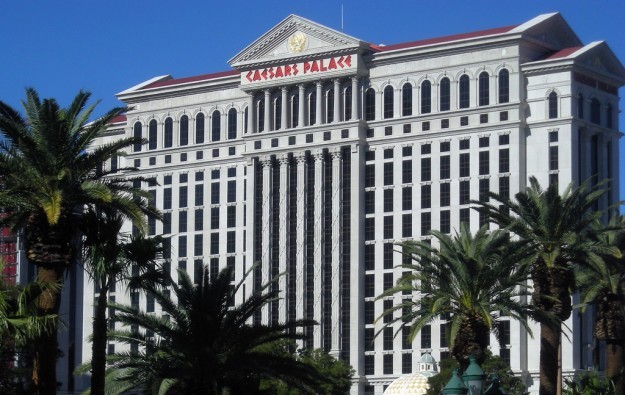 left shiny new assets like The Cromwell outside the confines of CEOC. Unlike all its major brethren in the casino industry, Caesars liabilities ($28 million) well exceed its asset base. By cutting annual interest payments to approximately $450 million, the bankruptcy also considerably lessens the risk that Caesars will run out of cash.
The Chapter 11 filing, wrote the New York Times, “provides a vivid demonstration of the risks of buying companies by loading them up with debt. Caesars, whose buyout was emblematic of private equity’s golden age before the financial crisis, has since become a symbol for that industry’s excesses.” Dissident investors, however, probably shouldn’t put too much hope in the court system. Said University of Nevada-Las Vegas history professor Michael Green, cutting to the quick as usual, “Caesars is, in a certain sense, a Nevada version of ‘too big to fail.'”
I wouldn’t agree, though, with those analysts who say “Caesars was reluctant” to spend: It flung money at any market opening that presented itself, including a mind-boggling $800  million bid for a rural New York State casino. Union Gaming analyst Chris Jones takes a sanguine view of today’s events, predicting no further casino closures and even reinvestment in the existing properties.
“Fitch [Ratings] estimates full recovery for CEOC’s credit facility lenders, with 87 percent recovery for the first-lien noteholders and less than 10 percent recovery for the remainder of the capital structure,” predicted analyst Alex Bumazhny. In other words, lead owners Apollo (Mis)Management and Texas Pacific Group keep the goldmine and junior noteholders get the shaft, as $10 billion in debt simply vanishes from Caesars’ books. Unsecured creditor Clark County could find itself out $47 million for the cost of burying power lines on the Las Vegas Strip. (The county contends that the debt is actually secured and will take steps to recoup it.)
As we’ve said before, Caesars has so many businesses, creditors and employees dependent upon it, that it’s likely to get off scot-free. Loveman and cohorts Leon Black and David Bonderman should light up cigars with hundred-dollar bills: They’ve just pulled the caper of the century.
* With an assist from new Golden Nugget Lake Charles, gaming revenues in Louisiana soared 16% last month. (On a same-store basis, the gain was only 2%.) Analysts were
 expecting a 15% decline at nearby L’Auberge Lake Charles but the Nugget only made a 3% dent in its business, as Lake Charles continues to be the happening market in Louisiana. (Don’t forget: One of Loveman’s many mistakes was to sell out of Lake Charles so he could double down in Biloxi.) Pinnacle Entertainment‘s L’Auberge still outgrossed the newcomer, $33 million — tops in the state — to $27.5 million.
In the crowded Shreveport/Bossier City market, Horseshoe fell 10%, while Sam’s Town rose 3%, El Dorado Shreveport bounced 16% and Margaritaville registered a $2 million gain over December 2013. Caesars had much better luck at its land-based properties, with Harrah’s New Orleans up and L0uisiana Downs gaining 9%. In Baton Rouge, Pinnacle’s L’Auberge Baton Rouge continues to gobble up the competition, grossing $12 million (+3%) to the combined $11 million of Argosy Baton Rouge and Hollywood Baton Rouge.
* Bidders didn’t exactly come running when New York‘s Location Board for casino siting reopened the process. So far only Tioga Downs has declared itself in the running — and it’s been rejected once before. Racino owner Jeff Gural plans to sweeten his second offer with “a second restaurant, a miniature golf course, batting cages and a climbing wall.” (I still don’t think that’s going to do it.) New York Gov. Andrew Cuomo (D), meanwhile, called for national companies to get into the act, although the relative lack of a population base around Binghamton would serve as a deterrent to most major players in the industry.
