
In what once seemed unthinkable, Macao has been ordered to close all 41 of its casinos (and presumably its myriad slot parlors) to inhibit the spread of coronavirus. The inciting incident appears to have been a case 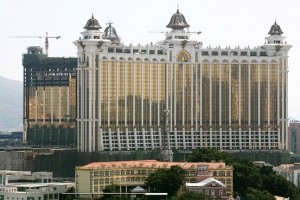 of the virus being reported in a Galaxy Entertainment employee, meaning it has penetrated the enclave’s signature industry. (A Sociedade de Jogos de Macau bus driver was also infected.) You can kiss February goodbye—Wall Street is predicting a 60% (you read that right) revenue plunge—and 1Q20 is probably toast as well. In an effort to contain the spread of the virus, the Macanese government has asked casino companies to provide housing for the many nonresident workers. They’ll certainly have the empty hotel rooms to cover it. According to the government, the six casino operators are playing ball, promising to provide “adequate conditions” for essential workers (out of a total of 35,000 non-residents, many deemed non-essential) who would otherwise be going home to neighboring Zhuhai.
Analyst projections of the impact of the 15-day shutdown varied. Sanford C. Bernstein boffins pegged it at 50% of gross gaming revenues. Gloomier were the analysts at JP Morgan Securities, who predict a 75% tailspin to $700 million. That alone could turn what was expected to be an up year for Macao into a 6% downturn. While casino 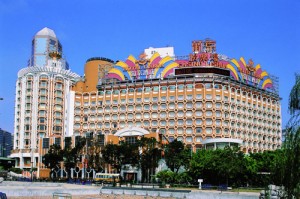 floors go empty, hotels are still permitted to rent out rooms and restaurants are cleared for business as usual “considering there are still visitors there. And we have sufficient risk control measures.” Such reassurances may be in vain. “Casinos have already been closing restaurants and other services over the past several days in light of tepid customer visitation,” a Bernstein note read. “Whatever the details of the temporary shutdown are, the first quarter is obviously going to show awful results.”
Roth Capital Partners had taken a conservative outlook on 2020, projecting flat revenues with 2019 (not impressive in themselves). Now it is forecasting a 14% drop-off, adding “While there are many unknowns with the coronavirus, we anticipate an approximately 31-percent GGR decline in the first half of 2020.”
The Bernstein note continued that, assuming a two-week shutdown followed by “soft business” in February and March, 1Q20 revenues would be way off, 50%, and a more prolonged closure would depress them 70%. Casinos aren’t the only ones hurting. Nightclubs, arcades and movie theaters have  been shuttered. The casino industry stepped up to the plate, assuring workers that they would not be asked to take unpaid time off nor would their salaries be cut. Macao Chief Executive Ho Iat Seng, who has closed all traffic from Hong Kong except for the new bridge, predicts the next seven to 10 days will be the crisis period, giving casino operators some hope that the closure will not roll on past the prescribed 15 days. SJM’s Ambrose So tried to spin the shutdown as no bad thing, saying it and “reduced operating expenses” coincided with a “quiet period” that traditionally follows Chinese New Year … and never mind that New Year was a disaster for the casinos.
As for those operating costs, Morgan analysts said layoffs “would not be an option in Macau given political sensitivity.” They noted, “Casino is ‘revenue business’, and there isn’t much that operators can do to mitigate such extreme declines in revenue.” They cling to hope of “strong recovery from pent-up demand,” which may have some validity, given China‘s 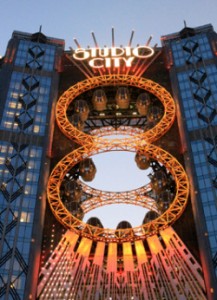 ravenous appetite for gambling. Bernstein concurred, predicting a “sharp recovery in visitation” and gambling revenues. “[T]he second half in Macau should still be a strong recovery (unless the medical situation becomes much worse).” Deutsche Bank analyst Carlo Santarelli even found a silver lining in coronavirus, writing with Steve Pizzella that construction permits and other economic stimulus would probably be speeded up, and “the concession renewal process could in fact move along quicker and smoother than perhaps anticipated.” Would casino operators trade two weeks of lost business for speedier, more-certain concession renewal? We think they would … though perhaps not gladly.
* If at first you don’t succeed in getting a casino, try again. And when that doesn’t work, find a new justification. That’s what the town of Wood Village, near Portland, is doing in tandem with businessmen Matt Rossman and Bruce Studer. The duo had their casino proposal twice rejected at the ballot box. But Mayor T. Scott Harden thinks he has the answer: Use the tax proceeds from the casino to ameliorate the city’s homeless problem. Says Harden, “in a lot of people’s minds this would get them to think. It might be the tipping point for a lot of voters.”
At present, only tribal casinos are permitted in Oregon, so Harden has to make his case to the electorate as a whole. Rationalizing previous casino pushes as way to raise education funding was a loser. Harden think this year’s outcome will be better. “If you have a taxpaying casino that is popular, that people go to, then you are looking at permanent funding for permanent solutions to the homeless crisis.” We hope Hizzoner is on the money, so to speak. (But expect fierce tribal opposition. You OK one private-sector casino and you’ve opened the floodgates.)
* Speaking of charity, electronic pull tabs legalized in North Dakota to benefit nonprofits have been spreading across the state like wildfire—much to the detriment of tribal casinos. For Mandan, Hidatsa & Arikara Nation Chairman Mark Fox it’s an existential threat. “It’s no small thing for us. It’s of dire concern, at a minimum.” “Casino-creep” is the term that North Dakota Indian Affairs Commission Executive Director Scott Davis uses to the describe the e-tabs, now present in all but three counties. Casinos, he said, “are very delicate entities crucial to the survival of our tribes. Without them, things would be really tough—tougher than they are now.” Spirit Lake Casino Resort is reporting a 42% decrease in revenue in a single year, for one.
According to InForum.com, there are “2,168 e-tab devices at 542 sites conducted by 190 charitable gaming organizations in 216 cities.” That’s putting a strain on North Dakota gaming regulators, who can’t keep tabs (pardon the pun) on the machines, let alone the potential for money laundering. Then-state Rep. Andy Maragos, who sponsored the pull tab legislation, has no regrets. Tribal casinos have nothing to fear because “They have a distinctive advantage of being able to give you a complete entertainment package.”
Responds Fox, “It’s not just chump change that the Indians have. It makes a huge difference, not just to us, but to the economy of the state as well … Our very livelihood, how we take care of our people, our jobs, are at a great threat.”
* The Mashpee Wampanoag are on the clock. The First U.S. Circuit Court of Appeals will hear their case for First Light Casino in Taunton … for 15 minutes. The tribe is appealing a 2016 decision that the Barack Obama  administration goofed when taking land into trust for the tribe, which was not recognized at the cutoff date of 1934. The Donald Trump Interior Department went back on the Obama DOI’s interpretation, taking away the Wampanoag’s reservation—and casino. At stake are not only ancestral lands but 3,000 slot machines, 190 gaming tables and 300 hotel rooms. Legal opposition has been bankrolled by Democratic Party rainmaker Neil Bluhm, who covets a casino in nearby Brockton. (Under Massachusetts law, a tribal and Brockton casino could theoretically coexist. Economically, not so much.)
“The Mashpee Wampanoag Tribe’s citizens are currently suffering a massive loss of resources and services due to the uncertainty of the trust status of the Reservation,” says the tribe, which is out $500 million to Genting Group, former developer of Project First Light. Don’t expect a ruling on the case anytime soon.

[…] Macau is closed. Not Vegas – whatever. […]