
Wall Street was expecting 18.5% gaming-revenue growth out of Macao last month. It got ‘only’ 12%, the Street not having taken an abbreviated 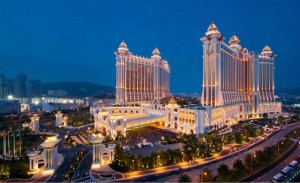 Golden Week into account. Furthermore, the enclave had a hard act to follow, its revenue having vaulted 24% in May 2017. Galaxy Entertainment Chairman Lui-Che Woo famously said he wanted to see two solid years of improvement before he’d believe a recovery had taken place and we’re well on our way to Mr. Woo’s goalpost but not quite there yet. Still, the upward movement of the gambling market has augured well for Macao’s gross domestic product. It raked in $3.2 billion of gambling revenue last month, not as hot as April but pretty damned impressive to the layman. We don’t have any market-share or VIP/mass-market breakdowns yet but hope to get them to you soon. Meanwhile, the clock is running down fast on casino legalization in Japan. The ruling Liberal Democratic Party may have no choice but to extend the current Diet session into July. Said one parliamentarian, “We are short of deliberation time – we cannot help but extend the Diet term.”
* MGM Resorts International is seemingly trying to make a liar out of me. After having taken an $850 million stab at the New York City market by throwing money at the Empire City racino in Yonkers, it insists that its plans for Bridgeport (contingent upon state approval) are still ‘on.’ MGM says it has been “unwavering” in its commitment to CEO Jim Murren‘s Connecticut birthplace but faults lawmakers for failing to establish “open competition” for additional Nutmeg State casinos. While waxing optimistic on the outcome of the next Legislature, MGM warned 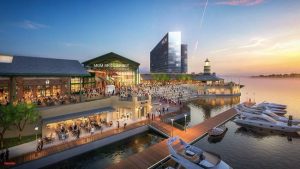 darkly that “the state’s delay will not deter us from executing our company’s comprehensive growth strategy,” i.e., going full tilt after the Big Apple.
Noting that Empire City has a 40% market share in NYC (Genting Group‘s Resorts World New York has the rest), MGM said it believes it can grow that number. With $1.8 billion now committed to New York State and Massachusetts, MGM has little choice but to go after every 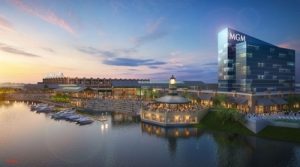 gambler it can (not to mention add amenities to Empire City that would improve its luster). The question of whether Bridgeport (budget: $675 million) would be one resort too many remains very open. Empire City probably wouldn’t pull revenue from Mohegan Sun or former MGM friend Foxwoods Resort Casino but a Bridgeport casino would.
It would also potentially bear the burden of having to replace the $250 million that Connecticut gets every year in return for tribal gaming exclusivity. MGM contends that New York City’s suburbs, including southwestern Connecticut have “substantial unmet demand for casino resort entertainment.” MGM presumably hopes to force the issue during a July special session of the Lege, although sports betting is the main issue on the docket.
* Sheldon Adelson may be leaving Pennsylvania but he metaphorically stopped long enough to have Sands Bethlehem‘s gaming license  renewed. That means when the casino becomes Four Winds Bethlehem, it will inherit a license good until 2023. The casino’s executive team is expected to keep its jobs, while Las Vegas Sands rolls the $1.3 billion payday into Macao upgrades. The company’s exit from the Keystone State has not been without some Keystone Kops comedy: new slot machines turned out to have the wrong software installed and had to be sent back to the manufacturer.
Casino President Brian Carr, who is staying on the job, downplayed the impact of Resorts World Catskills. As for the impending presence of MGM, that’s going to be the Poarch Band of Creek Indians‘ problem. Regarding what’s next, Carr said, “As we continue to think about future growth into the rest of the facility, I think the number-one thing is how do we turn it more into a resort destination and that getaway for our guests.” The brand may be changing but we see no reason to bet against the house anytime soon.
* Penn National Gaming having bombed with Hollywood Jamul, formally exited the picture earlier this week, as the casino was  rebranded Jamul Casino. Penn wrote off a $90 million loan to Jamul Indian Village Development Corporation. Now the tribe will run the casino themselves, presumably piggybacking on whatever was learnt from Penn during its brief tenure. We’ve seen some botched casino openings in our time but Hollywood Jamul’s was one of the worst, especially in light of the fact that licensing delays gave Penn extra time to prepare, time that was evidently wasted.
If you’ve been to Jamul and were underwhelmed by the F&B portfolio or by customer service, rest assured that those are the top-priority items on new General Manager Mary Cheeks‘ to-do list. Most of the changes to 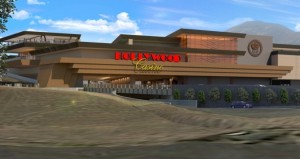 date have been in the nature of rebranding anything that wasn’t nailed down, the better to remove the Penn taint. Tony Gwynn’s Sports Pub is staying and being given a higher promotional profile. Jamul Chairwoman Erica Pinto said “There have been no layoffs. Actually to the contrary, we’ve been hiring … I made the announcement [of Penn’s exit] on March 1 and it was met with applause. I said, ‘Look guys, we’re finally doing it for ourselves.’ It was so exciting.” We hope it stays that way, even if a four-acre footprint seemingly sentences Jamul to being one of the underdogs in the highly competitive San Diego market.
* Nebraska and Iowa are ganging up on the Ponca Tribe to prevent it from opening a casino in Carter Lake. The Hawkeye State is opposed to further dilution of the Council Bluffs market while the Cornhusker State doesn’t want that ol’ debbil gambling on the fringes of its bailiwick. (Nebraska is one of the last states where you can’t gamble.) Having received the approval of the National Indian Gaming Commission, the Ponca Tribe says it is moving forward undeterred. Interestingly, the lawsuit constitutes Republican-on-Republican violence as it pits two profoundly conservative state governments against the Bureau of Indian Affairs as well as the NIGC.
The scenario is a replay of a 2007 battle in which Iowa, Nebraska and Council Bluffs successfully sued to have a Ponca casino proposal kicked back to the NIGC. “The federal government had its second chance ‘to get it right.’ It has failed, and it is incumbent upon the judiciary to rectify that failure,” opined Nebraska Deputy Solicitor General David Lopez. It’s a good thing for the Ponca that they are well-stocked with patience. This bout is going to go the full 15 rounds.

Sam Brownback is the governor of Kansas, not Nebraska.
Two mega-goofs in one day. I must be losing it. Many apologies, dear readers.
Well technically since January it’s been Jeff Colyer, but hey, you know those fly over states…