

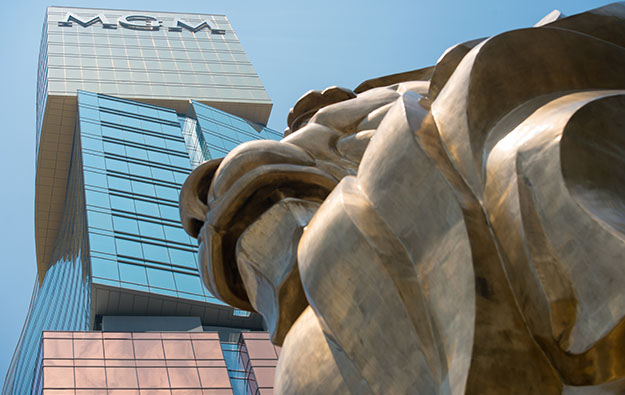
“Mac-Holy-Cau!” So exclaimed Truist Securities analyst Barry Jonas about MGM Resorts International‘s 1Q23 earnings statement. Fueled by better than expected grosses in Macao, MGM beat the Wall Street consensus for first-quarter cash flow by 8%. Cash flow was $1.25 billion on net revenues of $3.9 billion, while cash flow in Las Vegas alone was a best-ever $836 million. Table games on the Las Vegas Strip were up 6% while slot winnings vaulted 19%. Hotel revenue shot up 43% on 92% occupancy, as daily room rates hovered at a stratospheric $258 per night. As for new arrival The Cosmopolitan of Las Vegas, Jonas observed, “MGM remains pleased with trends at the recently acquired Cosmo … and is in the process of converting the property to the MGM Rewards platform.”
Room bookings have been accelerating since November, driven by weekend events. (Nor are regional casinos feeling any macroeconomic impact.) “That said, we think a seasonally slower Q2 & Q3 is well understood by investors here, given a slower event calendar before Las Vegas’s inaugural [Formula One] race in Q4 and the Super Bowl in 1Q24.” Also, Culinary Union talks loom large, portending a 5% pay bump for the rank and file.
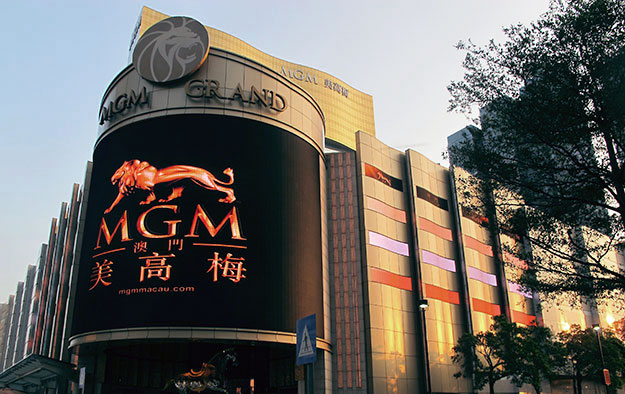
But the big news was Macao, where mass-market gambling has shot up to 115% of pre-pandemic levels, even with 10,000 hotel rooms out of service. The company’s $618 million of revenue far outshot the $407 million one investment bank was conservatively expecting. What’s more, MGM is enjoying 15% market share compared to the 9% it had pre-Covid. 100 more table games (with an additional 100 held in reserve) and greater utilization of suites aren’t hurting either. “So, this will cushion some of the impact from other operators’ opening additional hotel rooms as labor comes back,” recorded J.P. Morgan analyst Joseph Greff. (Added Deutsche Bank‘s Carlo Santarelli, the increased hotel inventory at competing properties could sap MGM China‘s market share of gamblers.)
After waiting since 2011, MGM is finally able to make plans for Osaka, of which it will bankroll its $5 billion (40%) share between 2024 and 2028, “levels that are easily supported by its current levels of EBITDAR, liquidity and capital structure.” The opening has been pushed back (again) to note later the end of June 2030, but Greff sees blue skies ahead, noting the presence of 30 million Japanese within three hours, no competition and a powerful, international market engine, all of which should add up to high ROI.
“The only nit we could potentially pick at is a larger than anticipated losses from its BetMGM joint venture (somewhat surprisingly, not much attention was given to it on the earnings call, but understandable given momentum elsewhere),” Greff lamented. BetMGM revenue for the quarter was $476 million for a negative ROI of $82 million. Still, MGM was feeling sufficiently flush to buy back $487 million of its stock, a development The Street understandably welcomed.
Gambling revenues in Ohio reached $219 million last month, just a touch (i.e., 1%) above last year but 19% higher than before the pandemic. As usual, MGM Northfield Park was out front with $26.5 million (+1%), with second place hotly contested between newly potent Jack Cleveland ($24.5 million, flat), Hollywood Columbus ($24 million, +4%) and Hard Rock Cincinnati ($24 million, +5%, pictured). Hollywood Toledo fell 8% to $21 million. It was surpassed by Miami Valley Gaming‘s $22 million (+10%) and Scioto Downs‘ $21.5 million (-1%). Jack Thistledown was flat at $17.5 million, Hollywood Mahoning Valley generated $15 million (+3%) and Hollywood Dayton matched those figures. Belterra Park brought up the distant rear with $8 million, a 6% decline.
Sports betting engendered $92 million for OSB operators and $3 million for terrestrial ones, from handle of $737 million. Operators managed to constrain themselves to only $44 million in promotional giveaways, further evidence that fiscal discipline is finally taking root in this sphere. FanDuel led with $37 million in takings and market share of 40%. Best of the rest were DraftKings ($25 million), dark horse Bet365 ($12 million, driven by exceptionally high promotional activity) and BetMGM ($7 million). Comparatively skunked were Caesars Sportsbook and Barstool Sports at $3 million each.
Sports wagering in the Buckeye State continues to be fraught with peril. Yesterday, sports books were told by regulators to take University of Alabama baseball off the tote boards, due to “suspicious wagering activity.” FanDuel followed suit nationwide on the indefinite suspension. The suspect activity happened in Cincinnati, at BetMGM’s Great American Ballpark book. The evidence, although undisclosed, was deemed “enough to prohibit all wagers on Alabama baseball.” (Betting on baseball in Cincy? Shocking!)
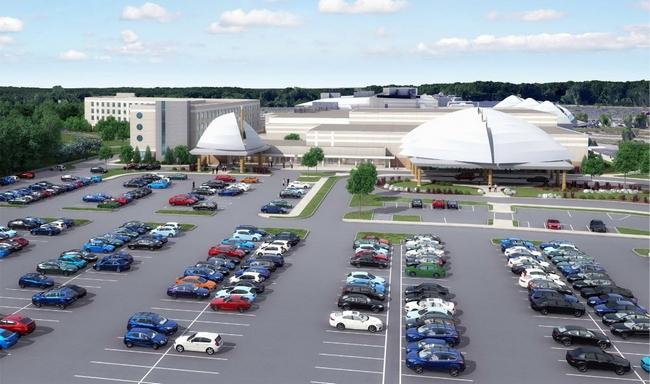
Jottings: A 40,000-square-foot augmentation of the gaming floor at Bally’s Twin River Lincoln Casino Resort (whew!), featuring 355 new slots, 57 more table games and that wave of the future, electronic table games. The $100 million expansion was partly underwritten by Rhode Island itself. Enjoy it now before cigarette smoke gunks it up … It looks like that Coney Island casino is down for the count but New York Mets owner Steve Cohen is stepping into the ring. He’s deploying 24 lobbyists to pitch a probable Hard Rock International casino. Cohen’s had some problems with the SEC in the past but that’s nothing compared to Bally’s Corp., which is partnering with convicted felons … Nebraska‘s Warhorse Casino, near Lincoln, is about to start taking sports bets. The target date is around Memorial Day, in time for the College World Series and NBA finals.
Quote of the Day: “I remember one of the companies excitedly told me about Jay-Z. ‘He’s coming on board. Maybe you want to meet him?’ I go, ‘No, not particularly.’”—New York State Senate Finance Committee Chairwoman Liz Krueger (D), on Caesars Entertainment‘s poster child for casinos in New York City.
