


Mincing few words, MGM Resorts International CEO Bill Hornbuckle sent a letter to all employees, urging them to quit dithering and get their Covid-19 vaccinations, if they haven’t already. He pleaded, “In addition to the heart-wrenching thought of more illness and death, I fear that progressively more restrictive measures, including a return to social distancing and capacity restrictions, could be around the corner if we continue on this path. This would be a significant blow to our community, industry, and economy.” Clark County‘s current vaccination rate currently stands as a dismal 44%. The county is reliably “blue” territory, so this crisis goes beyond political chumming of the anti-vaxxer waters. Playing to his audience’s wallets, Hornbuckle warned that, as Las Vegas‘ health goes, so does its economy. If Coronavirus worsens and scares tourists away, furloughs and layoffs could follow. He wrote, “After the pain endured by so many these past 16 months–and the tremendous progress made in 2021–I can think of no more damaging scenario for us as a community.”
We think that Hornbuckle and others in like positions in Big Gaming are stopping one step short and need to mandate vaccination for their workers. If little outfits like Google, Facebook, Twitter, Netflix, Lyft, Morgan Stanley, Saks Fifth Avenue, The Washington Post, Ascension Health and BlackRock can do it, MGM can. We know you’re feeling cabin fever and ‘pandemic fatigue’ out there, America. We feel your pain. It would be great if events ran in a bright, linear fashion. But this is a war, a once-in-a-century calamity and, had we been so easily discouraged in the 1940s, the Axis powers would have won World War II (gladdening the heart of Imperial Palace founder Ralph Engelstad).
Yes, the pandemic has already put a helluva wallop on Las Vegas’ economy—to the tune of $34 billion in lost business. According to economist Jeremy Aguero, gone were 125,600 jobs. Not even Orlando‘s workforce is so tourism-reliant (28.5%). And you thought the Great Recession was bad for Sin City. “Compared to recent recessions, the COVID-19 recession’s magnitude was unprecedented in its depth and speed … While the economic losses in 2020 were material, it is worth noting that many of the economic conditions and shortfalls have persisted into early 2021,” Aguero wrote, inspiring the Las Vegas Review-Journal to observe, “the immediate future isn’t particularly bright.” Room cancellations at Caesars Entertainment, according to an internal memo obtained by Vital Vegas, have spiked to 42%, the worst rate since December 2020. Scott Roeben thinks it’s the cascading mask mandates but we take a longer view and contend that it’s re-emergence of Las Vegas as Covid Central. Do you want a good economy, Dear Reader? Do you want a job in Sin City? Do you really want to relive 2020? Then get those shots!
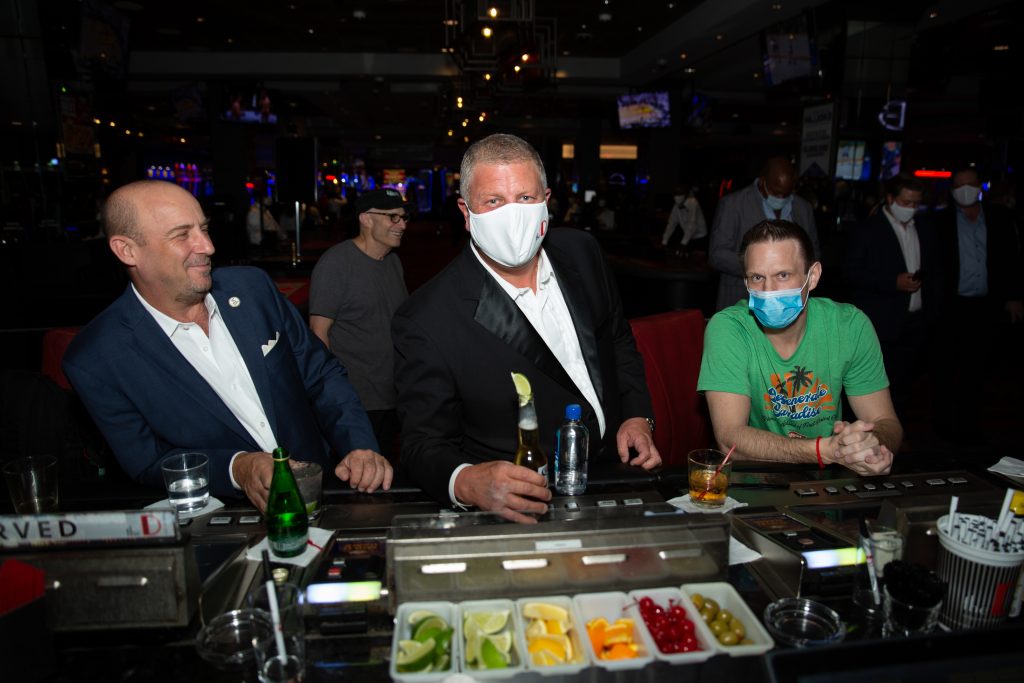
One casino owner who’s stepping up to the plate is Circa‘s Derek Stevens. His property will hold vaccination events August 2 and 3. The general public is invited, with attendance restricted to age 21 and higher on the 2nd, while you can bring the 12-through-21 year olds on the third. Kudos to Stevens for his civic spirt. We have qualms about Stevens using the clinics as a media event but if raising consciousness and getting people to overcome their vaccination fears are the endgame, who are we to frown?
We promised to fill out yesterday’s coverage of June’s Nevada gaming numbers when we had a complete picture and today we do. The R-J put a screwy spin on the results, crediting the opening of Resorts World Las Vegas (June 24) with putting the Silver State over the billion-dollar mark. Explain then, please, why gaming revenue was down on the Strip last month? Let’s wait for a revenue-positive month on the Boulevard before we fall all over Resorts World. Yesterday we chronicled big jumps for Downtown and Reno. Today we can add the Boulder Strip ($97.5 million, +46.5%) and miscellaneous Clark County ($147.5 million, +48.5%), to say nothing of Lake Tahoe ($31 million, 89.5%). Lesser gains were made by North Las Vegas ($24.5 million, +8%) and Laughlin ($43 million, +8%), with the Elko region ($30 million, +14.5%) falling somewhere in between.

Vegas visitation continues to improve incrementally, down 17.5% from June 2019 but better than last May’s -22%. Citywide occupancy stood at 92% in June 2019, last month it was 76% (in a market diluted by the Resorts World opening). Counterintuitively, supply didn’t affect demand. Even with so many more rooms available, hoteliers charged +4% on the Las Vegas Strip than in 2019. Weekend occupancy averaged 89.5% (-9%) while midweek trade ran at 71% (-19%). Incidentally, the National Indian Gaming Association provided the year’s first convention success story, with a best-ever 7,000-plus attendees. Air travel is still somewhat anemic but drive-in business boomed, with a 10% boost at all major interstate highways.
“Hungry Like the Great Wolf,” was how Truist Securities analyst Barry Jonas characterized Vici Properties, reporting bullish 2Q21 results. Not only are all gaming tenants paying their rent on time, Vici is diversifying, particularly with a $79.5 million loan to Great Wolf Lodge in Perryville, Maryland, to finance a water park (Bart Blatstein, are you listening?) Vici is keen on water parks, which execs call “casinos without gaming.” Great Wolf can tap another $300 million in Vici loans if needed. While the company’s main focus will remain on gambling (it expects to close soon on the Venelazzo sale and start collecting $250 million a year in rent), it’s reassuring to see it branch outwards. It’s also handling potential sales by Caesars Entertainment of its two Indiana racinos. Added Deutsche Bank analyst Carlo Santarelli, “within the context of broader gaming, we believe VICI, as well as peers, are attractive in light of the fact that its dividend yields are higher than some of their tenants free cash flow yields, a dynamic which makes very little sense to us, but nevertheless provides valuation support to our view.”
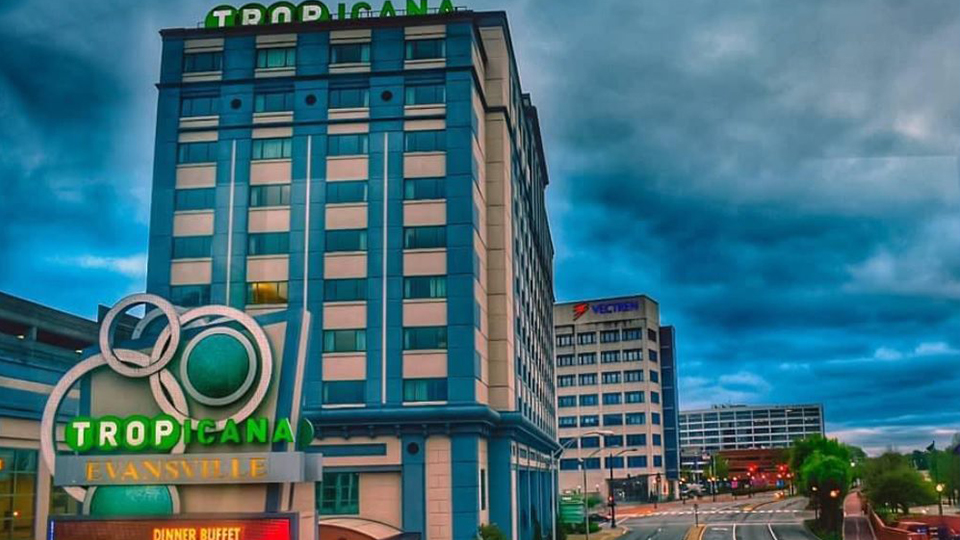
A rival REIT, Gaming & Leisure Properties, reported 2Q21 numbers “that were nicely ahead of estimates,” wrote JP Morgan analyst Joseph Greff. He attributed the largesse to the addition of Dover Downs and Tropicana Evansville, purchases that closed June 4. Boyd Gaming also is now paying higher rent for its GLPI-owned casinos, which include Belterra Park in Indiana. The sale of Hollywood Perryville to Penn National Gaming didn’t close quite soon enough (July 1) to further boost the numbers, although GLPI was able to keep $500 million worth of powder dry when Bally’s Corp. proved liquid enough to finance its purchase of Gamesys singlehandedly. “We continue to like the stability of GLPI’s triple net lease REIT business model and its attractive, safe, and likely growing dividend,” wrote Greff, adding, “This should make for an attractive risk-reward in a risk-off market for our coverage universe, which we note has sold off on three investor concerns relating to (1) sustainability of strong top line trends and elevated margins relative to pre-pandemic levels, (2) spikes in Delta variant infection rates and recent mask mandates, and (3) a general risk-off market particularly with regard to ‘re-opening’ sectors such as gaming.”
Truist’s Jonas was also buoyant, reminding investors of GLPI’s continued merger-and-acquisition activity and desire to diversify beyond gaming. Rents, cash flow and other metrics were right in line with Wall Street‘s expectations. Management was in a sanguine mood, according to Jonas: “GLPI noted COVID resurgence has had no impact on M&A discussions” and not only has the company been without a CFO for 11 months, it is in no hurry to fill that vacancy soon.
Jottings: High room rates at Venelazzo may be deceptive: Las Vegas Sands is trawling for locals’ business with discount offers at a host of restaurants and at Canyon Ranch Spa. Free wine! Cheaper food! Sands isn’t normally this george, so carpe diem, friends … Gannett newspapers are the latest media outlets to whore themselves to sports-betting providers. Tipico Group will be Gannett’s sole provider of betting odds, paying a referral fee to Gannett for ever punter who clicks through to Tipico. “It is unclear what benefits these deals have yielded,” reported Reuters, noting a failed alliance between Gannett and BetMGM … Derby City expansion is back “on” again. Churchill Downs announced that a $76 million hotel and 200 new gambling positions are slated for the Louisville offshoot … That darn Coronavirus is playing hob with the schedule for the $3.3 billion expansion of Marina Bay Sands. A 2025 completion looks iffy but don’t worry: Las Vegas Sands has until 2027 to finish … Stuck with $28 million worth of casino-zoned land but no seed capital? What to do? Donate it to the Boys & Girls Clubs, that’s what you do if you’re Biloxi entrepreneur Chris Ferrara. His project was doomed by the same lack of vehicular access that killed off Margaritaville. Still, his beyond-generous gesture makes him our George of the Year.

Nevada is reporting a 15% Covid test positivity rate, yet some folks still think people should just ignore that and power on like we live in Somalia… I. too am amazed by the inactions of Hornbuckle and the other CEO’s, I see a house of cards about to crumble, and they see an apple cart filled with weekend goodies they don’t want to topple. Either Las Vegas beats this or not, and the implications of the not in that equation are stark. Home prices will not stay robust forever, stimulus cash will not flow forever. We have to beat Covid both here and abroad to save Las Vegas, the notion that busy weekends need to be prioritized over human life and safety is surreal, ignorant, and massively shortsighted. Hornbuckle wants to tip toe around and not offend anyone, same with Stevens, as if the “rights” of the unvaccinated are more important than the lives and livelihoods of the society as a whole.
Michael, I think you forget that we are not China or Russia, or other non-democratic government and society. The rights of the unvaccinated are just as important as the rights of the rest of society. Our freedoms demand that. It may defy logic, and it may be unfair, but that is our constitution. People here are free to, pretty much, do as they choose. If they can force people to get vaccinated, they can force anyone to do anything, by government decree. Not going to happen here without a fight. That is technically why we have the second amendment. Consider that if they declare, and some in our government are already pushing for, that all fire arms are a health hazard, then they can force you to turn them in? Cannot own a car because the emissions from a car are killing the planet, and a car can also kill someone (drunk driving). Make automobiles a health hazard. Although I think we should all get vaccinated (both my wife and I are, early on), you cannot force other to do so. Should there be consequences for not getting jabbed? That is a tough one also. A business has the right not to serve anyone, and you can be removed if trespassing. No shirt, no shoes, no Jab, no service, leave. Vegas casino’s could do that, but they will not. Enough people get really sick, people will stop coming, and they will get the message.
I do not think the government mandating the Covid vaccine is the path forward, I think it’s up to the airlines, restaurants, spots franchises, casino/resorts, and private businesses to mandate that customers be vaccinated. I guarantee that twenty thousand cheese-head vaccine holdouts in Green Bay Wisconsin will roll up their sleeves if the Packers require it for the safety of the fans they are hosting. The convention business is 100% not coming back to Las Vegas unless something changes, the sooner the bigwigs at the top of the casino business realize that their fate is threatened the better. This is unsustainable, businesses will not send their employee’s to meetings to get sick. And the more used to having virtual business meetings the corporations get, the less likely they are in the future to have them in person, it saves them tons of money. I say get bold Las Vegas, if the plan is to ride the coat tails and the status quo, it’s a very bad plan…