

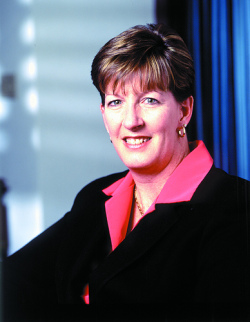
 In terms of turning around Isle’s financial performance, do you feel the full 180 degrees have been achieved yet? We’ve had a couple off different priorities over the last few years, as far as our strategic initiatives. One was to become a stronger operating company and we’ve made a tremendous amount of progress. One was — particularly during the Great Recession — to create experiences of values for our customers. We’ve very, very engaged with our customer base, not only through social media but through constant, ongoing research projects where we talk to our customers all the time. Rather than assume what is important to your database, we get out and talk to them at least two times a year, in many cases more than that. [We] ask them to rank what is most important, both in terms of the gaming experience and our employees, and then ask us to rank us on performance. To the extent that there’s a gap between what the customer is telling us is important and our delivery, it gives us a blueprint to improve our operations and we work on that.
 During the Great Recession, although customer spending decreased our visitation actually increased. So at a time when leisure dollars were very precious to our customers, we were clearly giving them an experience that was of value to them, even though they didn’t have as much to invest with us. We have, because of the economic issues, instituted profit-enhancement exercises, which has helped us decrease our expenses and improved our margins at most of our properties, and we’ve also paid down a significant amount of debt since this management team joined the company [in 2007]. There are a lot of things that are moving in the right direction. Operating in what we are referring to as “the new normal” means that you have to make some adjustments. Any company in any business environment that is not willing to make changes is obviously going to face significant problems and I think we have been good or strategic about making the changes to our business model that we needed.
 This is obviously a presidential election year. Some of the volatility we’ve seen, as far as economic conditions, is directly related to the political situation in Washington. Both parties have a tremendous amount at stake. The consumer’s paid the price for this gridlock that we’re seeing in Washington and are very frustrated. People are looking for a change. I am encouraged by what we have seen from the economy since Thanksgiving weekend: a strong Black Friday. I don’t know if you saw the Iowa [casino] results for December. Part of that was the calendar but part of that was improving consumer sentiment. Hopefully we go into 2012 with a little wind beneath our wings.
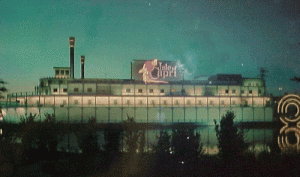
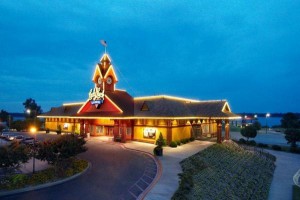 Because of capex – or a lack of it – Isle has acquired the nickname “Pile of Debris.” What’s it been doing to reverse that perception? We’ve been working very, very hard to erase that perception since this management team joined the company. We acknowledge that we have some deferred-maintenance capex issues across the enterprise. Where we have the ability, based on our balance sheet, [we have] made some changes to our properties. We have plans to make additional changes as the economy improves. Whether it is the Lady Luck rebrands that we have done [as at the former Casino Aztar in Caruthersville, right], which have generally been very efficient in terms of the capital we have invested, we’ve completely changed the perception of the consumers. Our consumers, if you talk to them, they tell us that they believe these are very different properties as a result of the capital that we have been able to invest and the operating changes we’ve made, and quite frankly, just the focus we’ve put on cleanliness, which is very important what our customers tell us is most important to them. So as we have the ability to continue to reinvest in these assets, that will continue to change peoples’ opinions.
 With so many new U.S. markets potentially opening, including just downriver in Kentucky, where would Isle like to expand? You have to do exactly what we did in Cape Girardeau. At the point that the last license became available in Missouri, because we are a Missouri-headquartered company and have significant operating experience here, we were contacted by just about every potential developer of a property in the state. Once they had either selected their site or what community they wanted to be in, they would ask if we would be willing to be a partner or operator. We took a good, hard look at the state and said, ‘Where do we believe the best opportunity is?’ We believed there was already saturation in the St. Louis market and in the the Kansas City market [above], so we started to look outstate. Cape Girardeau is the largest city between St. Louis and Memphis, a largely underserved market and that was exactly the kind of place we believed you would be able to get a good return on the capital you were investing.
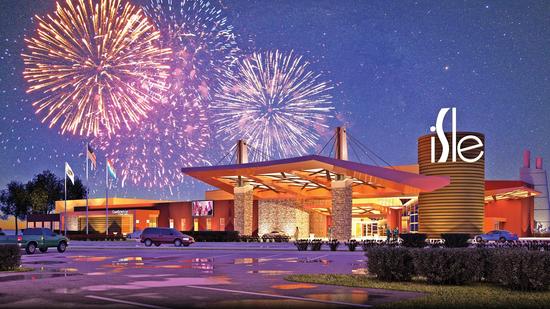
Wall Street analysts expect financial fireworks from Isle of Capri’s forthcoming Cape Girardeau casino.
One of the things the industry is truly coming to grips with is you have to make good capital decisions. Deployment of capital is really going to define a company’s success in the future. We believe the Cape provided the right opportunity for that. Any other opportunity we would have to look at the same way: Is it an underserved market? What’s the potential? Are there saturation issues? Are there potential competitive issues? You make decisions based on what you can spend and what the realistic return is, and if it’s not something you believe is feasible we just wouldn’t do it.
 You’re also a veteran of the Atlantic City market. What do you make of what’s happening now and are there things not yet being done that should be? It’s wonderful that Revel is opening. It will be a much-needed shot in the arm for Atlantic City and very similar to when Borgata opened. The folks that Borgata had defined as Atlantic City defectors, there were a lot of people who made a purchasing decision that they didn’t like what was in Atlantic City. Borgata gave them a reason to come and try something new, and succeeded in growing the market. Revel will certainly do the same thing on an even grander scale, so you will have trial in that market for the first time in a long time, and that’s always a good thing. It depends on the operators, whether or not they put their best foot forward from a marketing perspective. There’s obviously some pretty smart operators and I have faith that they will do that.
 There are some properties that are going to be under pressure. You hear all the time people talking about whether there’s going to be one or two or three that close. You are going to have a capacity issue and Revel is going to put some pressure on, so it will be interesting to see what happens. Atlantic City’s problem is the expansion of gaming in the United States. if you went back to when I started working in Atlantic City in 1981, there were only two places in the United States where you could gamble legally. The world has changed dramatically and there are those who say Atlantic City was a lost or a missed opportunity because of not being able to capitalize on the East Coast monopoly. But Revel will be an awakening for the city and we’ll see what they do with it.
 There used to be a mentality that, if you’re not operating in Las Vegas you’re missing out. Can a company thrive without a Vegas presence? Absolutely. If you look at the Caesars [Entertainment] business model, they benefited tremendously from stringing their regional operations together across the United States in their hub-and-spoke model, using that as drivers to their destination resorts. They built loyalty in the regional markets because people wanted to go to the destination markets. There’s enough independent operators in Las Vegas that, to the extent you want to partner with somebody, there are lots of opportunities for us to send our customers and the regional markets have changed enough that you don’t have to have a destination driver, although it’s nice to have.
 Any fond or not so fond memories of working for The Donald? [Laughs] It was an interesting two years. Learned a lot from that process and from Mr. Trump as it relates to branding. I have been a marketing professional for most of my career and when you look at what he has been able to accomplish with his empire and even with “The Donald” as a brand, if you look at any of the books that he has written or that have been written about him, he truly knows how to leverage that. That’s a very valuable lesson that I learned in terms of wrapping your brand around everything that you do. One of the other things we learned from him was the concept of setting the table: understanding who’s going to be in a meeting and what everybody is going to try to achieve walking out of it and, quite frankly, making sure from a negotiating stance or process that you know what you want to get out of this and that you’re ready.
So he didn’t call you into a boardroom, poke a finger at you and say, “Yuh fired!” [Laughs] No, and I may be speaking out of school a bit, but I also had the opportunity to meet a very different Donald Trump on a number of occasions. I remember a board meeting that we had at his resort at Mar-a-Lago where Donald had a baby on his hip and was walking around. He wasn’t Donald Trump; he was just a proud daddy.

Hopefully in 2012 gas prices will remain below $4 dollars a gallon and Europe can figure out a way to get out of the financial sovereign debt crisis they are in. If both those key indicators get better in 2012 the economy should improve.
Having dealt with executives of large companies I am no stranger to executive double speak, but Virginia seems to have taken the fine art to the virtuoso level. We have been patrons of the Pile in Kansas City market, and I can tell you that the actions she describes here bare little to no resemblance to what is happening on the ground. She says “very very engaged with our customer base..talking to them all of the time”. We say we receive surveys constantly from Harrah’s and Ameristar asking us what we think, but nary a one from our friends at the Isle. Nor has anyone in the place (like a casino host for example) stopped and asked us what we think.
She says “we were clearly giving them an experience that was of value to them, even though they didn’t have as much to invest with us.” We say we agree the unending series of video poker downgrades you have undertaken in the Kansas City market to schedules that make the penny returns look attractive in comparison definitely provide value, just not to the customer.
The board of directors at the Isle may find these comments comforting, but if she thinks she is fooling the people that patronize her establishments she is mistaken.
Wow. You gave her a golden opportunity to crap all over Trump and his casino company. She took it and responded gracefully. Very classy of her.
Once again a great interview!
On Isle…one of my favorite Dan Lee quotes of all time calling Isle: “the Motel 6 of the industry”. Regardless of what you think of him, he is probably spot on with that one.