
“We are in an envious position when it comes to this growth opportunity. Few companies can match our 40 plus years of experience in sports wagering, our significant sports betting infrastructure here in Nevada and our growing geographical  footprint across the country,” said CEO Keith Smith about new Boyd Gaming sports books in Shreveport, Biloxi and Valley Forge. What Smith knew and gaming analysts didn’t was that Boyd was about to act as the distributor of sports betting for MGM Resorts International and GVC in a new joint venture between the latter two companies. MGM and GVC — who will both put $100 million into the kitty — will piggyback off Boyd’s casinos (as well as MGM’s own), thereby gaining access to Illinois, Indiana, Iowa, Kansas, Louisiana, Missouri, Ohio and Pennsylvania.
Deutsche Bank analyst Carlo Santarelli gave the joint venture a rave review, writing that “GVC will bring its technological expertise, while MGM will provide 15 state licenses, thanks to the partnership with BYD, and a database of ~30 mm potential customers via M Life.” “From MGM’s perspective, the deal looks to be primarily about gaining a technology and operational partner for sports betting and online casino and poker in the U.S. market as more states roll those products out,” added Internet-gambling expert Chris Grove.
Jefferies gaming analyst David Katz thought the deal may have been born of necessity, writing, “A large bookmaking enterprise  may be a lot more complicated than MGM thought.” If it’s a win-win for GVC and MGM it’s a win-win-win for Boyd, which gets to participate in the action without having to put up any equity, nor have to bear any of the consequences if the deal goes south. While the company remains in an expansionist mode, Smith downplayed the possibility of Las Vegas-area acquisitions, citing high for-sale prices.
* Gaming pundits won’t have Dover Downs CEO Denis McGlynn to kick around anymore. The racino has been sold to Twin River Worldwide Holdings, best known for its two Rhode Island casinos but also possessor of the ex-Hard Rock Biloxi and a racetrack in Colorado. Between new, broader sports-betting rules 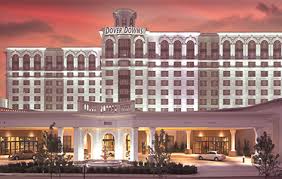 at Dover Downs and a comparably recent tax break, the racino was an attractive takeover candidate. The parties to the deal are characterizing it as a merger but we know who’ll be calling the shots. Once the deal closes, the combined company will go public.
Said McGlynn, “Becoming part of Twin River will be transformational for us. [I’ll bet!] It will make for a more stable, stand-alone entity that will invest in our people, our marketing program and our facilities so we can compete at the highest levels … We’ve been operating bare bones for years. But we’ll have to see down the road what the synergies are.” State Sen. Brian Bushweller threw shade on McGlynn, saying the acquisition was a case of “merging Dover Downs with a larger organization that I think can bring a lot of stability, creativity and a bright future to Dover Downs.”
For its part, Twin River promised reinvestment in Dover Downs. Spokeswoman Patti Doyle also said “The expertise that Dover Downs has in sports wagering is going to be of value to us as we prepare to launch that amenity in Rhode Island in the fall. The expertise that Dover Downs has in the online gaming sector may be leveraged in other properties.” It’s another win-win scenario in a week that’s been full of them.
* Neil Bluhm is going to get his wish. The Massachusetts Gaming Commission is set to take another look at putting a casino in Brockton. Ominously for the stalled Mashpee Wampanoags, the MGC will reconsider the situation in the southeastern region, promised a casino in the enabling legislation but still without one. Encore Boston Harbor is absent from the agenda but the MGC has given itself until autumn to resolve that issue.
* Greenwood Gaming & Entertainment got run out of Carlisle, Pennsylvania, and received a frosty reception when asking South Middleton to reverse itself on hosting a casino. The  criticisms were predictable ones but the voices of support include Union Fire Co. Chief Dave Weaver, who said, “We can only be taxed so much. It’s time we think outside of the box to ease the tax burden.” According to PennLive, Parx Casino CEO Tony Ricci promised “$2 million revenue that would be split between the township and Cumberland County, an additional $250,000 in supplemental funding, 250 jobs with an average salary of $42,000, and synergies created with area businesses.” It remains to be seen whether township leaders find that a sufficiently enticing case to reverse their earlier decision.
* Leaders of a pro-casino ballot question in Arkansas came up way short in their collection of valid signatures. They needed 84,859 and the Secretary of State’s office was able to certify only 70,054. Driving Arkansas Forward, as the initiative is called, will be given another month to make good on its signature-collection quest. The goal is to legalize racinos in Hot Springs and West Memphis, as well as create two new casinos in Pope County and Jefferson County.

[…] to opt out of mini-casinos, the Middleton board of supervisors voted against opting back in. This will not sadden many in the populace. Greenwood lawyer Mark Stewart implored, “We bring with us hundreds of good […]