
If MGM Resorts International thinks its federal lawsuit against victims of the Mandalay Bay Massacre will be a speedy way of disposing of all pending cases, it may be in for a rude surprise.  Legal experts say the matter could drag on for years, possibly going all the way to the Supreme Court. Why? In part it’s because the Safety Act of 2002 has never been tested in a court of law. Thus, MGM has no legal precedent to cite, merely some statements by Department of Homeland Security Secretary Kirstjen Nielsen that “make clear” that mass murderer Stephen Paddock committed terrorism. Washington, D.C.-based attorney Brian Shaw calls MGM’s case “far too broad of an interpretation of the statute. It should be fairly clear that what MGM did is not what was intended in the statute.It is [Nielsen’s] responsibility, not that of a judge.”
Boston College Law School Associate Dean Alfred Yen added that the Safety Act lacks clarity and, whatever the outcome, appeals are inevitable: “This is a high-stakes, controversial case. A court would be very careful not to rush to a judgment on this. It is going to take a long time for a court to decide the merits of this case.” MGM, meanwhile is sticking to its story, that it is doing this in the best interests of the shooting victims. We doubt they see it that way.
* Ohio may be the next domino to fall as sports betting spreads across this great land of ours. Or not. Bill sponsor state Rep. David Greenspan says, “There are no preconceived notions as to what that pathway may look like nor is there a time line. We’re not  beholden to a time line to get it done by a certain date, nor are we going to be forced to do something that is not ready.” There are those who, if not outright opposed, want it to be an adults-only pastime. “I think for 18-year-olds you’re opening a can of worms because it’s the first time that they’re coming to college, it’s like having a credit card, you know it’s tough to have the checks and balances and as a parent I would be petrified to have to deal with that, as a coach it very much scares me,” remarked Dixie Jeffers, who coaches womens’ basketball at Capital University.
Jeffers’ boss, Roger Ingles, raises the specter of point-shaving, a concern shared by former UNLV athletic director Mike Hamrick, who once saw a Runnin’ Rebels basketball player pass up a sure-thing shot in favor of dribbling the clock, thereby failing to cover the spread — much to the dismay of the crowd.
Speaking of sports betting, casinos in Mississippi appear to have been caught flat-footed by its legalization, meaning that sports wagering will become law without Mississippians having anyplace to put down a bet. Considering the length of the runup to the July 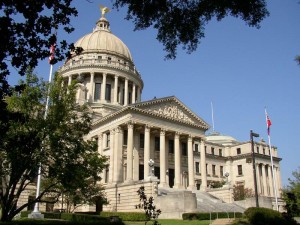 31 kickoff date, casinos don’t have a very good excuse for not being ready to take some action. “Right now, the ones wanting to get started are still in the renovation phase,” said Mississippi Gaming Commissioner Allen Godfrey. Fifteen casinos haven’t even applied for permission to open a sports book. Talk about leaving money on the table! As things stand, bettors will probably have to wait until mid-August to lay their wagers down.
* Although he calls the casino-legalization bill in Japan “far from perfect,” Union Gaming Group analyst Grant Govertsen believes the gaming industry can declare victory. As for casinos spreading beyond the initial three to as many as seven more cities, Govertsen thinks that’s a decade away. “Quite frankly, seven years 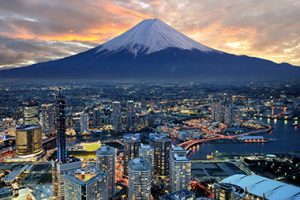 from now we’ll be lucky if any of the [megaresorts] have been operating for as much as one year,” he told a reporter. In that context, and as Japanese citizens get to experience [megaresorts] over a several-year period, the public opinion will probably turn positive and thus make expansion more palatable. That said, even in a situation where there is public support, we would not envision a wholesale expansion of gaming. Rather, we’d expect very measured expansion with one or two IRs approved at a time.”
Macao needn’t worry: “At the margin we could envision Japan siphoning off a few percentage points of VIP play from markets like Macao,” Govertsen said, adding that — given the time lag between now and when Japanese integrated resorts hit the market — a lot of other (unspecified) factors could impact Macao instead.
