


That’s what Credit Suisse analyst Ben Chaiken had to say about MGM Resorts International, citing strength in regional casinos, Las Vegas and sports betting (in that order). First-quarter cash flow exceeded 2019 levels, aided in part by “strong demand reaching ’19 levels … Las Vegas is accelerating, with growth supported by easing government restrictions, an improving event calendar, and pent-up demand. March was one of the best gross booking months in the company’s history.” Non-gaming amenities have lagged gambling and room revenues as recovery metrics, which could be crucial, as they account of 75% of revenues and are at the mercy of capacity restrictions. Elsewhere sports betting and Internet gambling “look very promising.” Nationally, BetMGM has 25% i-gaming market share and 17% of OSB. “Benefits appear to be flowing both ways, with 10% of BetMGM’s new customers coming from MGM, while 44% of new MLife signups coming from BetMGM.” Management was even upbeat on Macao, seeing positive customer trends—as did Melco Resorts & Entertainment—ahead of critical Golden Week.
Chaiken’s opposite number at JP Morgan, analyst Joseph Greff, bumped his stock-price target from $37/share to $45 (it currently trades at $42). He called the 1Q21 numbers “solid, with impressive momentum in Las Vegas. Momentum here commenced in mid-February and has continued thus far into April.” Occupancy on the Las Vegas Strip is running at 73%, which is pretty darned impressive in light of zero convention activity. Weekends are seeing 90%-plus occupancy “indicating strength in the leisure segment and MGM’s efforts to tap into its casino database to fill rooms at present gaming capacity.” Further helping the comeback is an anticipated return to 93% of pre-pandemic airlifts into Sin City in June, escalating to 99% in July. “This airlift support bodes well for the return of group business, which, with what’s on MGM’s books for 2022 and 2023, is at pre-pandemic levels,” Greff wrote. Cash flow on the Strip is expected to achieve 90% of 2019 metrics by next year.
Strip revenues for the quarter where $545 million (Greff had predicted $493 million) and regional casinos contributed $711.5 million, above a projected $705 million. A slight decline in table wagering was offset by higher slot coin-in. BetMGM grossed $163 million for an operating loss of $59 million. The parent company intends to invest $450 million in BetMGM as does joint-venture partner Entain, with the goal of reaching $1 billion in net revenues next year. Only MGM China ($296.5 million) was a cause of caution, with Greff ratcheting down his cash-flow projection by 23%. (What a reversal of fortune.) Overall, MGM is sitting pretty on $6.2 billion of cash, mostly domestic.
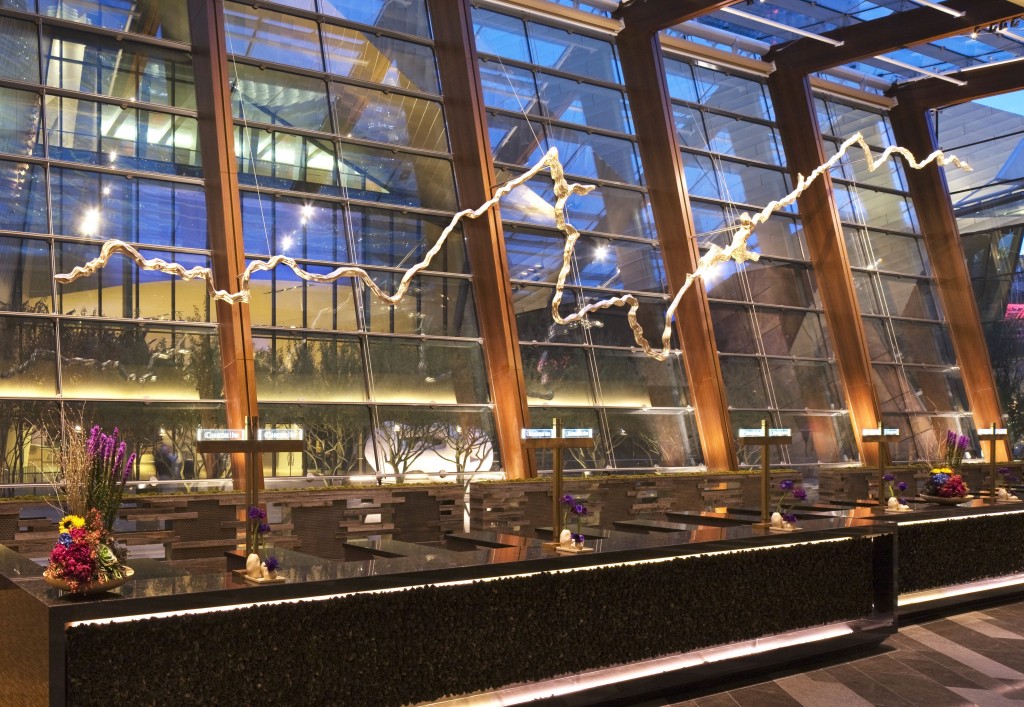
Two of the customers fueling MGM’s Strip resurgence are healthcare workers Charmaine Lamsin and Dennis Bowman, who parlayed a $33 airfare and an unbelievable $85/night Aria room rate into a bargain Vegas vacation. They’re symptomatic of an influx of travelers who are bringing Sin City back sooner than anticipated. Lamsin and Bowman told MSN that Vegas had ‘never felt cleaner,’ given all the safety protocols the industry has put in place, some of them mandated by the so-called Adolfo Fernandez Bill, named in memory of a Covid-killed Caesars Palace employee. Cashless gambling is gaining traction—as are casino revenues. As reported yesterday, March casino revenues for Nevada nudged above $1 billion, the first time they have reached their accustomed level since prior to the Coronavirus onslaught. Resorts World Las Vegas, meanwhile, is hoping to ride a tailwind from the return of conventions in June. “You can’t survive on [leisure traveler] forever. We know that this city’s all about conventions and the other segments,” resort President Scott Sibella told MSN and he’s got $4.3 billion in product riding on it.
Could the latter quarters of 2021 actually surpass 2019’s record levels? Some think so and restaurateur Ryan Doherty says business is already better than it was two years ago. “Vegas is full of hospitality workers, so when it’s busy, everyone here is making money, and they’re going out and spending money,” he said. (We might add that our spies tell us the recreational-marijuana industry is, shall we say, riding high.) Nor is the recovery confined to the Strip, as tourists fan out in search of new experiences. “About four to six weeks ago, there was definitely a clear kind of shift in the energy,” reported local coffee-bar owner Josh Molina. “It’s light somebody turned on a light switch.”
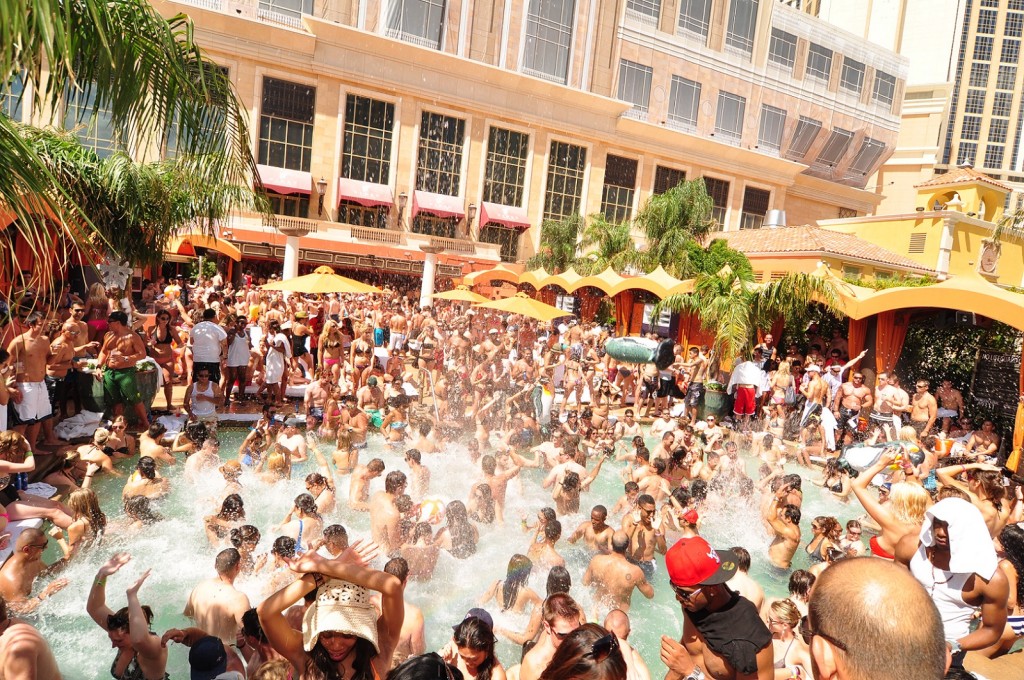
Nightclubs are going to be driving a harder bargain now that Hakkasan Group has been purchased by Tao Group Hospitality, giving the latter 61 nightspots in 22 markets. In Las Vegas alone, Tao will control nine of the top night- and dayclubs. Hakkasan managers will remain in place, as Tao evidently likes how they do business. Said Tao co-CEO Jason Strauss, “As indoor dining and other hospitality experiences start to return to regular operations, we believe our newly combined company will be well-positioned to take advantage of this pent-up demand, setting the stage for long-term growth.”
Sports books in Colorado notched $300 million in handle last month, their second-best tally. Books doubled their February haul, grossing $20.5 million. However, $9 million in promotional outlays cut deeply into that—and into state tax revenues. “Those promotional credits have been a nagging issue that has really kept the state from realizing its full tax revenue potential,” reported PlayUSA analyst Jessica Welman. “On the optimistic side, it could be just that it takes time to work through those credits from the heavy promotion in the state industry’s early days. But if tax revenue remains lackluster, the issue may need to be fixed.”
Professional basketball led the action, generating $107 million in handle. College basketball drew $71 million, followed by hockey ($14 million), tennis ($11 million), soccer ($9 million) and Colorado fave table tennis ($9 million). “Most markets are locally driven, so when local teams do well, betting interest rises. But nowhere is that more pronounced than in Colorado,” concluded PlayUSA analyst Ian St. Clair. “Considering the circumstances Colorado launched under, at a time when major U.S. sports were dormant, the state really has been one the U.S. sports betting industry’s great success stories.”

Not to be done with PlayUSA, it is pegging Maryland to be a $225 million/year revenue state engendering $3.1 billion in handle once it matures. That’s $35 million/year in tax revenue for those keeping score in Annapolis. “The best predictor of a successful market has been whether it is designed to foster competition among numerous operators, which Maryland has done,” said analyst Eric Ramsey. But don’t go spending that tax money just yet, solons. It is expected to take Maryland three years to reach PlayUSA’s benchmarks. Added Welman, of the Free State’s wide-open, 60-skin playing field, “we know this structure won’t scare away any potential operators … There are questions unique to Maryland about whether local operators will be able to compete with the DraftKings and FanDuels of the world, which will surely be coming. Or if the state’s inclusion efforts will affect the early growth of the state’s industry. But the bottom line is that sports betting should be a reliable revenue generator for the state.”
Nor will it hurt to have two NFL teams, two MLB franchises and nine Division I academic programs to tap for action. However, there are some constraints. Sports betting is legal on all sides of Maryland, so importation of bettors is highly unlikely. Also, the relatively small population size is comparable to Colorado’s, which provides a limited ceiling for growth. But there’s always table tennis …
Finally, we overlooked a casino-industry connection to the White House‘s recent recognition of the 1915 Turkish genocide of Armenia. A reader writes in to gently remind us of gaming’s most illustrious Armenian-American, casino owner and humanitarian Kirk Kerkorian. (How could we forget?) “Kirk Kerkorian was a proud Armenian and spent freely in support of it during times of need. Reportedly over a billion dollars since the earthquake of 1988,” he writes. “The genocide of over 100 years ago which was memorialized last Sunday, April 25th was very important to him. He lobbied the U.S. government in support of getting our President to actually use the word ‘genocide’ during the memorial observance for several years, and Joe Biden was the first President who would do so.
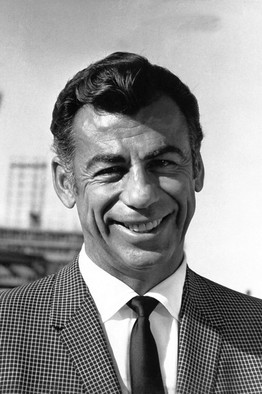 “Kerkorian also produced an epic film about the genocide that was titled The Promise. Released in 2017, it starred Christian Bale, who is probably the most notable actor to American audiences. Costing about $100 million to produce, it didn’t make much, but can be seen on Netflix. Appeared to be a final labor of love for Mr. Kerkorian, as it was released shortly after his death.” Watching The Promise has been added to our to-do list. And we are only too happy to note Kerkorian’s good works on behalf of his ancestral land.

Vital Vegas is almost never wrong, it certainly appears The Palms has been sold to a Southern California tribe, The San Manuel Band of Mission Indians… This is both gigantic and potentially good news for the average Las Vegas gambler/visitor. San Manuel is not going to sit there and wait for people to visit in my opinion, they will offer us goodies and a competitive product. For far too long the consumer has been ignored or taken for granted, Big fabulous high end resorts are fine to visit, I applaud Resorts World for creating some major hype, I am amped to see it in person. But if a place is going to get me to keep coming back it must offer more than eye candy and exotic, tasty food. San Manuel has always tried very hard to lure customers in, they are investing nearly a billion dollars, so I expect them to get aggressive and run promotions…
The sportsbooks across the country should think long and hard about offering bets on the NFL Draft, the incredible teeter totter of action around the overall third pick the San Francisco 49ers made smells like rotten fish… For several weeks they were booking bets on that choice, Trey Lance was around 15 to 1 for a long time, the favorite was Mac Jones, second choice Justin Fields. Then things went wild the last couple of days, Trey Lance’s odds tumbled, when Draft Pundit Daniel Jeremiah mentioned the morning of the Draft that Trey Lance might just be the pick his odds became less than even money, and the 49ers picked him. Anyone associated with these supposedly confidential decisions could have placed bets for weeks, this situation is ripe for “insider trading”, and the gigantic plethora of new outlets across the country make it more difficult for investigators to find wrongdoing, if investigators for this even exist. Sportsbooks should stick to competition on the fields or courts, taking bets on something this easy to manipulate is very dangerous, I guarantee that human beings are not perfect creatures, just how many imperfect people were involved with Draft Day decision making enough to place bets at the hundreds of operating books taking these cheeseball exotic prop bets…