
Looking for a bargain in casino stocks? JP Morgan analyst Joseph Greff nominates MGM Resorts International, which he says “remains cheap.” He bases this, in part, on strong Las Vegas Strip performance driven by “two jewels” Bellagio and MGM Grand. (Note that Aria 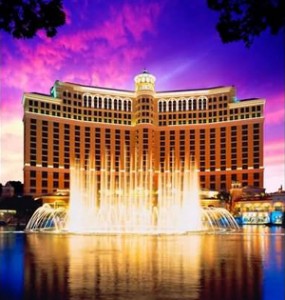 has been eclipsed.) Over in Macao, Greff wrote, “Early indications on the Cotai ramp-up have been very positive so far, with significant foot traffic and above-industry mass table yield (i.e., MGM Cotai’s table yield is similar to that of MGM Macau during the Chinese New Year holiday thus far), although it’s much too early to read anything from a week’s performance as the property opened on February 13th.” Mass-market gaming revenues “jumped” 23% and VIP play is growing 16%, double the enclave’s 8% average. The company is carrying $11.5 billion in debt, with $1.5 billion cash on hand.
MGM is sticking with its target dates for opening MGM Springfield and other new properties, although it’s being a bit vague about Park MGM — sometime this year. Deutsche Bank analyst Carlo Santarelli was less impressed than Greff. “With 1Q18 poised to be softer than previously articulated, we were surprised by the strength embedded in the 2Q-4Q guide and as such, we believe the stock setup is challenging. We continue to see episodic RevPAR growth, as opposed to pure underlying strength, with demand flat to down and core pricing power constrained, as promotions  remain elevated,” he wrote. MGM used the investor call to also sneak out an unpleasant surprise: “Management also noted it would be raising core resort fees, helped in part by a neighbor’s institution of resort fees providing cover to do so.”
As for MGM Cotai, “Management provided some positive commentary on the call regarding visitation/foot traffic and noted that the newly opened property has already matched the peninsula asset in terms of win/unit/day, albeit on a much smaller table footprint.” So what’s not to like? Well, other than more resort fees. Considering how well MGM is performing, why does it feel the need to stick it to the consumer yet again? Because it can, that’s why. (Greed also might also have something to do with it.)
* Now that it has a full year of Aliante Casino revenues under its belt, Boyd Gaming can report double-digit cash flow gains on a same-store basis. Santarelli found Boyd management somewhat circumspect but “Management noted that it exceeded the high  end of the $62 mm of EBITDA contributions from Aliante and Cannery in 2017, implying core portfolio growth was slightly north of 10%.” On the flip side, new competition from Four Winds in Indiana and “more challenged” Louisiana markets were cause for caution. Management’s priorities include a continued stock buyback and going full steam ahead with Wilton Rancheria (due date 2020) now that the latter has the Trump administration’s green light.
Taking Indiana and increased corporate expenses into account, Greff lowered his cash-flow target for Boyd. “While we believe that BYD’s guidance probably has some cushion in corporate expense and a reasonable worst case impact at Blue Chip,” he wrote, “we embrace management’s guidance, but, at the same time, recognize there could be upside to 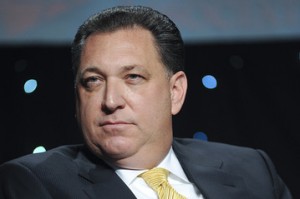 EBITDA throughout 2018.” That upside would be the Vegas locals market, which represents fully half of Boyd’s cash flow. Despite a 17% increase in locals revenue, Boyd missed Greff’s estimates for 4Q17.”Management highlighted strength in the Hawaiian customer segment, increased downtown visitation, and operating improvements, with strong returns at California and some partial offset from higher fuel costs from its charter business.” IP Biloxi and Treasure Chest were impaired by temporary closure due to Hurricane Nate. Completion of the acquisition of four properties from Penn National Gaming isn’t expected until after June. Then Boyd can expect a mix of rewards (Ameristar St. Louis and Ameristar Kansas City) and challenges (Belterra and Belterra Park). Let’s hope CEO Keith Smith (pictured) has some tricks up his sleeve.
