


At a time when the north Las Vegas Strip is finally heating up, MGM Resorts International has chosen this moment to put The Mirage on the market. Although it’s 32 years old (224 in dog years), The Mirage should fetch an attractive price—albeit short of the 14X cash flow that Jim Murren used to shop it around at, back in the Great Recession. Best case scenario, MGM disposes of a geographically isolated asset at a handsome markup (look what happened with The Cosmopolitan of Las Vegas). It’s a seller’s market and MGM chose its moment wisely. The only drawback for a potential buyer is that only the operational half of The Mirage is for sale, not the underlying real estate. You’d have to settle for being a Vici Properties tenant.
On the upside, you get a lot of real estate to play with: 77 acres, much of it underdeveloped, according to CEO Bill Hornbuckle. He was in altruistic mood, saying “I’m excited for somebody to come in and make it their marquee property.” As for his own company, “we have enough of Las Vegas … We think there is an opportune time, and we think this might be it to sell an asset in Las Vegas. So it, for us, became the obvious one.” No potential buyer or buyers were tipped, although Hornbuckle’s remarks implied he’s looking for someone without a Strip presence. We’re loath to prognosticate. It would be sentimentally pleasing to see Boyd Gaming back on the Strip but …
… we’re a little skeptical, while Penn National Gaming—shot of the Tropicana Las Vegas—has been muttering about maybe, possibly getting back into the market. Hard Rock International can never be counted out, although it has many other irons in the fire. And who, except for Scott Roeben, saw the San Manuel Band of Mission Indians swooping in for the Palms? We think a tribal buyer is likely … but also suspect that Phil Ruffin will be sorely tempted to reunify The Mirage with Treasure Island, solidifying his empire on the north Strip. It’s a painfully tough call.
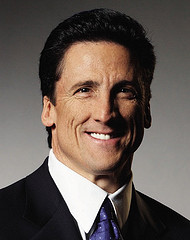
Although BetMGM lost $49 million in 3Q21, Hornbuckle had plenty of reasons to be sanguine: $1.9 billion of them. That was the amount of profit overall. MGM China, though, was a real money pit. $289 million in revenue sounds like a lot but it was 61% below the comparable period in 2019. (At least the $7 million cash flow was triple Wall Street‘s expectation.) Getting back to sports betting, Hornbuckle chose to take a glass half-full view: “In the three months ending August, BetMGM commanded 23% share nationwide in both U.S. sports and betting and iGaming.”
Barry Jonas of Truist Securities seconded Hornbuckle’s outlook, writing that “It’s fair to say MGM’s Vegas recovery has been quicker and stronger than we expected, even without Group and International back just yet. The regionals remain strong, China is lagging (as expected), and BetMGM continues to fortify itself as a (if not the) leading player in Interactive.” Gaming is bolstering the Las Vegas comeback, representing 31% of overall revenue, compared to 22% in 3Q19, while slot handle hit an all-time high. Hotel occupancy ran 82% “and management noted rates were higher than pre-COVID levels for the first time since re-opening.” Previewing the fourth quarter, MGM disclosed that October occupancy was 92%, an encouraging trend it expects to continue throughout the balance of the year.

Two-thirds of MGM’s 18 U.S. properties recorded best-ever numbers in the quarter “and though non-gaming amenities will return, management believes regional margins will stabilize well above 2019 levels.” As if that weren’t good enough, win per player was at its highest pitch despite “depressed” levels of play from Baby Boomers. In spite of the loss associated with BetMGM, it recorded net revenue of $227 million and execs see it hitting $800 million for the full year. It’s presently trusted more for i-gaming play (a dominant 32% share) than for sports (17%). First-time depositors quintupled year/year in September, although that is perhaps not a kosher comparison, given the addition of new jurisdictions, of which Hornbuckle expects to be in 20 by year’s end. BetMGM is also a great source of new M life signups: 42%.
MGM also, oh so casually, mentioned that, yes, they are one of the winners of a New York State OSB license (of a potential 9-10 selectees) and it thinks the tax rate will be closer to 50% than the top-tier 62%. “New York is a big state for any sportsbook, but we think MGM is uniquely positioned given their extensive M Life database, and casinos in both New York and New Jersey,” wrote Credit Suisse analyst Ben Chaiken. “Management sounded optimistic about a commercial gaming license in New York, noting that cash investment in that business could start by 2023.” We don’t know anyone who doesn’t think MGM has the inside track (pun intended) at Empire City Yonkers. As for OSB, Carlo Santarelli of Deutsche Bank thinks that by 2027 it will be a $1.1 billion market, i.e., one of the nation’s biggest. That may not be enough to support nine or 10 platforms but MGM is unlikely to be one of the losers.
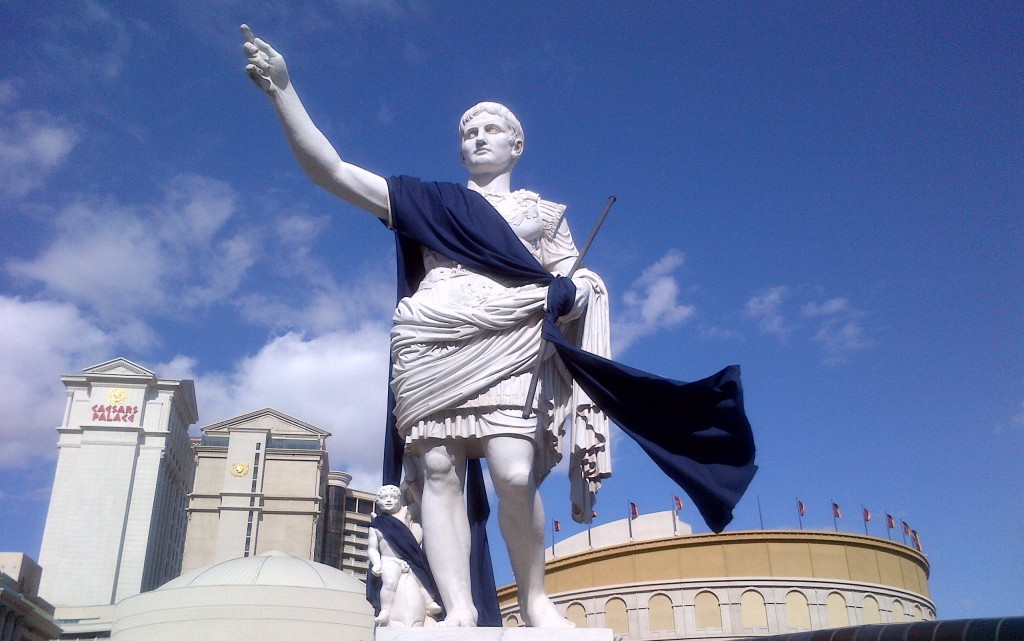
While analysts had expected a narrow profit from Caesars Entertainment‘s 3Q21—16 cents/share—the Roman Empire surprised everyone by taking a $233 million bath (-$1.10/share). The silver lining, of sorts, was that losses were much worse at this time in 2020 ($6.09/share). To placate The Street, Caesars threw it in a bone in the form of an advanced timetable for selling one of its Strip resorts. If, however, the company remains bent on parting with dowdy Bally’s Las Vegas, don’t expect a big payday. Caesars Palace is off-limits for understandable reasons and if, per Roeben, the company insists on keeping the old Aladdin Center for the Performing Arts as part of any Planet Hollywood sale, it’s not left with many trophy assets to vend on the Strip, especially if they’re planning to realize $2 billion-$3 billion … as indeed they are.
“On the brick-and-mortar side, if Ida didn’t hit New Orleans and we didn’t have the fire in Tahoe, we would have done $1.1 billion of brick-and-mortar EBITDA in the quarter,” Director David Tomick said, pinch-hitting for Caesars’ brass. “We had an extremely strong quarter, demand remains particularly robust, and in regards to New Orleans and Tahoe, Tahoe has pretty quickly recovered back to above 2019 levels, not quite as strong as it was pre-fire, but continuing to build.” Indeed, as Santarelli said, making a “bull case” for CZR, “Las Vegas results were nicely ahead of Consensus” with sky-high margins. “October has the 4Q21 off to a strong start in Las Vegas, where trends appear akin to those experienced in July, and the favorable calendar in the period should also help regional markets.”
Switching to his “bear” hat, Santarelli noted the losses, incurred primarily in the digital sphere. He also observed a “meaningful slowdown” in the regional properties. (Stimulus money running dry?) Fourth-quarter projections, he thought, “should not be going up, and in our view, likely need to come down, given the digital spend.” Still, he noted several positive catalysts, including a New York OSB license, continued expansion of sports-betting-enabled markets and more market share in i-gaming as Caesars introduces new product early next year.

Jonas was laid-back about the CZR results, writing “Spend now for total digital rewards later.” The company’s perception may have been hurt by pre-releasing July and August numbers, whereupon the company was hit by a variety of September one-offs, such as Hurricane Ida and the Caldor Wildfire. Caesars’ cash flow numbers were within Jonas’ expectations whereas the consensus was, he felt, “stale … We remain positive on CZR’s Digital opportunity, with CZR willing to sustain sizable near-term customer acquisition costs for the promise of future ROI–potentially by the 2023 football season.” That’s a bullish forecast, especially for a segment that just posted $164 million in negative ROI, but Caesars has surprised us before. And don’t write the recovery off just yet: CZR posted record cash-flow numbers at 31 of its 51 casinos.
Unlike BetMGM, a bigger proportion (55%) of Caesars’ digital haul comes from sports betting than i-gaming. The former is none too shabby, recording $1.3 billion in handle in October—although the bottom line has been damaged by low hold in the recent past. And, with the addition of Louisiana, it is now in 20 states. “We continue to favor CZR’s omni channel strategy, supported by one of the strongest databases in the business and its 100% owned strategy,” Jonas wrote. As for good old brick-and-mortar casinos, he reported “green shoots” in early 2022 where Las Vegas meeting business is concerned. Even at the present rate, Caesars is averaging 89% occupancy on the Strip. “While total occupancy is flat q/q, midweek occupancy caps (relating to housekeeping labor) continue to impact results for now (potentially improving into 2022).”
Caesars Forum is doing better than expected, with over 175 events booked, representing $650 million in income and 1.8 million room nights (business that is overwhelmingly new to Caesars). Added Jonas, “Operating costs could be a bit elevated as a midweek capacity caps are lifted, but should come with strong revenue contribution as demand picks up.” So that was a good investment. The redo of Caesars Palace, which is more controversial, is running behind schedule, now set to finish early next year. After that … aggressive debt restructuring. Some things at Caesars Entertainment never change.
The third time was the charm for the New Jersey truck driver who shockingly unseated state Senate President Stephen Sweeney (D), despite the latter’s union backing. The trucker spent only $9,150 to pull it off but had the advantage of having run against Sweeney twice before and sussing out his weaknesses, or so our Atlantic City bureau writes. One of our favorite Garden State politicians, Don Guardian (R) is back in office, this time as an assemblyman. And Gov. Phil Murphy (D) eked out a 1% win. That’s good news for opponents of smoking in casinos, although much depends on Sweeney being persuaded to do the right thing in the lame-duck session of the Lege. Americans for Nonsmokers Rights was quick to start hammering this message and they’ll have an ally in state Sen.-elect Vince Polistina (R), who has said “The exemption needs to end. I know the governor supports it, so hopefully we can get back to Trenton after this election and we can get it done, because those [employees] deserve clean air and a healthy, safe work environment.” From your lips to the Lege’s ear, senator-elect, and congratulations.
Tomorrow: Penn National Gaming reports third-quarter results, although we read in the Adams Daily Report that The Street is disappointed.

Question: Is there any talk on these investor calls about the strategy of cutting their way to profitability? I’m thinking of Caesars’ Roog “we don’t need to give anything to anybody.” They sure aren’t putting the savings into upkeep.
Officials have arrested a father and son for wreckless arson for starting the Caldor Fire at Lake Tahoe which forced an evacuation and business closures in August.