

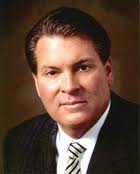
 High-ranking executive jobs at Trump Entertainment Resorts aren’t for “lifers.” Having steered Trump through yet another bankruptcy, CEO Mark Juliano is exiting stage right, “leaving to pursue other opportunities” — the latest executive to be purged. Nobody stays long atop Trump. Former Argosy Gaming CEO James Perry was brought aboard in late 2005 but left less than two years later. Given the challenges faced by Juliano, I’m sure he’ll be welcome somewhere else in the casino entertainment industry — and no executive has been more vociferously optimistic about Atlantic City than he.
Confidence, however, is not set aflame by the company’s choice of successor: MTR Gaming Group CEO Robert Griffin. The latter was one of several top Isle of Capri Casinos executives who left or were eased out when the company hit bottom a couple of years back. Isle brought in a turnaround team led by — you guessed it — James Perry. In Griffin’s favor are six years of experience in the Atlantic City market, in the mid-Nineties. However, his tenure at Isle coincided with the last spasms of the Bernie Goldstein era, a period marred by serious — and serial — corporate miscalculations. (The Bahamas? Coventry?? Singapore???) Griffin’s current employer, MTR, withdrew from the Vegas market in disarray and now confines it operations to a couple of racinos and a pair of horse tracks out East. He may be “experienced” (Trump Chairman Marc Lasry‘s meme in re Griffin), but the last 12 years of it have been spent mostly in the casino equivalent of Triple-A baseball.
Taking to the skies. Would a gondola line connecting Atlantic City’s casinos be a shot in the arm or an airborne version of the Las Vegas Monorail? (Eight to 10 bucks a ride? Ow!) And would it worsen the disconnect between the casino districts and the rest of the city? This will be something to follow with interest.
Bum rap. But not being pedantically detailed in its wording of a cash-back offer, Harrah’s Entertainment could be out $8 million. The language in question doesn’t rise to the level of “ambiguous” and shouldn’t confuse anyone with an iota of common sense. This is a direct-mail-marketing exec’s nightmare and will probably have the unintended effect of making casinos even leerier of this sort of promotion. That’d be a crying shame.
At long last, slots. If it were a house guest, Penn National Gaming would be the sort who wipes his shoes on the bedspread and complains about your cooking. It’s tried to dictate policy to the Kansas Lottery Board and lately has been acting boorishly in Maryland. Penn has been bigfooting the debate in Ann Arundel County over the casino site bestowed upon rival Cordish Gaming. (Penn is only permitted one casino in Maryland, raising questions as to its endgame vis-a-vis Cordish.) When regulators expressed sympathy with Cordish, Penn threw a tantrum and threatened to hold the opening of its Perryville slot parlor hostage until early November. Penn’s petulance bombed with the Maryland Lottery Commission, which had already asked Attorney General Douglas Gansler to see if the company’s meddling in Ann Arundel warranted a fine.
Faced with a potential downpour of opprobrium, Penn backpedaled as fast as it could. Clearly anxious to repair a damaged public image and perhaps hoping to buy a little good will, Penn opened its newest Hollywood Casino three days earlier than scheduled and did its bit to further erode the Delaware market. Considering that one of the guests of honor was short-tempered former Baltimore Orioles catcher Rick Dempsey, Penn should count itself lucky that no fisticuffs erupted. It’s taken 23 months, from plebiscite to pulling that first lever, but Maryland is finally in the casino game. Welcome to the fold.
Pennsylvania’s table games are doing so well that the state’s top casino, Parx, is reaching into Connecticut for experienced dealers. As a Foxwoods Resort Casino official puts it, it’s a compliment to the tribal casinos there that Parx covets their table-game personnel.
Four more months and then the insanity of Gov. Bob Riley‘s anti-casino jihad will come to an end in Alabama. A constructive solution to this county-vs.-state conflict is certain to be on the table once Riley leaves office, not a day too soon.
When the state owns a casino (or three), its decisions toward potential intra-state competitors take on a tinge of protectionism. Kansas provides us with a case in point.

Penn National making way into texas.
http://www.krgv.com/content/news/story/Changes-May-Soon-Come-to-a-Valley-Track/AijiAX5so0CHPhNonpuBKA.cspx?rss=1651
I did not quite get the Juliano firing (as I would categorize it) at Trump either. And to be replaced with the CEO from MTR? I just don’t get it. Mark is a very capable CEO and arguably would have been a good asset in assisting the company in turning around their operations.