

With gaming reeling—and tax revenues along with it—Internet gambling may start looking more attractive to states that have previously scorned it. Sports betting has taken the lead, with Colorado poised to enter that fray. However, Morgan Stanley analyst Thomas Allen posits “the impact of  Covid-19 could spur more states to legalize online casino and sports betting.” After all, look to New Jersey, where homebound players turned to ‘Net betting 65.5% more than last year, generating $65 million for casinos. Two Atlantic City casinos, the Golden Nugget and Resorts Atlantic City raked in more from the Web than they did terrestrially. Penn National Gaming, while absent from New Jersey, also expects to make a silk purse from a sow’s ear. CEO Jay Snowden told investors that Penn Interactive would “deliver meaningful revenue and profit contributions in 2021 and beyond.”
Players in several states are primed for online gambling because, Casino.org argues, they’re habituated to placing sports bets on their computers and smartphones. Adds Allen, “Covid-19 will likely have a negative impact on state budgetary positions, forcing them to look for new sources of taxes. In addition, legalization and the roll-out of online forms of gambling can be much quicker than building bricks-and-mortar casinos (Massachusetts a good example). Finally, online can be at least a slight offset to lost revenues during phases of social distancing, as we are experiencing today.” There’s the magic word “taxes.” Few politicians can resist it when it’s prefaced with “gaming.”
* Oregon tribes didn’t wait for the state to act before closing their own casinos. There’s going to be a lot of pain that goes with such forbearance. Casino-related unemployment across Indian Country is estimated at 900,000 people, many of them non-indigenous. The ripple effect from the  closures has extended to restaurants, golf courses, RV parks and the like. Although Oregon Gov. Kate Brown (D, left) is giving the nine tribes wide leeway, she parlays weekly with tribal leadership. “What we all are doing is the same guessing game: Do you think we’re going to be able to open in May? … We have followed the rule of whatever’s best for our customers and our tribal members,” Confederated Tribes of Siletz Indians Chairwoman Delores Pigsley told The Oregonian. When your resorts are your tax base, that’s a $131 million question.
The hurt extends to Oregon nonprofits, which have relied upon millions of dollars in charitable contributions from gaming tribes over the last three decades. In addition to the $131 million kept from gambling, casinos would also have generated $215 million in salaries. That doesn’t include the trickle-down effect on business that are ancillary to the casinos, like the restaurants that help prop up the fishing industry. And though the gambling dollars have stopped coming in, the bills and obligations continue to pile up. Opined the Harvard Project on American Indian Economic Development, “the COVID-19 crisis poses an immediate threat to three decades of steady improvement in economic conditions across Indian Country.” That’s a sobering thought. And while Pigsley is mentally preparing for a soft reopening, she qualifies that with “It’s not going to be business as usual.”
Similar woes are occurring in Wisconsin, where Ho-Chunk Nation reports that it has let go 60% of its 3,000-soul workforce. Stressing his reliance on casino monies, President Marlon WhiteEagle told the media, “We have minimal [Bureau of Indian Affairs] funding and grant funding.” Unlike Oregon’s casinos, Wisconsin’s are under a closure order from Gov. Tony 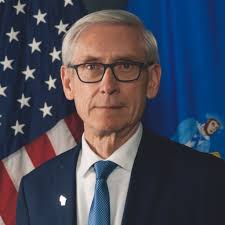 Evers (D, right). Not only could a new Ho-Chunk casino in Beloit be toast, NBC-15 reports that the absent money “helps pay for a number of services across departments including healthcare, scholarships and programs to preserve native culture. “We’ll have to again strategize … what’s the best way to get the project going again,” WhiteEagle said of the Beloit casino, which Evers initially supported before becoming noncommittal. “There’ll be restaurants, they’ll even have gas stations on there, so people who go to the casino, there’ll be a full service deal, and then they’ll leave and there’ll be no extra money spent in that community,” complained anti-casino scold Lorrie Pickens, who is urging fellow bluenoses to flood Evers’ office with phone calls.
* We don’t want to overplay this but that Eldorado Resorts takeover of Caesars Entertainment is not looking so good for either party. For one thing, CZR shareholders are to be compensated with 77 million share of ERI stock … which is 63.5% less valuable than it was when the deal was cut. Also, Moody’s Investor Service just downgraded Eldorado to B3.  Which means that the $3.6 billion in cash Eldorado was going to grace Caesars with is getting more and more expensive to borrow. Third, Caesars and Eldorado have committed to paying $98.5 million in rent to Vici Properties—money they don’t have. Vici says “we have not yet agreed to any lease modifications or other concessions with any of our tenants, if the current environment persists we may ultimately support tenants during the short term in ways that we believe will benefit the Company over the long term.” But, as The Motley Fool points out, “Free rent isn’t actually free,” so Caesars or Eldorado may have to sacrifice some properties to consummate a deal that looks ever more dubious on the lip of a recession.
Fortunately for Vici, it has no debt coming due until December 2024. Both it and Gaming & Leisure Properties Inc. have had to withdraw revenue forecasts for this year. GLPI says its tenants are paid up through  the end of this month, even troubled Penn National. As for May and June, it kept mum. What CEO Peter Carlino would say was “GLPI believes its collaborative and mutually beneficial outcome with Penn National provides us and our investor base greater visibility and predictability from rent receipts over the remainder of 2020,” alluding to GLPI’s virtual steal of the Tropicana Las Vegas from Penn in return for rent credits. Casinos aren’t looking like the stable cash cows that REITs thought them to be but we think the latter will find a way to turn this to their advantage.
* Las Vegas Mayor Carolyn Goodman‘s media blitzkrieg, culminating in a calamitous interview on CNN continues to get razzed within the casino industry. Unite-Here President Donald Taylor called Goodman’s ‘every man for himself and devil take the  hindmost’ philosophy “one of the worst things I’ve heard. Nobody wants people to go back more than I do, but everyone wants to go back to a safe and secure workplace and not be an experiment in a petri dish.” Added Caesars Palace bartender Alexander Acosta, “We’re not test subjects. We’re people. We are employees.” Casino worker Jay Blake thought Her Honor hadn’t “put a lot of thought into what it could mean if we reopen too soon.” Nevada Gov. Steve Sisolak (D) held his ground, saying “I’m not gonna allow our workers to be put in a position that they have to decide between their job and their paycheck and their life. That’s not a fair position to put them in and I will not allow that to happen.”
Clark County Commission Chairwoman Marilyn Kirkpatrick, whose constituency includes the Las Vegas Strip, took to Facebook to warn that “Doing so too soon and without appropriate protective measures in place 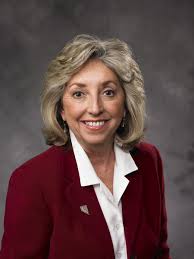 would put us all in danger.” She also paid CNN a visit, remarking, “We certainly don’t want to be a ‘control group’ for some out-of-left-field school science project.” Rep. Dina Titus (D) also took a second shot at Goodman, telling Don Lemon that “the mayor needs to listen to the scientists and the health-care specialists and stop talking about my constituents as though they’re guinea pigs and some grand experiment that she’s trying to conduct. We can bring back the economy, which is one of the things she seems to think is a priority, but you can’t bring back people’s lives.”
The Culinary Union was less restrained, blasting “Workers will be the reason we get through this pandemic and workers have to be protected. We demand it.” It spoke for employees like security worker Dee Kenny,
who told NBC News, “There’s no proper protocols in place anywhere. I’m 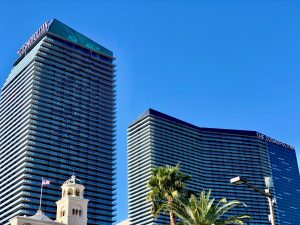 not going to go back until I’m not at risk.” Even the more measured Blake said, “Vegas is a unique destination, in that we rely on guests from all parts of the country, all parts of the world. I’m concerned if we open to everyone, people [will be] coming from hot spots, places with outbreaks, where social distancing wasn’t as stringent as it was here.” Bartender Acosta, for his part, is OK with wearing a mask and gloves, but wonders if there will enough of them for the gigantic Vegas workforce. He’s got a point.
