


Here’s one for those of you who believe gambling is facing a recession: Revenue in Ohio fell 2% last month (yes, it took the Buckeye State until February to report December’s numbers). The haul was $193 million, which was still 14% better than the end of 2019, if that’s any consolation. MGM Northfield Park maintained its market-leading status with $24 million, up 5.5%. But there was a surprise challenger: Jack Cleveland, close behind with $23.5 million, an 8.5% gain. Other racinos that were revenue-positive (like MGM Northfield) were Scioto Downs, up 2% to $19.5 million and doughty Hollywood Mahoning Valley, up 3% to $13 million. Miami Valley Gaming was flat at $19 million.
Everyone else lost ground. Hollywood Columbus ceded 1% to $22 million and Hollywood Toledo tumbled 9% to $18 million, while Hard Rock Cincinnati slipped 3% to $20 million. Jack Entertainment didn’t prosper at Jack Thistledown, which fell 12.5% to $14.5 million (as its players presumably fled to the shelter of downtown Cleveland). Also taking a hit was Belterra Park, plunging 21% to $6 million. Rounding out the picture was Hollywood Dayton, stumbling 10% to $12 million.

Bally’s Corp.’s hyper-aggressive expansion into the sporting field is backfiring big-time. Bally’s hitched its wagon to the Sinclair Broadcasting star and now hyper-leveraged Diamond Group is filing for bankruptcy, threatening the viability of 19 regional sports networks (all Bally-branded). Sinclair can’t even meet a $140 million interest payment. “You’re looking at a potential rewrite of the entire regional sports business on the other side of this restructuring,” telecom analyst Davis Hebert told Bloomberg. When it does come out the other side, Diamond will be mostly owned by creditor financial institutions, who will be looking to shop it around. But if doesn’t go into Chapter 11, Diamond will face a $2 billion balloon payments to all those RSNs.
Cash-poor Diamond isn’t able to meet that obligation, meaning that Bally’s won’t have sportscasts on which to hawk its product. When you don’t even have 1% market penetration, that’s not good news. Let’s tot up Bally’s digital spending spree: $2.6 billion for Gamesys, $192 million for Bet.Works, $118.5 million for Monkey Knife Fight (already back on the market, probably to be sold at a loss), $42.5 million for SportCaller, “fan engagement platform” Telescope $26 million, $10 million for the Association of Volleyball Professionals, and finally almost $8 million for “experience designer” Degree53. What is the likelihood some or all of these (poor) investments will be written down on or before the next earnings call? Pretty high, we’d say.
According to Legal Sports Report, “The nearly 12.1 million in shares distributed for these deals were worth $651.9 million when their respective acquisitions closed. They are currently worth $236.9 million based on Friday’s closing price of $19.61.” (emphases in the original) It’s difficult to acquire new customers when RSN viewership is falling 11% and many of the broadcasting deals are underwater, such as $60 million pact with the San Diego Padres. In the meantime, Chairman Soo Kim continues to run Bally’s by the seat of his pants, as when he proclaimed the Sinclair deal would “revolutionize the U.S. sports betting, gaming and media industries.” Kinda didn’t, did it? CEO Lee Fenton, who gets paid to put the best face on bad news, said the tarnished Diamond assets still “form part of our plan, and we think we get tremendous best-of-branding benefit from it.” That’s their story and they’re sticking to it … until the 4Q22 earnings call anyway.
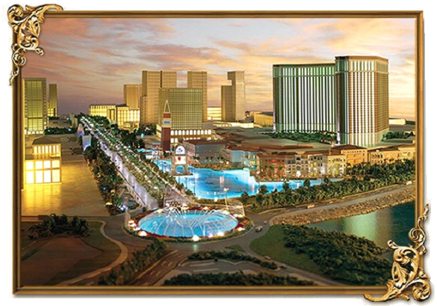
To end on a positive note, Macao casino earnings vaulted 82.5% last month, hitting $1.4 billion for January. It didn’t hurt that 500,000 tourists flooded the enclave during the Chinese New Year period. Stocks of the affected companies nudged upward as much as 5%, even though Macao was still at only half the level of January 2019. All things considered, that’s a healthy comeback, pardon the pun. “We’re just thrilled to be open and making money and seeing demand like we’re seeing,” said Las Vegas Sands CEO Rob Goldstein last week, leaving aside the question of how places like Venetian Macao are going to boost their non-gaming revenues from 5% of the aggregate to an empyrean (by Macanese standards) 30% of total. It’ll be difficult in the early going, as workers for non-casino positions are currently hard to find. In Sands’ case, it’s keeping some of its hotel inventory shuttered until the job market warrants otherwise.
