

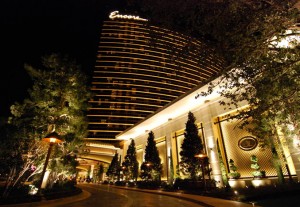
Steve Wynn‘s failure to disclose a $7.5 million paternity settlement may have been the best thing that happened to Mohegan Sun‘s hopes in Massachusetts. The tribal megaresort is suing the Massachusetts Gaming Commission for failing to conduct ‘extreme vetting’ of Wynn  Resorts. Mohegan Sun’s court filing reads, in part, “There were multiple sources–including books, reported lawsuits, and documents stemming from those lawsuits–available to the Commission during the suitability determination, licensing proceeding, and after the license award which discussed and disclosed Mr. Wynn’s sexual misconduct and mistreatment of employees. Despite this poorly-kept secret, nowhere in the IEB’s report on Wynn’s suitability is there any indication that the issue of sexual harassment was investigated, even superficially.” The bottom line is that Mohegan Sun wants Wynn Resorts stripped of its license, after which it could presumably buy Encore Boston Harbor dirt cheap.
The lawsuit furthermore accuses the MGC of being “irrevocably biased in favor of the Wynn application.” The body was certainly Continue reading
 regarding sexual harassment, workload, technology, and immigration,” enthused Culinary spokeswoman Bethany Khan. As for pay increases, the actual amount was withheld (no doubt to keep the pressure on at other companies) but Secretary-Treasurer Geoconda Argüello-Kline characterized them as “the highest wage increases that workers have ever had.”
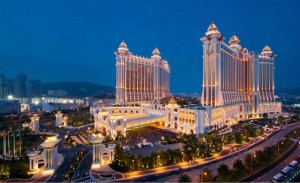 Golden Week into account. Furthermore, the enclave had a hard act to follow, its revenue having vaulted 24% in May 2017. Galaxy Entertainment Chairman Lui-Che Woo famously said he wanted to see two solid years of improvement before he’d believe a recovery had taken place and we’re well on our way to Mr. Woo’s goalpost but not quite there yet. Still, the upward movement of the gambling market
  just to show that it means business, the Culinary has opened a “Strike HQ” next to its offices, printed up placards and invited the media to stop on by. In the Culinary’s latest explanation of its position, wage increases have fallen to the bottom the list, below protection from sexual harassment, outsourcing of jobs, loss of jobs due to technological upgrades and protection for immigrant workers. (ICE is reported to be rampaging through entire neighborhoods, albeit not in Vegas … yet.)
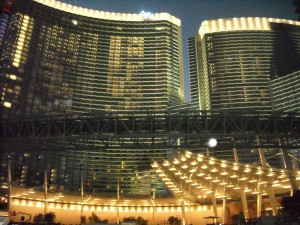 in 2017 and a 17.5% slide in baccarat win on 9% less wagering. Also, April ended on a Sunday, meaning that the last weekend’s slot revenue hasn’t yet been tallied but will be rolled into May’s results. This month will be more difficult, as last May saw 3% Strip growth and a 12% jump in baccarat win. (Of course, it’s only “win” if you’re the casino; for everybody else it’s called
  negotiations could drag on for several months past the June 1 deadline: “Recall, in 2013, the Culinary Union remained in negotiations with some Strip operators for several months post the June, 2013 contract expiration, ultimately agreeing to a new deal in November, 2013.” Of the publicly held companies, Wynn Resorts, Station Casinos and Las Vegas Sands (naturally) will be unaffected. Good for them. Penn National Gaming and Boyd Gaming, with three unionized casinos between them, have limited exposure. The brunt of a strike would fall on MGM Resorts International and Caesars Entertainment, part of the price of consolidation.
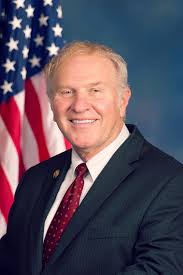 how our economy looks when it is working as it’s designed to function. Private investment creates employment opportunities for local workers, including those with disabilities, which leads to economic growth, and higher tax revenues. Higher revenues, in turn, help to support more robust local services. Simply put, everyone benefits.” — Rep. Steve Chabot (R), during an American Gaming Association roadshow at Miami Valley Gaming.
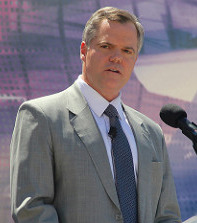
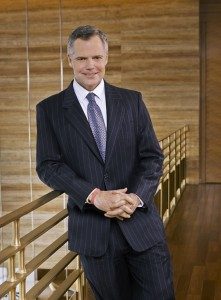 countermeasures into place. This was a necessary step before the actual casino-implementation law could go before the Diet. “The pace of implementation has started to accelerate,” said an understandably eager MGM Resorts International CEO Jim Murren, who was on hand for the vote. He added that three megaresorts would “generate billions of dollars, making the market vastly larger than Singapore.” Murren probably chose Singapore as his analogy since Japanese politicians have been fixated on that country both in terms of its casino industry and how it handles gambling by its citizens. The Diet
  contradicted by the numbers. The latter are across-the-board better, in cases significantly so, than a year ago. (To be honest, these numbers also reflect Macao‘s recovery, particularly in the case of Las Vegas Sands.) Richard Velottta
 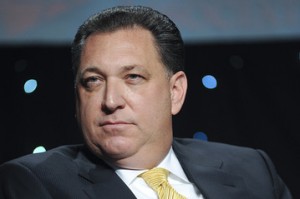 “The studies we saw told us our players were spending significant time at their local bars or restaurants playing VGTs. If that’s the case, we want to be where our customers are.” — Boyd Gaming CEO Keith Smith,
  Yonkers, putting them squarely in the much-coveted New York City market, 15 miles from Times Square. (Genting Group‘s Resorts World Catskills is officially toast.) Of the total purchase price, $625 million will be paid from MGM to MGP in the form of rent. An additional $50 million will be paid to Empire City’s current owners if MGM can get table games by Dec. 31, 2024. On top of $245 million in debt, MGM will chip in $260 million in new equity to Empire City. “It is noteworthy to us that the seller preferred to take MGM equity versus the high-dividend-yielding MGP,” wrote JP Morgan analyst Joseph Greff. Empire City is projected to generate $230 million in revenue and $70 million in cash flow this year. MGM paid an exceptional 12X cash flow for the racino, but this drops to 7.5X when redundancies are eliminated and is hoped to fall still farther, to 6X, after MGM makes its planned enhancements to the property. (Understandably, MGM prefers the latter number.)
 catalyst, obviously, is the Supreme Court ruling that legalized sports betting in our great country. As befits its name, Paddy Power is a puissant force in U.K. betting and — combined with FanDuel’s knowledge of U.S. sports — should be ready to hit the ground running in any jurisdiction in which it is licensed, with seven million customers already enrolled. Said Paddy Power CEO Peter Jackson, “Together with our substantial financial firepower, we believe we are now exceptionally well placed to target the prospective U.S. sport betting opportunity.” Indeed.
 fact, older age brackets didn’t find the casino experience so hot: 41% of those aged 35-64 also got a downer vibe from the casino floor. The 65-plus demographic was most supportive of the casino experience. Young people prefer online gambling, with 50% of the Millennials favoring its legalization, and the 35-49 demographic 52% supportive. Of more concern to us is the revelation that Millennials are experiencing anxiety, depression and suicidal ideation than has been the case in generations previous. There’s not much the casino industry can do about that, but it should be of concern to decision makers in state houses everywhere when
  end, Elvis Presley-themed resort
  difficulties. It certainly is not reflective of the company’s brand equity (great) and asset portfolio (very strong). Analyst Daniel Politzer listed an array of positive factors, starting with Las Vegas Strip capex maintenance “that should lift ADR and improve customer mix.” He added that “stable fundamentals and domestic gambling-consumer strength bode well for the hub-and-spoke Total Rewards system. Margins at outlying properties are expected to improve thanks to “more efficient marketing/promotional spend.” Ten billion dollars’ worth of real estate could be sold to gaming REITs (read:
  believe
 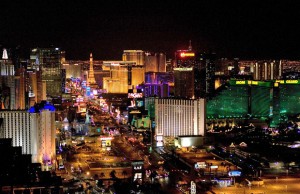 got a rude wakeup call yesterday. Some 99% of Culinary members voted to authorize a June 1 strike, if necessary. That’s almost 50,000 employees hitting the bricks at 34 casino-resorts, both on the Las Vegas Strip and Downtown. Protection of immigrants with temporary status is one of the Culinary’s hot-button issues, as well as what union boilerplate describes as “the Union’s economic proposal seeks to provide workers a fair share of the employers’ enormous anticipated cash flows and Trump tax windfalls.”
 schools in the nation and needs to re-orient its priorities. Now, from his bully pulpit,