

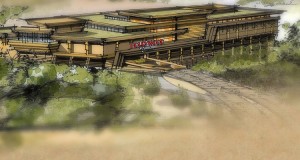
It’s been a busy week or so for Derek Stevens. Last week, he started turning earth on the La Bayou site, preface to construction of a two-story slot parlor that Stevens expects to 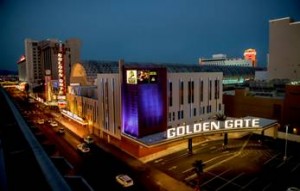 have finished by August. (He wastes no time.) That bit of news was overshadowed yesterday by the precipitate closing of DuPar’s in the Sal Sagev, known to you and I as the Golden Gate. “DuPar’s has struggled with payments over a period of time,” ran the austere official announcement, one that Stevens felt compelled to clarify with a tweet that the “payments” in question had nothing to do with the rent. VitalVegas thickened the intrigue with a rumor that DuPar’s owner Biff Naylor was at odds with the IRS. As if that weren’t enough drama for a day, the closing was moved up by 30 hours, with midnight on Feb. 8 superseded by 6:30 on the evening of the 7th. DuPar’s occupies an awfully prominent space, so we’re confident that Stevens will have something else in there sooner rather than later.
* This was bound to happen sooner or later. In Nevada, you can vote at age 18 and volunteer to get your ass shot off in Iraq but Heaven forbid you should Continue reading
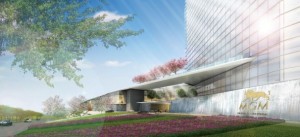 having been open the first week of December — is a 12% sequential improvement. Casino management has to be happy that revenue was split almost 50/50 between slots and table games. National Harbor had 39% of Maryland‘s casino market last month, followed by Maryland Live ($44 million) with 35% and Horseshoe Baltimore, way behind at 16% ($20 million). Year/year, Maryland Live was down 16% and Horseshoe was off 14.5%, which (if memory serves) is in line with projections. An unlikely beneficiary was Penn National Gaming/GLPI‘s Hollywood Perryville, ($6 million) up 5%. Golden Entertainment‘s Rocky Gap Resort had an exceptionally good month, up 12% to $4 million.
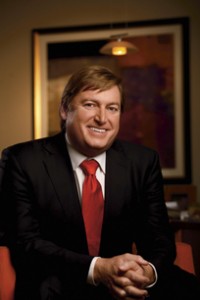 than “if.” Lawmakers are warming to Dan Lee‘s proposal to split Rising Sun‘s gaming inventory in half and move 50% to a new facility further upstate. The idea of relocating in Indianapolis
 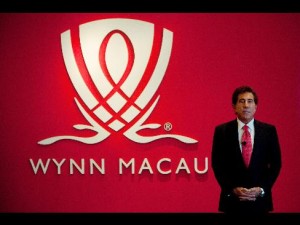 the article’s brazen assumption that aforesaid recipient was Donald Trump. (Not illogical: Trump is already raising money for his re-election campaign.) The story’s lead sentence described Wynn as “casino owner and new Republican National Committee finance director” and made the observation, two paragraphs later, that “The gift came a month before President Donald Trump’s inauguration, which raised a record $90 million from donors. Wynn was among a group of 25 individuals chosen by Trump on Nov. 15 to help organize his inauguration.” (So was Adelson but that’s not disclosed.) The donation is a tiny chip off Wynn’s block of $1.2 billion in Wynn Resorts stock. It is, however, a pretty “george” percentage of Wynn’s annual charitable giving, which can run to $20 million.
 “drag” on the company’s southwestern portfolio. Going forward, Jamul won’t be factored into Deutsche Bank’s projections for Penn. There goes the $15 million analysts had expected from Jamul, not to mention its role as a counterbalance to reduced market share in West Virginia. (Santarelli latter revised his sentiments, saying, “The start at Jamul is worse than expected, and we previewed it as being lackluster, but didn’t expect a $0 contribution from the asset in 2017, as management has guided.” Taking a anything-is-better-than-nothing view, he concluded, “Jamul represented roughly 1% of Company EBITDA prior to the print today and is now 0%, so it’s all upside from here in the event it turns around.” (emphasis added) Penn parent Gaming & Leisure Properties, in an unrelated investor call, did a fan dance about a potential new acquisition while simultaneously trying to downplay it.
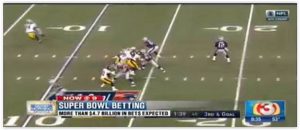 AGA’s ability to blanket the airwaves with this story, not to mention its message discipline. Should sports betting be legal? Of course it should. What’s newsworthy here is the blitz put on by the AGA, which only a few years ago was seldom seen and even less heard. At least CBS Boston explains the AGA’s methodology, noting that “the $4.7 billion figure is merely an estimate and not an official number. The AGA arrived at the number by taking national estimates from a 1999 report from the National Gambling Impact Study Commission, adjusting for inflation, then applying the ratio of Nevada’s legal sports betting totals to bets across the rest of the country.” Action is said to be 11%
 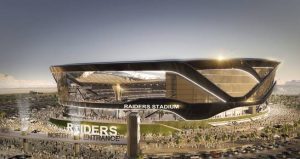 owner Mark Davis says he has replacement financing from Goldman Sachs, but there appears to be skepticism that it will be enough to cover the costs of an NFL-scale stadium. The source of Adelson’s pique was Davis’s submission of a lease proposal to the Las Vegas Stadium Authority,
  legislation one darn bit. In a unanimous vote, Galvano’s Senate Regulated Industries Committee moved forward legislation which effectively begs the previous state/Seminole compact but, if adopted, would run a cart and horses through the agreement Gov. Rick Scott (R) negotiated with the tribe, which died due to legislative indifference. The tribe’s blackjack exclusivity would be a thing of the past, as racinos in Miami-Dade County and Broward County would be granted 25 tables apiece. Galvano seems to think the Seminoles will go along with this and is already spending some of the tribal blackjack revenue that has been held in escrow. More likely, the Seminoles will tear up what’s left of the compact and keep all revenue for themselves.
 with several caveats
 opposition to a Mohegan Sun/Foxwoods Resorts Casino satellite gambling house continues to mount. The lawmakers to whom Feldman was referring are Reps. Ezequiel Santiago (D), Christopher Rosario and Roland Lemar (D).
 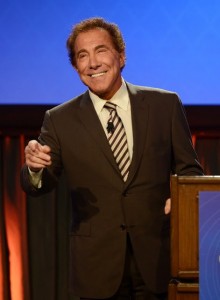 reconfigured the main casino floor (mass market), adding new slot/poker sections and opening up the promotion area, and accessibility to the premium-mass area has also improved (basically, knocked down the walls from the main casino). From an accessibility standpoint, the property is now part of the Cotai Connect shuttle program (jointly run by other Cotai operators), and a taxi incentive program continues to be utilized.” More restaurants are also on the way. Perhaps emboldened by improving Macao results, Steve Wynn has put Paradise Park back in play, predicting a design revelation this spring, with construction to begin toward the end of the year. No word on whether the giant ape is still part of the plan or not. Finally, there’s a bit of cost creep at Wynn Boston Harbor, up $300 million to $2.3 billion. Isn’t it amazing how companies (and politicians) talk about hundreds of millions of dollars like it’s pocket change?
 Elsewhere, Horseshoe Baltimore operates with less than two-thirds the slot machines of Maryland Live but got bigger bang for its buck — a daily gross of $235 per machine versus Maryland Live’s $255.
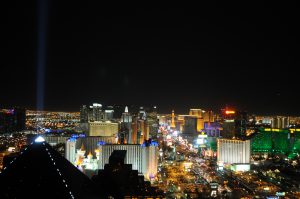 Edge, as it’s called, will have two swimming pools, 614 hotel rooms,
 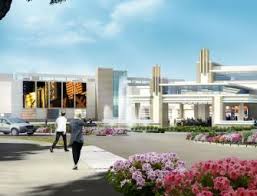 lottery. However, a study by the Massachusetts Gaming Commission finds that lottery-ticket sales not only failed to decline around Penn National Gaming‘s Plainridge Park, they continued to grow, albeit at a slower rate than other parts of the Bay State. There also has been little incidence of increased crime in the area. The MGC is keeping a watching brief on the issue and plans to monitor similar social phenomena in Springfield and Everett. Reports the American Gaming Association, “One oddity in the report is that while towns surrounding Plainridge had slower growth in lottery sales, Plainville, where the casino is located, had substantial growth.” Do casinos and lotteries coexist better than previously believed?
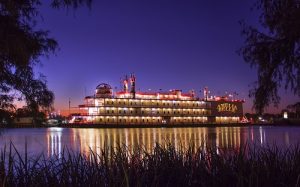 market, but don’t blame the smoking ban: Three of four casinos in the area were revenue-positive, save for a 2% dip at Churchill Downs‘ Fair Grounds racino. Harrah’s New Orleans, once a prophet of gloom and doom was up 10% ($24 million). Boyd Gaming added $9 million to Treasure Chest (+3%), while Boomtown New Orleans‘ $10 million was good for a $2 million gain. Outlying Boyd properties didn’t always fare so well: Delta Downs ($15 million) was flat but Evangeline Downs ($7 million) was 4% off and Amelia Belle plummeted 20%, to $3 million.
 bankruptcy been that its quiet resolution