

Indiana casinos are on course to face a significant new competitor: a $400 million project in South Bend, bankrolled by the Pokagon Band of Potawatomi Indians. No date has been  set for the beginning of construction but the Potawatomi have struck two deals with South Bend, bringing the casino closer to reality. The first was $400,000 commitment to pay for water and sewer service to the casino site. The second was a revenue-sharing agreement whereby, in lieu of property taxes, the tribe will pay the city 2% of casino profits. The minimum payment will be $1 million if the casino has 850-1,699 gaming positions, $2 million if the casino passes the 1,700-gaming-position threshold. This is on top of a veritable raft of commitments the Potawatomi have made to restore wetlands, fund schools, improve hospitals … the list goes on and on. Gov. Mike Pence (R) doesn’t want any new casinos in Indiana but he’d have to be a churl to reject such a “george” proposition.
The Potawatomi have been such a godsend for South Bend that it’s Continue reading
 It was Iowa Racing & Gaming Commission 1, Penn National Gaming 0 in an Iowa appellate court. Penn had been trying to get the license of its Belle of Sioux City reinstated, claiming it was deprived of due process. That argument
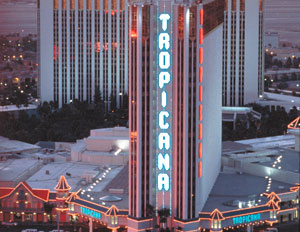
  imposed by previous management — which McDevitt accuses of being Icahn puppets. Since the Icahn-owned Tropicana Atlantic City
 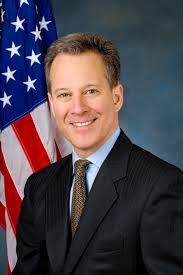 The two have said they will refrain from taking wagers from the Empire State through the end of the baseball season, although the agreement with Schneiderman
  heavyweight fights!’ And I notice the three shtarkers he’s with, in trench coats, two of them are putting on gloves and the other one is putting on brass knuckles. I go on the walkie-talkie and I call for Jim Callahan, who was head of our security, and I go, ‘Jim, I think I’m in a bit of trouble.’ And he says, ‘Just turn around.’ I turn around. He’s got 40 of the crew with tire irons and hockey sticks and screwdrivers. ‘And now, are you gonna go, Donald?'” — Broadway producer Michael Cohl, recalling the night the Rolling Stones got Donald Trump
  will this spare SLS Las Vegas the embarrassments that are its quarterly reports, it means that you, dear reader, will no longer have a window into the performance of SLS, The Cosmopolitan of Las Vegas or any other casino that is not the property of a publicly held company. The NGC found that it “was an additional burden to both the casinos and state regulators to review these financial earnings.” It wouldn’t be a burden if the Nevada Gaming Control Board were funded to an appropriate level instead of being on an austerity budget and, as for the companies’ auditors, isn’t that what they get paid to do? S&G fails to see the burden. Besides, the financial data will still be shared with the Control Board, which will keep it under wraps.
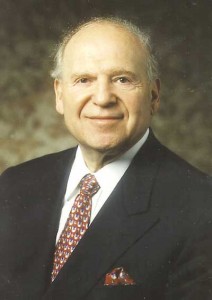 the market. “Anything” includes raising the prospective investment from $2.4 billion to at least $10 billion. That’s almost double what Adelson spent building Marina Bay Sands in Singapore, a country with fewer restrictions on who can gamble and where. He’d also face more competitors in the megaresort market, whereas in Singapore he has only the (largely vanquished) Resorts World Sentosa to worry about. Marina Bay Sands CEO George Tanasijevich said the proposed investment could push past the $10 billion mark depending on “how many buildings we are allowed to build and how many locations we are allowed to build in.” He also identified South Korea as Sands’ number-one priority, meaning that Adelson has temporarily despaired — haven’t we all? — of any imminent breakthrough in Japan. The huge financial commitment Adelson is promising the Koreans represents the biggest gamble of his career, especially since South Korean nationals are barred from all but one of the country’s casino resorts, a situation that will not change until
  New Jersey casinos in a spirited public debate. Hizzoner wasn’t the only skeptic: Resorts Atlantic City President Mark Giannantonio said, “Legislators are asking the residents of this state to change the constitution without even first calling for an economic impact study. That, to me, is appalling.” Atlantic City NAACP prexy Betty Lewis was equally skeptical. “I do not trust our legislators, because when gaming first came to Atlantic City, they were telling us we wouldn’t even have to pay taxes anymore. We can’t depend on their word,” she said.
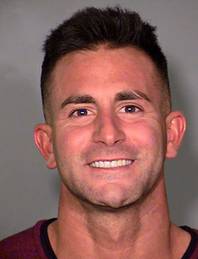 misdemeanor charge and had scarcely returned to Texas
  change and you don’t adapt, you become a dinosaur and you become extinct.” — New Jersey Assemblyman Ralph Caputo (D).
 Sedgwick County vote on whether to convert Phil Ruffin‘s Wichita Greyhound Park to a racino.
  “The global online gambling market is growing at an 11-percent clip, but for growth to continue the American market must further open. Online gambling is currently worth around $37 billion a year, as about 85 nations across the world have chosen to legalize Internet gambling, according to the American Gaming Association.” —
  images and videos (3,235 of the latter) on his computers. Las Vegas Sun columnist John Katsilometes characterized the material in question as “simply disgusting to any civilized individual.”
  trust Gaming & Leisure Properties, while Pinnacle would continue to exist as a casino-management company. This may constitute the acid test of the major qualm that surrounds casino REITs: that high rents may discourage reinvestment in the properties themselves, of which Pinnacle’s are some of the best-regarded in the business. (Unite-Here is predicating its opposition to the merger on precisely this fear.) The deal is valued at $4.1 billion. Although the result of the consolidation will be that GLPI will own multiple properties in the same market (including two of three in Baton Rouge), the REIT is in the catbird seat, collecting rent while competing managerial entities like Pinnacle and Penn National Gaming slug it out for market share. The merger has passed muster with Indiana gaming regulators but the Louisiana Gaming Control Board is still pondering it.
 subsidiary Caesars Entertainment Operating Co. That’s the conclusion of court-appointed examiner Richard Davis, who’s spent the past year of his life unraveling the Caesars bankruptcy. (To add insult to injury, Caesars has to foot the bill for Davis’ time.) Posing the question of whether the removal of properties like Harrah’s New Orleans from CEOC precipitated its Chapter 11 filing,
 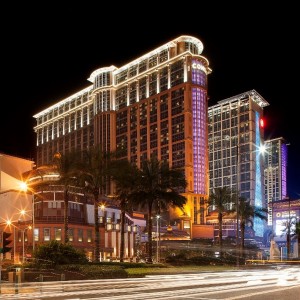 Sociedade de Jogos de Macau —
  and prohibits some forms of gambling, while permitting other forms in Indian casinos and card rooms, and even actively promoting it through the California Lottery. Some may gamble irresponsibly, and a small percentage may become addicted to gambling, but these vices or mental health issues should not constitute crimes … California should simply get off its faux moral high horse and legalize all forms of gambling.” — The Orange County Register,