

“Wait ’til next year” seems to be Penn National Gaming‘s mantra for the Tropicana Las Vegas. At present, the company is still installing Marquee Rewards, replacing older slot  machines and getting out of any leased-game arrangements. It doesn’t expect any significant bottom-line contribution from the Trop until 2017. As for the relationship between the Trop and M Resort, Penn told JP Morgan analyst Joseph Greff that it is still trying to find synergies between the two. In the meantime, Penn sure wishes it could find financial extraction from its casino at Jamul Indian Village (left), near San Diego. Penn has been carrying the entire project cost, which it says it can do for another year or year-and-a-half but would like to find someone else to take over the loan. If that happens, it will probably be announced in the next month or so.
Unlike the Boston newspapers, Penn is “very comfortable,” it says, with the performance of Plainridge Park, although it doesn’t expect revenues to stabilize for another three years. Greff said Penn had “broad-based strength in the Southern Plains region excluding Alton Belle” but its vulnerable flank was Continue reading
 from last year, as the state’s industry is now fully built out. “Since September 2015, the state has seen monthly gaming revenues continue to increase by an average of 6.1 percent compared to 2014,” reported a study by the RubinBrown firm. At $1.6 billion, the Buckeye State’s casino industry is smaller only than Indiana’s and Missouri‘s ($1.7 billion). Given its rate of growth, it should be in second place very soon. Overtaking Indiana ($2.1 billion) will be more difficult. The legalization of casino gambling in Ohio and Kansas is credited with making the Midwest the fastest-growing region for gaming revenue in the U.S.
 latter has said that if the issue can’t be resolved in the Lege,
 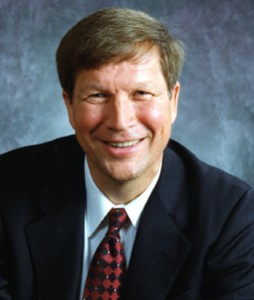 the state. Anti-gambling group Ohio Roundtable contended in vain that Kasich acted unconstitutionally by expanding gambling without putting the issue to a statewide vote. The Ohio Supreme Court ruled that the activist group lacked standing to sue. It opined that claims of gambling addiction and other social ills didn’t amount to a right to sue the state. “The negative effects of gambling that appellants allege do not constitute concrete injuries to appellants that are different in manner or degree from those caused to the general public, were not caused by the state’s conduct, and cannot be redressed by the requested relief,” opined the court Attacking the casino issue from a different angle, opponent Frederick Kinsey was deemed to have standing to sue. His beef isn’t with Kasich but with the original ballot initiative that created the Caesars/Penn duopoly. Kinsey, who may have casino aspirations of his own, “claims that the constitutional right of equal protection was violated because applying for an Ohio casino license was not available to everyone,” according to CardPlayer.com. The case has been remanded to Franklin County, where — among other things — Kinsey will have to
  for a $1.3 billion, taxpayer-funded, NFL-ready stadium. The 65,000-seat facility would be built on the southwestern corner of the newly expanded UNLV campus. “We’re dead serious about this. We may fail. We’re not saying this is simple. It’s complicated stuff, but it’s damn worth the effort,” Goldstein
  lead thumb — it’s the opposite of a golden touch,” says blogger par excellence Victor Rocha. One instance of this is the former Spotlight 29, a California bingo parlor run by a 12-member tribe, the Twenty-Nine Palms Band of Mission Indians.
  set for the beginning of construction but the Potawatomi have struck two deals with South Bend, bringing the casino closer to reality. The first was $400,000 commitment to pay for water and sewer service to the casino site. The second was a revenue-sharing agreement whereby, in lieu of property taxes, the tribe will pay the city 2% of casino profits. The minimum payment will be $1 million if the casino has 850-1,699 gaming positions, $2 million if the casino passes the 1,700-gaming-position threshold. This is on top of a veritable raft of commitments the Potawatomi have made to restore wetlands, fund schools, improve hospitals …
  It was Iowa Racing & Gaming Commission 1, Penn National Gaming 0 in an Iowa appellate court. Penn had been trying to get the license of its Belle of Sioux City reinstated, claiming it was deprived of due process. That argument
  imposed by previous management — which McDevitt accuses of being Icahn puppets. Since the Icahn-owned Tropicana Atlantic City
 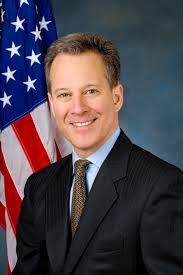 The two have said they will refrain from taking wagers from the Empire State through the end of the baseball season, although the agreement with Schneiderman
  heavyweight fights!’ And I notice the three shtarkers he’s with, in trench coats, two of them are putting on gloves and the other one is putting on brass knuckles. I go on the walkie-talkie and I call for Jim Callahan, who was head of our security, and I go, ‘Jim, I think I’m in a bit of trouble.’ And he says, ‘Just turn around.’ I turn around. He’s got 40 of the crew with tire irons and hockey sticks and screwdrivers. ‘And now, are you gonna go, Donald?'” — Broadway producer Michael Cohl, recalling the night the Rolling Stones got Donald Trump
 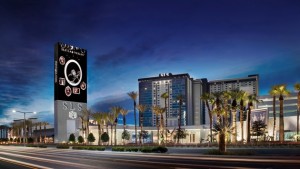 will this spare SLS Las Vegas the embarrassments that are its quarterly reports, it means that you, dear reader, will no longer have a window into the performance of SLS, The Cosmopolitan of Las Vegas or any other casino that is not the property of a publicly held company. The NGC found that it “was an additional burden to both the casinos and state regulators to review these financial earnings.” It wouldn’t be a burden if the Nevada Gaming Control Board were funded to an appropriate level instead of being on an austerity budget and, as for the companies’ auditors, isn’t that what they get paid to do? S&G fails to see the burden. Besides, the financial data will still be shared with the Control Board, which will keep it under wraps.
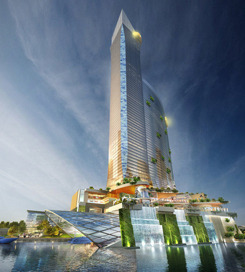
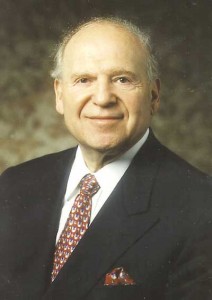 the market. “Anything” includes raising the prospective investment from $2.4 billion to at least $10 billion. That’s almost double what Adelson spent building Marina Bay Sands in Singapore, a country with fewer restrictions on who can gamble and where. He’d also face more competitors in the megaresort market, whereas in Singapore he has only the (largely vanquished) Resorts World Sentosa to worry about. Marina Bay Sands CEO George Tanasijevich said the proposed investment could push past the $10 billion mark depending on “how many buildings we are allowed to build and how many locations we are allowed to build in.” He also identified South Korea as Sands’ number-one priority, meaning that Adelson has temporarily despaired — haven’t we all? — of any imminent breakthrough in Japan. The huge financial commitment Adelson is promising the Koreans represents the biggest gamble of his career, especially since South Korean nationals are barred from all but one of the country’s casino resorts, a situation that will not change until
  New Jersey casinos in a spirited public debate. Hizzoner wasn’t the only skeptic: Resorts Atlantic City President Mark Giannantonio said, “Legislators are asking the residents of this state to change the constitution without even first calling for an economic impact study. That, to me, is appalling.” Atlantic City NAACP prexy Betty Lewis was equally skeptical. “I do not trust our legislators, because when gaming first came to Atlantic City, they were telling us we wouldn’t even have to pay taxes anymore. We can’t depend on their word,” she said.
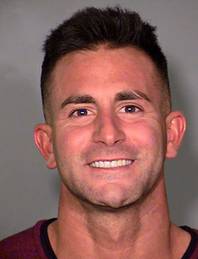 misdemeanor charge and had scarcely returned to Texas
  change and you don’t adapt, you become a dinosaur and you become extinct.” — New Jersey Assemblyman Ralph Caputo (D).
 Sedgwick County vote on whether to convert Phil Ruffin‘s Wichita Greyhound Park to a racino.
  “The global online gambling market is growing at an 11-percent clip, but for growth to continue the American market must further open. Online gambling is currently worth around $37 billion a year, as about 85 nations across the world have chosen to legalize Internet gambling, according to the American Gaming Association.” —