Even with $600 extra in their pockets, gamblers could not be lured back to the Las Vegas Strip last month. Strip revenues of $321.5 million represented a 44% implosion from 2020. Statewide, the falloff was 26.5% to $762 million. Once Nevada casinos become diversified destinations again recovery is inevitable but we’re hardly there yet. At least Las Vegas locals were generous with their play: off only 6.5% from one of the two biggest months in American gaming (February 2020 being the other). True, casino capacity was capped at 25% but that didn’t keep the locals away—and their play may have been even stronger than it looks ($200 million), slot revenue from the final weekend not having been reported yet. JP Morgan analyst Joseph Greff struck a hopeful note: “Given improved vaccination rates, slower COVID-19 new case trends, and increased capacity limits, we think this month likely marks the bottom of LV Strip [gross gaming revenue], and we expect CZR to confirm this on tonight’s earnings call.”
Things could hardly get worse. Last month, McCarran International Airport‘s traffic cratered -64%. International travel (see baccarat results, below) plummeted 93%. Spirit Airlines held its market share best, off 40%, while Southwest Airlines was down 61% despite having a vast lead in volume. As for the small(er) fry, American Airlines dropped 59%, followed by Frontier‘s 64% and Delta‘s 68%.
Continue reading

 Online sports betting and Internet gambling have come to Michigan and they’re a smash hit. In the first 10 days of sports betting, handle was $115 million, with revenues of $13 million. FanDuel led market share with 32% of handle, well ahead of DraftKings‘ 24.5%, followed closely by Penn National Gaming‘s 24%, then BetMGM‘s 20%, per Credit Suisse analyst Ben Chaiken. He described the i-gaming haul—$29.5 million—as “well above expectations,” led by MGM Resorts International with 38% of market share, trailed by FanDuel’s 23% and DraftKings’ 24%. Whereas Chaiken had anticipated a monthly gross of $28 million, he’s upped that to $90 million, quite a dramatic change to say the least. To put that in perspective, it would be at least $10 million higher than Pennsylvania, which has 3 million more inhabitants. Talk about the proverbial “pent-up demand”! The downside was that sports books spent so much to acquire players that they ended up losing $5 million.

 Why so sanguine? OSB and Internet gambling were “objectively impressive” with BetMGM forecast to capture 15% of American OSB share and 20% of i-gaming action. (He wasn’t so chill about the Strip, lowering his cash-flow projections.) The good online news inspired Greff to boost his MGM price target from $32/share to $37. MGM leadership thinks business will not return to 2019 levels for a couple of years, projecting that it will be 90% of prior-year levels by late 2022. Greff is a bit more optimistic than that. Strip occupancy fell from 89% to 38%, thanks of course to nonexistent convention business, table-game wagering was 41% less (though the house won more often) and “properties are still being negatively impacted by capacity constraints, lack of demand/airlift, etc.”
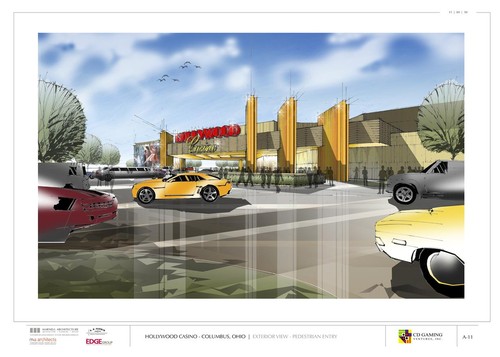
 Penn National Gaming reported 4Q20 earnings today and they were down 23% from last year. Many reasons were cited, including lower consumer spending, casino closures in Illinois, Michigan and Pennsylvania, and new restrictions in Ohio and Maine. Oh yes, and Covid-19. Fortunately for Penn, it had done a sufficiently good job of lowering expectations that Wall Street wasn’t fazed by the numbers. After the New Year ‘skinny stimulus,’ Penn is describing January business as “thus far encouraging,” with more foot traffic and longer stays. Sports betting is also providing a critical boost. JP Morgan analyst Joseph Greff wrote that Penn “is continuing to see encouraging growth in the younger demographic tiers of its database, and expects the roll-out of vaccinations will encourage more guests in all age segments of its database to return to land-based facilities soon.”