

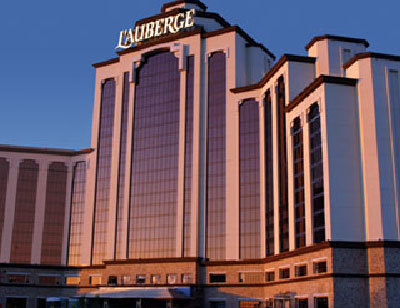
Casinos in the Pelican State were off 10% in January. However, when one adjusts the numbers to account for the permanent closure of Diamond Jacks in Shreveport and the all-but-permanent shutdown of Isle Grand Palais on Lake Charles, gaming revenues were only down 6%. We’d call that recovery, given a difficult comparison, stimulus money on the loose, capacity limits (50%), gaming-position limits (75%) and an extra weekend day. Penn National Gaming properties prospered, up 10%. By contrast, Caesars Entertainment took a -38% walloping. Somewhere in between (-11%) was Boyd Gaming. Staying with Lake Charles, L’Auberge du Lac and Golden Nugget were tied at just under $26 million, a 7.5% gain for L’Auberge and a 2.5% for the Nugget. Delta Downs rounded out the market with $14 million, up 3.5%.
Caesars needs a course correction in Bossier City/Shreveport, where Horseshoe was eclipsed by Penn’s Margaritaville, $12 million to $16 million (-16% vs. +36%). Eldorado Shreveport slipped 6.5% to $7 million, while Boomtown Bossier inched up 3% to $4 million and Sam’s Town stumbled 24% to $4.5 million. Harrah’s Louisiana Downs nudged 2% higher to $4 million. In Baton Rouge, customers continue to flee Belle of Baton Rouge, collapsing 43.5% to $1 million. Doing better was Casino Rouge, up 3% to $4.5 million. Surprisingly, L’Auberge Baton Rouge was 2% lower but still dominated the market with $13 million.
Continue reading

 Online sports betting and Internet gambling have come to Michigan and they’re a smash hit. In the first 10 days of sports betting, handle was $115 million, with revenues of $13 million. FanDuel led market share with 32% of handle, well ahead of DraftKings‘ 24.5%, followed closely by Penn National Gaming‘s 24%, then BetMGM‘s 20%, per Credit Suisse analyst Ben Chaiken. He described the i-gaming haul—$29.5 million—as “well above expectations,” led by MGM Resorts International with 38% of market share, trailed by FanDuel’s 23% and DraftKings’ 24%. Whereas Chaiken had anticipated a monthly gross of $28 million, he’s upped that to $90 million, quite a dramatic change to say the least. To put that in perspective, it would be at least $10 million higher than Pennsylvania, which has 3 million more inhabitants. Talk about the proverbial “pent-up demand”! The downside was that sports books spent so much to acquire players that they ended up losing $5 million.
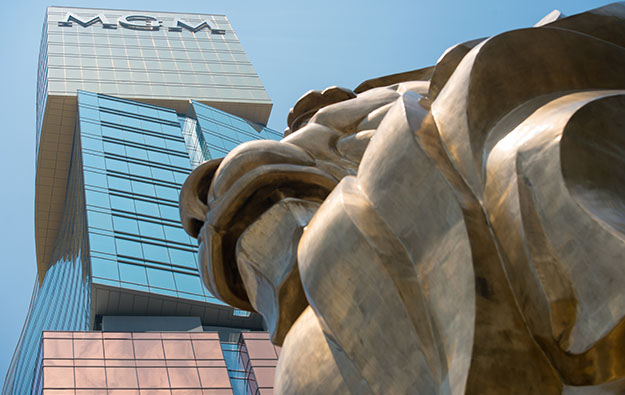

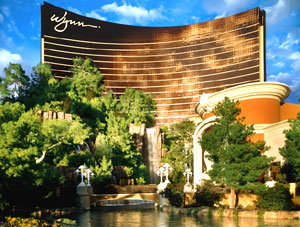
 Why so sanguine? OSB and Internet gambling were “objectively impressive” with BetMGM forecast to capture 15% of American OSB share and 20% of i-gaming action. (He wasn’t so chill about the Strip, lowering his cash-flow projections.) The good online news inspired Greff to boost his MGM price target from $32/share to $37. MGM leadership thinks business will not return to 2019 levels for a couple of years, projecting that it will be 90% of prior-year levels by late 2022. Greff is a bit more optimistic than that. Strip occupancy fell from 89% to 38%, thanks of course to nonexistent convention business, table-game wagering was 41% less (though the house won more often) and “properties are still being negatively impacted by capacity constraints, lack of demand/airlift, etc.”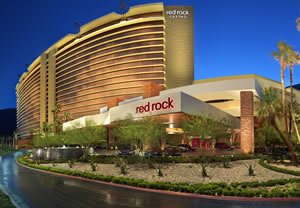
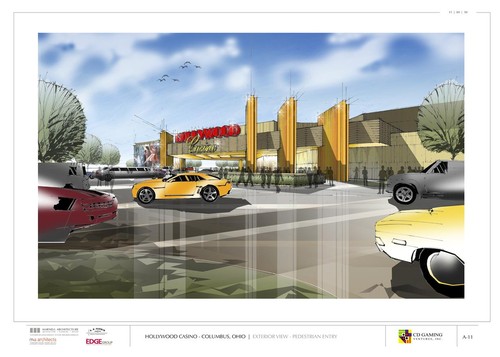
 Penn National Gaming reported 4Q20 earnings today and they were down 23% from last year. Many reasons were cited, including lower consumer spending, casino closures in Illinois, Michigan and Pennsylvania, and new restrictions in Ohio and Maine. Oh yes, and Covid-19. Fortunately for Penn, it had done a sufficiently good job of lowering expectations that Wall Street wasn’t fazed by the numbers. After the New Year ‘skinny stimulus,’ Penn is describing January business as “thus far encouraging,” with more foot traffic and longer stays. Sports betting is also providing a critical boost. JP Morgan analyst Joseph Greff wrote that Penn “is continuing to see encouraging growth in the younger demographic tiers of its database, and expects the roll-out of vaccinations will encourage more guests in all age segments of its database to return to land-based facilities soon.”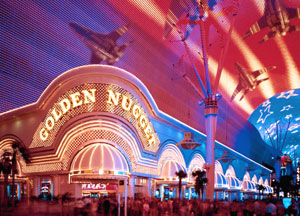
 More than 23 million Americans are expected to bet legally or otherwise on the Super Bowl, according to the American Gaming Association, which predicts $4.3 billion in handle. 7.5 million punters will be doing their wagering online, 63% more than last year. The action leans heavily (56%) toward the Kansas City Chiefs—sorry, GOAT—with 12 million citizens betting against friends, as opposed to 1.5 million using retail sports bookies, down 61% from last year, before Covid-19 struck. Action with Lefty in the back alley will be patronized by nearly two million Americans, down 21%, a sign of progress. Speaking of progress, the AGA says, “34 percent of Americans remember seeing responsible gaming messaging in the past year, up five points from 2020. Super Bowl bettors were even more likely to see responsibility content, with 53 percent seeing responsible gaming messaging in the past year.” As AGA prexy Bill Miller puts it, “Responsible gaming is core to legal sports betting’s long-term success, and this is borne out by continued demand for consumer protections only available in the legal market.”