

Check Louisiana off the list of states giving the thumbs-up to the Eldorado Resorts takeover of Caesars Entertainment. CEO Tom  Reeg had to assure regulators that the company would invest $500 million (there goes that highly touted half-billion cost savings) in the Pelican State if approved. That includes redoing all-but-defunct Belle of Baton Rouge “a venue so decrepit the gaming boss wouldn’t even stay there during his recent visit,” reports Casino.org. We’re glad of anything that lights a fire under Reeg to upgrade that casino, which generates negligible revenue.
* A gaggle of dirty tricksters in the Arizona Lege are trying to hold tribal gaming compacts hostage Continue reading
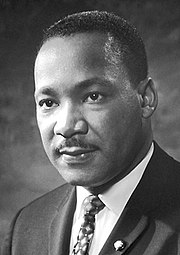 “I do not think of political power as an end. Neither do I think of economic power as an end. They are ingredients in the objective that we seek in life. And I think that end of that objective is a truly brotherly society, the creation of the beloved community.”—Dr. Martin Luther King, Jr., whose birthday we celebrate today.
 Gaming once more. The goal is to raise an additional $135 million in revenue and the Clark County Education Association
 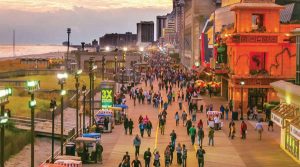 “The revenue increase is a positive. Right now the industry should be in ‘grow-the-market’ mode rather than seeking to consolidate profits, so a decrease in profits isn’t necessarily the worst news we could get. Overall, what Atlantic City needs right now is to improve its image and marketing and become a destination in a crowded Northeast casino market.”—
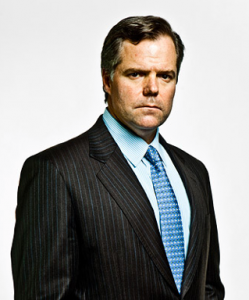 purpose is to hang out with the Boston Red Sox, not that being seen with a bunch of cheaters is the world’s greatest PR idea. His new business plan is to emphasize events: more comedy acts, more concerts, more sports … more things other than gambling. He’s basically waving a white flag at Foxwoods Resort Casino and Mohegan Sun, tacitly admitting that seasoned gamblers aren’t going to change their playing habits easily (if at all).
 development in Greece. That means
  600 dimes win per day, with Plainridge Park bringing up the rear with $330K daily win. Plainridge Park’s $10 million haul represented a devastating 27.5% falloff, as it is caught in a pincer between Twin River in Tiverton and Encore. Players were obviously staying away, as handle was down 22% despite an impressive win/slot/day of $274. Also slipping at the slots was MGM, down to $176/win/slot/day, for a gross of $14 million, a dip of 2.5%. MGM had a terrible month at the tables, toppling 30% to $5 million.
 reduction in the maximum wagers that can be placed at fixed-odds betting terminals. Paddy Power Betfair and Stars Group
 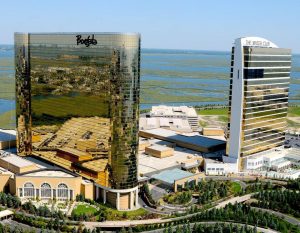 betting handle, economic stimulation that someone should bring to the attention of tight-ass Maine Gov. Janet Mills (D), who just vetoed sports betting in her state. Atlantic City grossed $208.5 million. Table-game winnings were down 6% but slots were up 2.5%, maintaining the revenue status quo. Borgata was off 4%, thanks to a terrible month at the tables: Win plunged 21% on 9.5% less wagering, so Lady Luck was really with the players. Slots were up 5% despite 4.5% less coin-in. In the final tally, Borgata won $55 million.
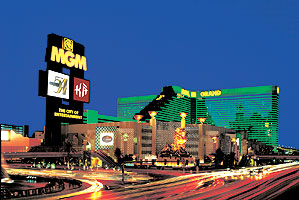 Betting the farm on Japan, CEO of MGM Resorts International Jim Murren has realized his goal of selling MGM Grand and Mandalay Bay. The price
 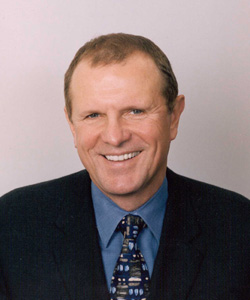 to get on the list for Section 8 housing or to clean up the streets. They were duped,” said Mayor Marty Small. Big winner in the showdown was Small. Losers included Unite-Here labor boss Robert McDevitt, Resorts Atlantic City owner Morris Bailey and former state legislator Raymond Lesniak (pictured). McDevitt was unbowed, saying, “Marty Small and his family have been living comfortably for decades off the backs of Atlantic City residents. The least he could do out of respect to their contributions to his lavish lifestyle is to tell the truth. Of that, he is incapable.”
 initiative and put it up to November’s electorate. “We will likely approach a total of 30 states with some form of legal sports betting by the end of 2020,” Eilers & Krejcik Gaming Managing Director Chris Grove told Fox Business. He didn’t include California in the 30 if only because, when it comes to gaming, the political system always manages to tie its shoelaces together. In addition to the ballot initiative being crafted by state Rep. Adam Gray (D, below) and state Sen. Bill Dodd (D), 18 tribes and the state’s horse racing industry have agreed on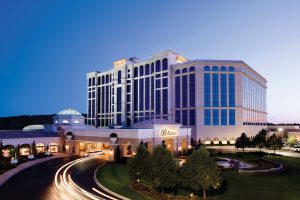
 people are [not] ready to legalize, support, endorse and promote betting on competitive athletic events.” Says who? Mills’ snit fit is great news for neighboring New Hampshire, where Gov. Chris Sununu (R) will be only too happy to take spillover action, as will business partner DraftKings. Although there’s already a considerable body of economic evidence available (New Jersey, anyone?), Mills grumbled that “Before Maine joins the frenzy of states hungry to attract this market, I believe we need to examine the issue more clearly; better understand the evolving experiences of other states; and thoughtfully determine the best approach for Maine,” the best approach apparently being to do nothing.
 tribal gaming revenue to defend against a lawsuit brought by the state’s three biggest tribes. The Sooner State must not need tribal lucre as much as Stitt claims, if he can so cavalierly use it to bring in pricey Seattle legal talent to defend himself. It is, however, characteristic of Stitt’s me-me-me perspective on a sensitive issue: whether the state’s tribal compacts rolled over last Jan. 1 or must be renegotiated. While each tribe is required to pay the state $35,000 a year for “costs incurred in connection with the oversight of covered games,” Stitt seems to have a much more luxurious legal tab in mind.
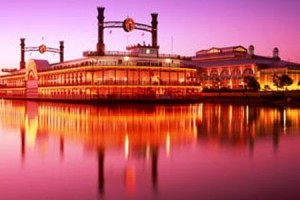 receipts rose 5.5% last month. The gross was $124 million, with most of that ($94 million) coming from the state’s northern tier. Last year December was flat, despite nine weekend days, which makes this year’s performance even more impressive. Driving the increase among the northerly casinos were Rivers Casino Des Plaines and Grand Victoria in Elgin. At the former, Churchill Downs saw a 17.5% revenue spike to a market-leading $45 million. The latter, Eldorado Resorts-owned riverboat grew 10% to $14 million.
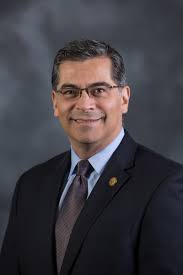 room was described as “seriously underfunded,” in yet another black mark on the Golden State’s gambling demimonde. “The card room will remain closed unless it is able to demonstrate that it has addressed its funding issues,” said the office of Attorney General Xavier Becerra. The latter said it had been warning Magnolia House since June and, evidently, the card room hadn’t cleaned up its act. “[M]ultiple reviews of its finances revealed that it was seriously underfunded, threatening significant losses to patrons and players.” Perhaps even more worrisome, Magnolia House had been comingling funds from third-party vendors with its casino accounts. (Third parties act as “the bank” since the card rooms themselves cannot.) Is there any good news in this? Well, if you’re famished you can still stop by Magnolia House, as its restaurant remains open.