

Although Florida voters thought they were cutting the Lege out of gambling legalization, lawmakers may have found a way to weasel their  way back in, at least as concerns sports betting. The Sunshine State’s constitution now forbids the Lege from involvement in “casino gambling,” but does sports betting fall under that rubric? It’s a bit of hair-splitting sure to wind up in court but, for the moment, it appears to open a path for solons to get back into the act of legalizing and taxing sports wagers. A somewhat roseate projection by the American Gaming Association has Florida booking $110 million in tax revenue from sports betting.
The all-important constitutional amendment putting gambling expansions in the hands of the initiative-and-referendum process fails to include the words “sports betting.” Indeed, gambling was defined as Continue reading
 million—a 4.5% gain—led the state. Slots were down 2% at MGM but table win up 12%, a development that will thrill management, since table games are taxed far more conservatively. MGM had 42% of market share to Maryland Live‘s 35%. The latter was up 3.5% to $52 million. Horseshoe Baltimore, which has become an authority on alienating players—
 merged companies. “Anytime you see mergers and consolidations within an industry, you get concerned about whether or not there will be contraction in terms of things like the number of employees,” added gaming consultant Dan Heneghan. 2) The continued rise of sports betting and Internet gambling. Both are raking it in hand over fist. “Nevada is clearly in our sights,” said Gov. Phil Murphy (D), apropos of sports betting. “We can overtake it as early as [2020].” 3) Expansion of gambling in Philadelphia. [Ever contrary, we think it will result in local cannibalization, not an existential threat to A.C.] 4) More casino amenities, which now account for 47% of overall revenue. “The product is constantly being
 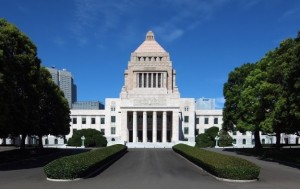 train. “Sources told the Mainichi newspaper that some of the five belong to a cross-party group of politicians tasked with promoting international tourism.” The five are unidentified, although one has denied the accusations. Ticking off various casino-related worries that preoccupied the Diet during her tenure there, retired parliamentarian Mieko Nakabayashi added, “The other worry was about bribery, corruption and even the involvement of organized crime groups. That appears to be what we are seeing now.” Nor does she think we’ve
  show the peril of your chosen approach and have remained intent on breaking faith with the tribes. Your actions have shown that my continuing in service on your cabinet is unnecessary to you and impossible for me.” She also slammed Stitt for threatening to open the Sooner State to private-sector casino companies as means of clubbing tribes into submission. Stitt, for his part, could not refrain from posturing about the issue. “[Legislators are] privately telling me that they support me. But you’ve got to realize that the other thing that’s frustrating that Oklahomans need to understand is when certain industries, the casino industry, pours money into campaigns, it complicates it and the lobbying and that’s what you’re trying to see happen to advocate for their positions.”
 supply and continued protests in Hong Kong—which show no signs of remitting—were hardly conducive to tourism. There hasn’t been this bad of a year/year decline since March 2016. VIP baccarat made its worst showing in three years. Not even strong mass-market baccarat and blackjack play were enough to offset that. President Xi’s three-day stay coincided with a crackdown on visa applications, another disincentive to gamblers. Don’t you get the impression that Xi likes the money that gambling brings but hates the industry? For the year, Macanese casino revenue was down 3.5%. Wall Street keeps telling us that 2020 will be better … and at the rate how can it be much worse? Mind you, in spite of everything, Macao casinos still
  casinos. We’ll see what happens with his threat to crimp casino vendors’ style. Also, as former attorney general Drew Edmonson pointed out, if tribal gambling is deemed illegal, the state would “have trouble” collecting the 4% rake it gets from the casinos, “so it’s really in the state’s interest to have those operations continue in effect.” Issuing a veiled caution to Stitt, Edmonson continued “the state is sovereign, but so are the tribes … and when there is a disagreement between the two, federal courts become the arbiters.” Already Stitt is a defendant in a lawsuit filed in federal court by three major tribes.
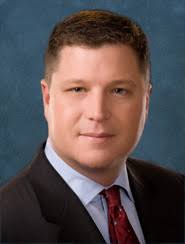 and online wagering, which would taxed at a painful 50% (who said Democrats are the only party of high taxes?). The proceeds kept by the state would go toward the cost of education. In view of the likelihood of opposition from the well-funded Seminole Tribe, one pundit said of Brandes, “His bill is DOA. A longshot comes through every once in awhile. This bill isn’t getting out of the chute.” The Seminoles aren’t against sports betting. They just think it should be their bailiwick. For that matter, decisions involving gaming were taken out of the Legislature’s hands last election by popular vote.
 Penn’s $11 billion debt overhang. As a return on investment
 Flamingo Las Vegas will soon debut a new restaurant called Bugsy & Meyer’s Steakhouse. Some will find the name ironic if they adhere to the theory that it was Meyer Lansky who had Busgy Siegel snuffed … On a personal note, thank you to everybody who reads this column. As we head into a new year I cannot stress enough that you make this possible. For our part, we will strive to make the next year of S&G as good as or better than the last one. Happy New Year.
 has already thrown in the towel and other would-be operators may be getting cold feet. The tortoise-propelled pace of the casino-development process is just
 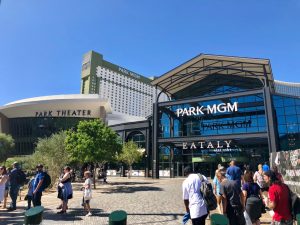 prior-year comparison was difficult (+6.5%) but not impossible, while December looks more promising in that respect. Strip casinos won $518 million, but slot win was flat ($278 million) and baccarat dove 23% on 31.5% less wagering. Non-baccarat table win was up 4%, so that was a bright spot. Locals won big at the slots, with casinos taking home 8% less on 1.5% lower coin-in. A favorable calendar (one extra weekend day) didn’t do anything to help the casinos. (Incidentally, isn’t Park MGM—photo by Greg Askins—the butt-ugliest
  “It’s not an issue of jobs. It’s an issue of the law. It’s like saying, ‘Yes, meth is a terrible drug, but think of all the jobs that are created in the emergency rooms, and if we stop it, those jobs will stop.’ It has to do with the law. They have clearly been outside of the law.”—former California gaming regulator Richard Schuetz on the the Golden State’s card-room industry and its
  package they’ll be proposing. “We need further deliberation.” Lawmakers conducted a listening tour of the state, compiled a report but held back from making formal endorsements. Casinos are more popular with voters than is glum Gov. Brian Kemp (R) but that’s no guarantee of anything. A two-thirds vote in the Lege is needed to merely get casinos onto the next election ballot, where they would also need a supermajority to pass. At least two proposals are gaining traction, according to the Albany Herald: “One would be built adjacent to the Atlanta Motor Speedway in Hampton, while the other is the brainchild of Columbus entrepreneur Bob Wright, who wants to build a casino resort along the Chattahoochee River between Uptown Columbus and Fort Benning.” (Lots of troops with discretionary dollars from Uncle Sam burning a hole in their collective pocket.)