

Despite having missed — by several days — the deadline for getting their $1 million application fee refunded, Penn National Gaming and Cordish Gaming want their money back from New York State. Why? Because they  have belatedly decided to scrap their Rensselaer County project and concentrate on their proposal for (more lucrative) Orange County. It remains to be seen whether the Empire State will allow Penn and Cordish to play by a different set of rules than all other applicants.
Ever-fickle Foxwoods Massachusetts, meanwhile, reportedly has jilted Fall River in favor of New Bedford. This move puts them in head-to-head competition with KG Urban Enterprises, which has been trying to crack the New Bedford market for years. Foxwoods proposes to grind up a golf course to make room for its casino. All this comes very much as news to Fall River Mayor Will Flanagan, who told reporters, “I’ve been working diligently with Foxwoods over the last several weeks and they have not communicated any of that information to me. We’ve heard nothing contrary.”
 The Whaling City Golf Course already has some casino history, having been coveted two decades ago by the Wampanoag Tribe of Gay Head. However, were Foxwoods to turn its gaze to the former NStar plant, it could find itself with an equity party. KG Urban has been trying to monetize that site, without avail. New Bedford Mayor Jon Mitchell offered oblique confirmation of the Foxwoods pitch, while the latter’s CEO, Scott “Woody” Butera ducked reporters’ calls. Since the city owns the golf course, valued at $15 million, Foxwoods would have to win it in an open auction, so we’re talking a far-from-done deal here.
Mitchell might still be able to assemble sufficiently attractive acreage but New Bedford is casino-friendly turf. In the meantime, the Mashpee Wampanoags have dropped out of sight and, barring several layers of federal approval, seem extremely unlikely to make the September 23 application deadline.
Whoops. Thanks to a carelessly written law, West Flagler Associates can hold one jai alai game — just one — then convert their operation into a poker room. Then, in two years, they can add slot machines. So says Florida’s First District Court of Appeal, citing a loophole found in a law from 30 years back.
“The law allows a summer permit to be awarded to the lowest-performing pari-mutuel in a county. Hialeah Park had the lowest racing handle of the county’s pari-mutuels in the 2011-12 fiscal year but it declined the option for 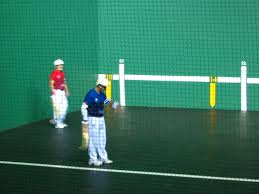 the permit, so West Flagler became the next one eligible … The permit comes loaded with advantages that legislators never imagined in 1980, when the law was written. It opens the door for a jai-alai fronton and poker room anywhere in Miami-Dade County. It also increases the odds of operating a new slots casino as a result of a 2009 law that allowed Hialeah Park Racetrack to operate slots after Miami-Dade voters authorized them for three other pari-mutuels in the county.”
The court noted that it wasn’t endorsing wide-open parimutuel expansion but that it was the Legislature’s job to close loopholes, not the court’s. And, as usual, the Lege adjourned this month without having taken any meaningful action on gaming in Florida.
