
Shares of Penn National Gaming jumped 12% on news of its 36% acquisition of Barstool Sports. Penn plans to unroll a Barstool-branded line of sports books, online applications and mobile-wagering services. Barstool, in turn, will promote Penn until 2060 … infinity in casino years. “The stake is a big play for the regional gaming company  to expand its exposure in sports betting, which will reduce its marketing costs and the price of customer acquisition. Penn is hoping it lures younger gamblers into its retail and online offerings as well,” reported CNBC, which also disclosed that Barstool’s core audience members are known as “Stoolies,” which sounds rather cloacal to us.
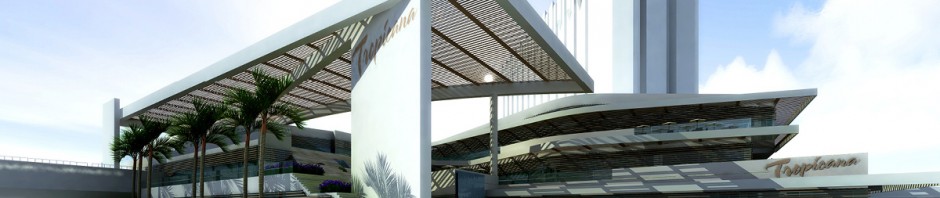
Penn CEO Jay Snowden described his company as “scrappy” and said Barstool was a kindred spirit in that respect. Wall Street certainly loved the marriage. “The $450 million valuation implied by this agreement builds in future growth enabled by Penn. This deal will clearly raise Penn’s profile in sports betting with the returns on investment demonstrated over time,” said Jefferies Gaming analyst David Katz. Barstool itself generated as much as $100 million in revenue last year, “with the majority coming from podcasts, merchandise sales, and gambling deals.” Also making out like a bandit is Chernin Group, which bought into Barstool for $25 million and is seeing an exponential return on its investment. Vox.com opines that, in Penn, Barstool “has found an owner that is unlikely to be worried about its brand and content, which is both popular and oftentimes intentionally abrasive.” Ironically, Vox cites the unwanted Tropicana Las Vegas as Penn’s best-known casino.
It will be interesting to see whether Penn’s plurality stake equals a reversal of Barstool founder Dave Portnoy‘s aggressive anti-union tactics. Barstool has already been spanked for this once. Forbes also cautions that the deal is not to be read as a valuation-lifter for all sports-betting companies. Barstool “has been willing to leverage its’ rabid and loyal fan base into other revenue opportunities outside of the traditional advertising model … Whereas other media brands/companies attempt to make a shift towards premium content, subscription-based models and the like when growth plateaus, Portnoy tested and demanded his audience’s loyalty on a regular basis – and each time his audience rose to the occasion.” Such is the power of the Barstool brand that Penn is already planning to leverage it into a freestanding pizza-parlor chain. Now the question is whether the brand equity is so great that Barstool can vie with the FanDuels and DraftKings of this world.
* Las Vegas Sands has evidently gotten past President Rob Goldstein‘s public qualms about the return on investment in Japan. It dispatched Marina Bay Sands prexy  George Tanasijevich to tell Nipponese reporters that the government must “make sure that we reduce misconceptions about our industry and its impact on the market.” His views were seconded by those of Wynn Resorts President of Development Chris Gordon, who spun the recent arrest of lawmaker Tsukasa Akimoto as a plus, saying, “We want to compete in a market where it’s really well-regulated.” And in case any casino applicants were even thinking about putting a thumb on the scales, the Akimoto bust puts them on notice—so we guess it is a good thing.
* Caesars Entertainment can’t make up its mind about Atlantic City. Five years after selling Playground Pier to Bart Blatstein, it is buying the retail complex back … for an undisclosed price. Blatstein will presumably use the money to finance his dream of returning casino action to the Showboat. While demurring that “nothing has changed” on the casino front, Blatstein told reporters, “I’m very happy because I’m completely focused 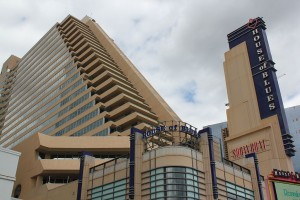 on the Showboat. Now there’s no distraction from what I’m going to do at Showboat. More than ever, I am extremely bullish on Atlantic City.” We’re glad someone is. His lack of transparency hints at Blatstein taking a bath on the real estate, into which he had sunk $52 million, to little avail. (Scant parking and circuitous access were blamed for The Playground’s failure.) Caesars, which will soon quadruple down on the Boardwalk with the addition of Tropicana Atlantic City, also said it was upbeat on the city’s future. “Caesars remains committed to Atlantic City, and the future development of our brand through job growth and capital investment,” it stated. “We are also dedicated to working collaboratively with all stakeholders to position the city as a leading gaming and entertainment destination here on the East Coast.” After all the Debbie Downer talk from Tilman Fertitta and Jim Allen, that kind of confidence is welcome.
* MGM Springfield is having second thoughts about that hotel thing. It’s entering talks with Red Lion Inn owner Main Street Hospitality Group about “exploring” a hotel project in Springfield. The news comes on the heels of a management shakeup at the casino, which posted its worst-ever revenues in December. The casino does have 250 hotel rooms but scrapped a glass-curtain-wall tower early in the development stage (local politicians didn’t take it well) and may be thinking better of the move. Main Street has extensive local ties, which would make it a logical partner for MGM, which has been trying to synergize with area businesses.
* ACS‘ PlayOn hardware is expanding past The D and Golden Gate, making the leap to The Strat, the Palms and sundry other Station Casinos properties. “Sometimes the time you 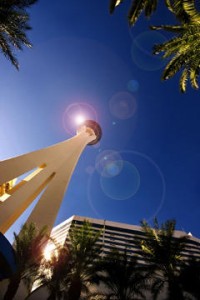 spend finding an ATM and coming back to the table disrupts your flow. Plus, you don’t have to risk losing your spot,” said Golden Entertainment veep Jay Fennel, in defense of the product. While PlayOn can be used on slots, so far there are no apparent plans to deploy it in that fashion. The American Gaming Association has Golden’s back. “Our focus has been on customer choice and introducing more opportunities in terms of how they pay for that experience,” said Senior Vice President for Strategic Communications Casey Clark. He added that the devices could provide insight into problem gambling by their tracking of player spending habits: “There’s greater opportunities for bettors to set limits, both time limits and monetary limits.” Or lose impulse control. We’ll see which is stronger, I guess.
* Speaking of Derek Stevens, his Circa is still on track for a December opening, while Virgin Hotels is vague about when its reinvention of the Hard Rock Hotel will debut. Powering all this and more is the extension of the Las Vegas Convention Center, set to 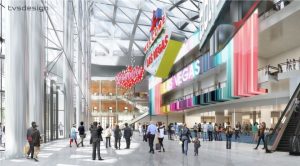 open in December. The Elon Musk people mover won’t be finished boring until next year. Vegas being Vegas, we predict an unseemly, last-minute rush to get Allegiant Stadium open by its date-certain of July 31. Wags on Twitter are likening its appearance to the “Death Star, a slow-cooker appliance, a hockey puck or maybe a big Roomba vacuum.” Resorts World Las Vegas continues to muddle along toward a mid-2021 debut as does the Madison Square Garden sphere behind Venelazzo. (Imagine Sheldon Adelson‘s disembodied head projected across thousands of feet of video screens.) The cone of silence has re-descended over The Drew. Could Steven Witkoff be having problems drumming up the money? Resorts World has the look of a white elephant, which can hardly make investors want to pony up billions to finish what used to be pale pachyderm Fontainebleau.
* Don’t expect much from a sports-betting bill being debated in the Washington State Lege. It would preclude betting on in-state collegiate teams, wagering via the Internet or via mobile devices. At least tribal casinos would have exclusivity on the action but the setup is seemingly designed to bring in as little money as possible or “figure out a slow and steady way to kind of enter into this new arena of gambling,” as House Commerce & Gaming Committee Chairman Strom Peterson put it. “These are some interesting conversations we’re going to have to have,” he added, when it was noted that some of the bans could play hob with March Madness wagering, should a Washington team make it to the tourney.
Saying “you’ll do nothing to stop the illicit gambling in the state,” Maverick Gaming owner Eric Persson protested the idea of tribal exclusivity. Speaking for the state’s aboriginals, Puyallup Tribe Chairman David Bean rejoined, “You know us. You trust us. We invest our resources in the state of Washington.” As for allowing sports betting in card rooms (where it would surely boost business), Persson testified, “That’s what the consumer wants.” The usual worries about underage gambling were voiced, with Persson reassuring the Lege that, given the choice, people will opt for safe, legal betting. Persson backs mobile wagering, the tribes do not. In whatever form, the horse tracks want in too. Peterson says he hopes the bill can be moved forward with minimal markup.

AC: The Pier at Caesars’s Leasehold was sold by Caesars to Bart Blatstein who bought the failing $200+ Million project for $2-3 Million, renovated it, and then re-failed it as “The Playground”. The Playground has no parking of its own, and is connected by a bridge over the Boardwalk to Caesars. On the same day Blatstein’s sale was announced, AC Mayor Small noted he spoke with Carl Icahn about the former Trump Plaza (next to Caesars). Icahn previously said the Plaza demo would not include one of the two hotel towers. Could this be a “chess game” where Caesars/Icahn develops the Plaza with parking and the Playground in exchange for the release of the casino deed restrictions on the Showboat? For info on Blatstein’s success in Philly’s “Piazza at Schmidt’s” see the Phiily Mag article “Can the Post Brothers Fix the Piazza At Schmidt’s”. Not an amateur, Blatstein was very successful and sold out to Jared Kushner who lost big time bucks!