

At first blush, Pennsylvania‘s gambling economy looks all right, up 1% from August of 2019 and 2% from last year. But factor in the plethora of new casinos that have entered the fray and the Keystone State is down 14% from 2019. Clearly, more casinos does not equal more money. At least not if you’re casino owner. For a tax collector it’s a different story. Not even a 5% uptick in table game winnings (or losses, if you happen to be a player) could paint a smiley face on the portrait, despite $286 million in casino win.
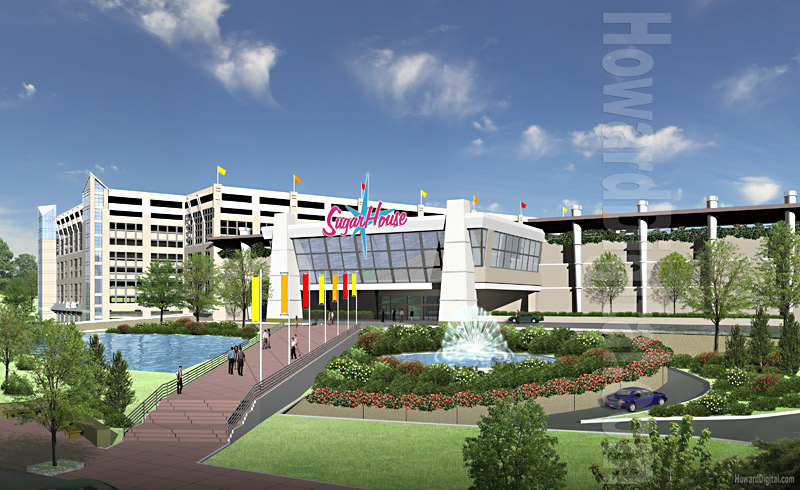
Despite being absolutely flat in revenue, Parx Casino held onto its top spot with $50 million in takings. Wind Creek Bethlehem made a brave run at statewide supremacy in July but had to content itself with $45 million and a 10.5% upsurge. Only a few dollars separated Rivers Philadelphia (pictured, +10%) from Philadelphia Live (+4%), deadlocked at $19 million in their seesaw struggle for downtown supremacy. Harrah’s Philadelphia tumbled 15% but remained ahead of upstart Valley Forge Resort (-4%), $12 million to $11 million. To the west, Rivers Pittsburgh (+4.5%) regained market share for $29 million, outpacing Hollywood Meadows ($17 million, +5%) and Pittsburgh Live ($9 million, +1.5%).
Elsewhere, Mohegan Pocono was flat at $17 million, Mount Airy slumped 6.5% to hit $16 million, Presque Isle Downs was down 9.5% to $9 million and Hollywood Penn National slid 11% to $13.5 million. Hollywood York suffered a rare adverse month, down 3% to $8 million, whilst Hollywood Morgantown gained 7% to $5 million. Newbie Parx Shippensburg made $3 million while getting rid of Churchill Downs has worked wonders for Lady Luck Nemacolin, vaulting 23.5% to $2 million.
Internet casinos added $145 million to the tally, a 35% upsurge. Under the Hollywood Casino banner—which enfolds DraftKings, Penn Digital, Barstool Sports and BetMGM—$60 million was won. Runner-up was FanDuel with $32.5 million, while BetRivers continues to fade, down to $28 million. Before $8.5 million in promotions were doled out, sports betting brought in $30.5 million on handle of $393 million. DraftKings eked out a $7 million-to-$5.5 million win over FanDuel, with everyone else far distant. That would include BetRivers ($2 million), BetMGM (ditto) and Caesars Sportsbook (ditto again). Still farther back were Barstool ($1.5 million) and Parx ($1 million). Expect those numbers—if not those market shares—to fatten when September’s figures arrive.
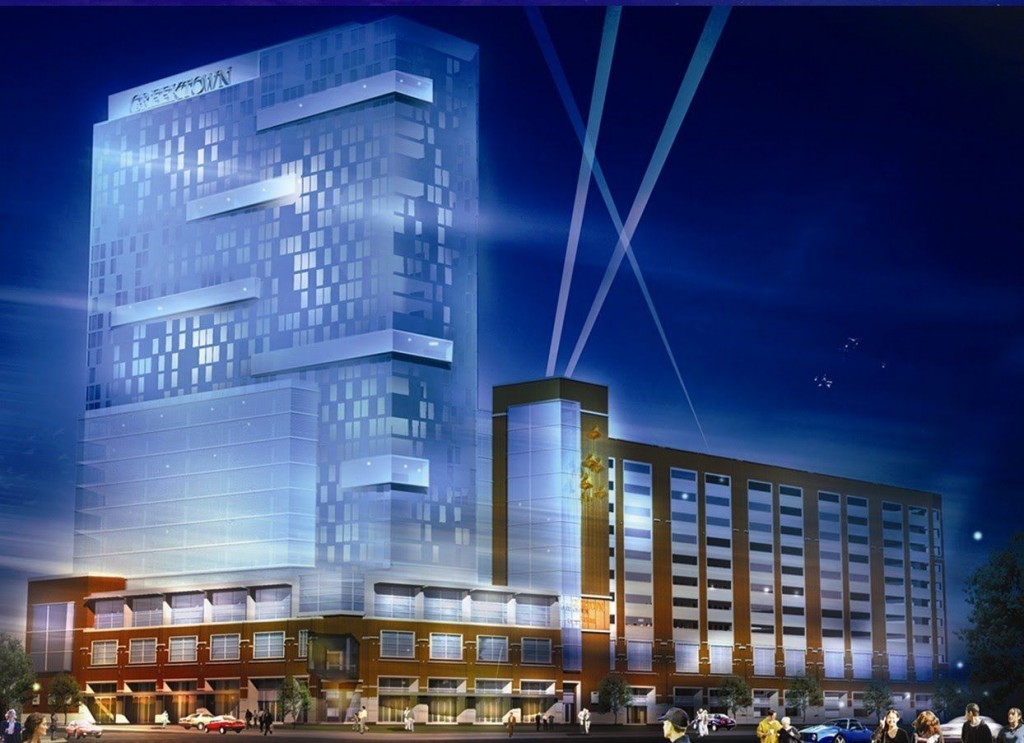
Hollywood Detroit continues to its resurgent ways in Motown. It leapt 12% to $24.5 million last month. MotorCity fell 5% but held onto second place with $31 million, while MGM Grand Detroit ceded 2% to the erstwhile Greektown Casino, for a market-leading $49.5 million. The aggregate $104.5 tally was flat with last August. Elsewhere in the state, Internet gambling ran rampant, rolling up receipts of $152 million. BetMGM ($44 million) held off DraftKings ($35.5 million) and FanDuel ($33 million), while BetRivers ($10.5 million), Caesars Entertainment ($7 million) and WynnBet ($5 million) all had respectable finishes. Also showing the flag were FoxBet ($3 million), BetGLC ($2 million), Barstool ($2 million) and BetAmerica ($1.5 million). Sports betting yielded $23 million from handle of $218.5 million. This time it was FanDuel ($9.5 million) putting BetMGM ($4 million) to rout, while DraftKings won $5.5 million. Barstool ($1 million) was the only other participant to end the month in seven figures.

In another setback for Atlantic City, the Casino Reinvestment & Development Agency has nixed all supermarkets proposed for Baltic Avenue. Our correspondent takes it from there: “As a residential real estate appraiser, the old saying ‘location, location, location’ should have been considered by the CRDA, but apparently wasn’t. Why would a new supermarket be built on a back street, rather than a major street? A supermarket should be considered for Atlantic Avenue or Pacific Avenue. Also, the site is at the northern section of the city, rather than a central location. My suggestion would be to buy and use a portion of the former Sands Casino location along Pacific Ave. It has been vacant since 2007, and does not appear to have any viable commercial use. Pacific Ave. has the small Jitney buses, so people without autos could get there. The full-sized buses that run along Atlantic Ave could make a loop on the side streets and also pick up customers at the new supermarket. This location would also be more north/south-centric than Baltic Ave.
“If you’re familiar with flood zones, any new building would have to be raised up so flood waters could pass under it. In Florida, the Publix supermarkets are built on barrier islands like Atlantic City. What would be the first floor is a covered parking lot. The supermarket is on the second floor, with offices and storage on the third floor.” My friend, you’re applying logic to Atlantic City governance, never a fruitful errand. Abandon all hope, ye who enter there.
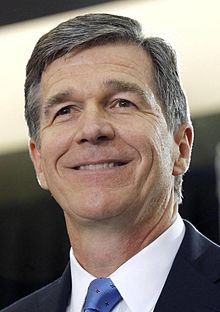
Lawmakers in North Carolina are so ashamed of casinos that they’ve been trying to smuggle them through the Lege, concealed within a must-pass budget. When that didn’t work they tried coupling them to Medicaid funding, then did the unthinkable and asked for Democratic Party votes. Damn, they must have been desperate. “We think this is the best, most prudent way for us to move forward,” sighed state Sen. Phil Berger (R), announcing that casinos were off the agenda for this session. Considering that Berger was a key recipient of Cordish Cos. lucre, it must have been an exceptionally bitter pill for him to swallow. An unlikely coalition of Dems and Christian conservatives apparently backed Medicaid expansion and balked when casinos were bundled with it—as did an umbrageous Gov. Roy Cooper (D, above).
“It was just pretty clear that the facts were almost beside the point as to what those proposals would do for rural areas. I’ve learned that in an environment like that, you’re unlikely to make any progress.” Berger remarked of the effort to put three casinos in outlying counties—Where else?—along with a fourth casino as a sop to the Lumbee Tribe. Plus slot routes. All in all, more gambling that Tarheel State politicians could stomach. (The Lumbee lack federal recognition, so it was a state-approved casino or nothing.) One good thing to be said for the latest iteration of the casino enabling legislation was that it jettisoned a locked-in monopoly for a private operator (probably Cordish) in favor of free competition for three licenses.
North Carolina is so far behind the times that it only just legalized parimutuel wagering on horse racing, at a juncture when the Sport of Kings is on its last fetlocks. Better luck next time, casino companies. Maybe you should sweeten the pot by offering to pay more than the “relatively modest” tax rate proposed by Berger & Co., and their corporate masters at Cordish.
Quote of the Day: “Unlike the Obama administration, which was ideologically oriented to push wealth and power upward, the Biden administration has a few populists trying to do the opposite. But in an inflationary environment where the stats are juiced to mislead policymakers, that’s not good enough.”—Matt Stoller on “The Missing Inflation Data.”
