

Managed (read: tribal) and overseas Caesars casinos rode out the Great Shutdown best, slipping 59.5% to $64 million. For dollar volume, the regional circuit generated the biggest haul, $311 million, albeit an 81% decline. Las Vegas was a dead loss, a mere $109 million in a billion-dollar market, tumbling 89%. Reeg needs some customers, stat, but he’s got a funny way of wooing them.
Over at Golden Entertainment, CEO Blake Sartini “had positive commentary on operating trends since its properties began reopening.” Cash flow is up 14% in June, a trend continuing in July. Since it caters overwhelmingly to locals players and, with the exception of The Strat, has no major amenities to act as a drag anchor, Golden looks golden for a speedy recovery. Indeed, in Las Vegas its locals properties saw revenues up by double digits and cash flow increasing twice over. Golden, wrote JP Morgan analyst Daniel Politzer, “expects the promotional environment in LV Locals to remain subdued. Similar to its LV Locals and regional gaming peers, GDEN has significantly reduced opex both at the property and corporate level and sees $130m in annual run rate savings as sustainable (labor, marketing, overhead). “
 Slot routes improved in 2Q20, although Sartini is now having to reconfigure his taverns to strike a mandated balance between video poker and social distancing. Politzer remained cautious. “While the bulk of GDEN’s portfolio looks to be recovering faster than previously expected and GDEN carries an attractive valuation, we remain cautious on what we view as a prolonged recovery on the Las Vegas Strip, which GDEN is exposed to directly (~20% of historical [cash flow]) and indirectly via its Southern Nevada casinos and taverns,” he wrote. Still, he projects a dramatic recovery next year.
Penn National Gaming elaborated on this week’s earnings release and Politzer colleague Joseph Greff was impressed. He was, he wrote, raising his projections based on “stabilizing fundamentals at its casinos and increased operating efficiencies.” He bumped up his cash-flow projection by 46% (to $945 million), although he forecast 2022 revenue still only to be 2019 levels. “While visitation is still below pre-COVID-19 levels due to capacity restrictions/limited amenities, spend/visit increased 45%, and the company has seen a significant increase in unrated play and growth from a younger demographic,” and all its casinos are cash-flow positive. “It remains focused on implementing cashless technology.” (Employees, beware.) Greff liked what he saw, saying Penn was “emerging from COVID-19 even leaner and more efficient, with sports betting and iGaming attractive near/medium term growth drivers.”
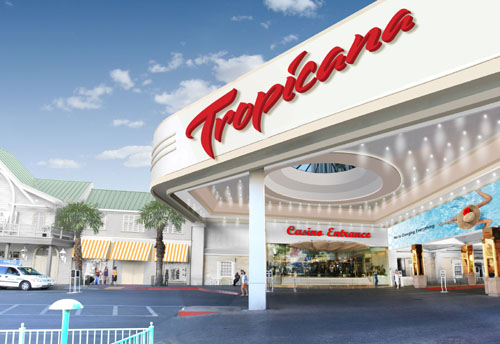
Execs at Penn did hedge on the destiny of the Tropicana Las Vegas, saying it could open in September “but it will see how demand evolves.” Regionally, the proverbial “pent-up demand” has lasted in July and August. “Looking ahead, PENN targets increasing cardless, cashless, and contactless technology, which will also cater to the younger demographic.” Also back on the front burner are Pennsylvania satellite casinos in Morgantown and York. In other Keystone State news, i-gaming revenues were up 40% during the shutdown. Not too shabby.
In an election-year showdown, Colorado casinos are going to the ballot box in pursuit of self-rule. The towns of Black Hawk, Central City and Cripple Creek want autonomy to set their own betting limits and to add games like baccarat. Currently, bet limits are capped at $100, a tenth of South Dakota‘s. While the measure hasn’t qualified for the election yet, Local Choice Colorado gathered far more signatures than it needed. Monarch Casino & Resort CEO David Farahi told Global Gaming Business that “Colorado is one of only two remaining states with bet limits, and our limits are by far the most restrictive in the country. By allowing the three gaming towns to approve new betting limits and games, casinos could attract higher-income Coloradans who typically travel to Nevada, as well as out-of-state, high-stakes bettors visiting Aspen or Vail.”
LCC is keeping mum about its polling but comparable measures have passed easily in previous elections, although sports betting was legalized by a fraction of a hair. Says Farahi, “If we can get some portion of people who would otherwise go to Las Vegas to stay and play in Colorado, it benefits the whole state.” S&G endorses the measure.
Jottings: Congratulations to Seminole Gaming and Hard Rock International. They have been awarded the Corporate Social Responsibility Award from the National Council on Problem Gambling for their PlayersEdge employee-training program … Donald Trump‘s casino years continue to haunt him. Deutsche Bank quietly cooperated with prosecutors, providing them with information that “would seem to indicate that the office is investigating reports that Trump engaged in bank, insurance, and tax fraud, exaggerating the value of his assets when he needed money and deflating them when he had to buy insurance or pay taxes.” Trump over-hype the value of his casinos? Perish the thought … Very bad news for gaming, especially right now: The Harvard Global Health Institute is recommending lockdowns in Nevada, Louisiana, Arizona, Florida and Mississippi, among other states. All are in the “red” (eight deaths per million people). What’s the safest state in the nation? Vermont. That’s. Only Vermont is “in the green” (one case per 100K people) … former U.N. ambassador Susan Rice is being tipped as Joe Biden‘s running mate, although PredictIt still favors Sen. Kamala Harris (D), 49 cents to 37 cents, a gap that Rice has steadily been closing. And in closing … 300 workers at Wynncore have been infected with Covid-19. Words fail us.

I’m a PredictIt gambler, degenerate perhaps, but I make money betting against stuff like “Will Hillary be convicted of being a pedophile before Labor Day”