


Penn Entertainment stock collapsed 13% Wednesday afternoon after Barstool Sports founder Dave Portnoy took to Twitter to rant and rave about the firing of Ben Mintz, a ‘Stool fool who dropped the N-word on air for all the world to hear. A panicky Portnoy simultaneously trashed Penn’s decision whilst pretending to rationalize it by saying the company could lose all its gaming licenses over the Mintz matter. Not bloody likely, although it would certainly imperil Penn’s provisional OSB license in Massachusetts, where it just squeaked by the last time—possibly in Ohio, as well, where it had been running a scofflaw operation.
So stupid is Portnoy that he scored an own-goal on his personal stock holdings, being heavily invested in Penn. He quickly tried to spin his gaffe, tweeting that it’s “Great time to buy. It’ll bounce back in my humble non financial advise [sic] opinion.” What an idiot. As Credit Suisse analyst Ben Chaiken diplomatically put it, “well publicized Barstool personnel changes likely drove the stock reaction.”
This PR and financial disaster for Penn is the foreseeable outcome of CEO Jay Snowden‘s womanish infatuation with Portnoy. (Were their relationship any gayer a marriage license would be required.) Snowden decided that, in purchasing Barstool and all it represented, it would be better to have Portnoy inside the tent pissing out than the reverse. Well, currently Portnoy is inside the tent, pissing in. Who’s sorry now?
While Barstool was unrepentant, Snowden ran and hid, saying, “We felt like we dealt with it appropriately. And I would also say that you’ve been following us and the relationship, and I think the public markets and financial community has gotten to know Barstool pretty well over the last three years, and there’s going to be some drama sometimes. There’s going to be some things that pop up here and there, and we’ll manage through those as we always have.” In other words, he’s going blunder on until the next catastrophe.
The Portnoy ambush may explain why Penn hurried out first-quarter numbers ahead of yesterday’s earnings call. It was a mixed blessing. Deutsche Bank analyst Carlo Santarelli noted that cash flow of $478 million was slightly ahead of his $476 million projection—but that Wall Street had expected $483 million. Also, Penn took a bath on shares it had repurchased at $30.36 apiece, only to have Portnoy’s big mouth drive their value down to $27. Revenue of $1.7 billion was incrementally ahead of what J.P. Morgan analyst Joseph Greff anticipated but Penn missed his cash-flow target badly. He didn’t seem to put much stock (pun unintended) in $28 million in Barstool revenues which he hadn’t modeled. Nor is Barstool expected to make a positive ROI contribution. None of this stopped Penn from ratcheting up its revenue projection for the year from $6.4 billion to $6.8 billion.

“Relative to others who have reported 1Q23 earnings thus far, we would have thought there would be more upside to PENN’s regional estimates ($511m versus our $513m) even on our recently raised estimates,” Greff reported. Casino revenues were barely up (1%) but cash-flow margins were way down (-28.5%). Greff expected a $3 million ROI from the digital side, but a $6 million reversal was what he got. Barstool will eventually generate a dinky $5 million in positive ROI … but not until next year sometime.
After the earnings call, Greff opined that Penn “shares are stuck for a reason.” His fears were centered on the digital segment: “We fear that if/when PENN executes in this segment, that other operators in the sector could have bigger moats,” he wrote. “Because of this, we don’t think it’s likely that a third party would find its enterprise that appealing to acquire so we don’t see a strategic reason why the shares could move higher,” Greff added, dropping his PENN price target from $34 to $28. Ouch.

As for explanations for a soft start to 2Q23, Penn blamed it on the Easter Bunny, saying that business was picking up late last month with “the strongest slot volumes thus far this year.” Which may not be saying much in Penn’s case. By the way, 65-plus-aged players have yet to come back and, at this point, appear unlikely to ever do so. All other age brackets were up, however. I-gaming, driven by expansion into Ontario, was something of a bright spot, bringing in $59.5 million in gross gambling revenue, up 33%. Still, Chaiken thought, “We think low(er) hanging fruit is the missed opportunity in iGaming, given PENN’s strong loyalty base of primarily slot customers who likely don’t identify with Barstool. We think a high ROI and very compelling opportunity/investment (similar to CZR) is to establish a brand or application singularly focused on this customer.”
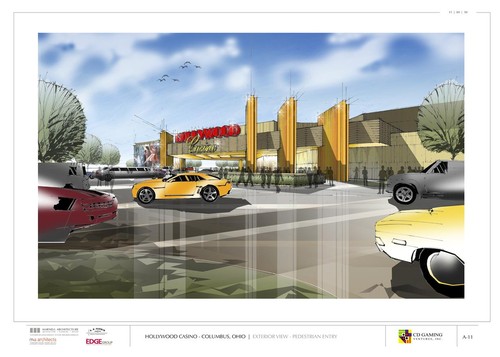
Despite current adversity, Penn is sticking with four big capex projects, including the M Resort hotel tower ($200 million), its Hollywood Columbus hotel ($1oo million), and $495 million for the new iterations of Hollywood Joliet and Hollywood Aurora.
Santarelli thought the plunge in Penn’s stock price was partly due to Portnoy’s antics but spread the blame around between “1) the weaker than expected results, 2) the reaffirmed guidance, 3) the recent headlines from Barstool, and 4) the broader gaming segment malaise.” He thought Ontario “a strong market” for Penn in OSB and Internet casinos, and “Average daily theoretical win by segment was encouraging,” except for the oldsters. All that said, he allowed that “expectations were higher” thanks the performance of other regional operators (like MGM Resorts International, Caesars Entertainment and Boyd Gaming—he didn’t name names but we will).
“Strategically,” he added, “we think PENN is somewhat catalyst starved, given; 1) regional trends remain stable, but a scenario in which growth resumes in the near term is difficult to envision, 2) returns from projects are 2-3 years off, 3) incremental state launches for Digital are likely limited to smaller, less needle moving states, for the foreseeable future, and 4) the M&A environment appears relatively benign at present.” Santarelli shaved a dollar off his price target, to $30/share.
Santarelli continued, “One can surely question whether this is the start of a steady decline in regional gaming, but we aren’t so sure that is the case. While we continue to believe revenue will be the primary driver of margin stability, in the case of PENN, competition is a key factor in its performance. As we have written about for some time, PENN is seeing considerably more competition from new supply than its peers, which when coupled with labor costs, as staffing has been increased, is further weighing on results.”
Chaiken was more optimistic, putting an “Outperform” rating on PENN, albeit moving his price target from $46/share to a still-lofty $42. By contrast, Truist Securities‘ Barry Jonas, despite claiming to be encouraged, took his price target all the way down to $33/share from $41, although he took Portnoy’s advice and put a “Buy” on the stock. He said management attributed the casino-operations disappointment to “to a shift in gaming revenues to higher taxed jurisdictions, and to a lesser extent property litigation settlements.”
But, he noted, it would have a wash at best were though variances credited back to Penn. He says Barstool will break even this year although Jonas didn’t seem to think that depended on telling Portnoy to put a sock in it: “Following last night’s dismissal of a Barstool personality, [Penn] commented that they felt the incident was handled appropriately. While unfortunate, we believe Barstool has shrugged off many controversies in the past and the actions could help with any lingering regulatory concerns.”

If you were hoping for any clarity on Station Casinos‘ land deal with the Oakland Athletics would be vouchsafed during the 1Q23 earnings call, you’d be disappointed. Station execs wouldn’t even say whether any of the land in question was gaming-entitled. When asked for specifis, CEO Frank Fertitta III simply blathered, “We’re pretty bullish about the site and we wound up with all of these new sites out in the suburbs that we acquired over the last 12 months.” One concrete bit of news involved Durango Resort, where some cost creep has added $30 million (and 360 slot positions) to the project, which tells you how confident Station is. Net revenues were up 8% to $433.5 million, although profit slipped 7% to $85.5 million. Cash flow was $194 million, an 8.5% hop.
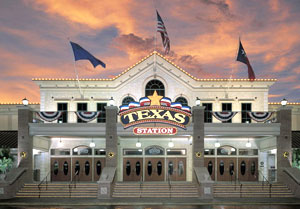
Second-quarter earnings may be hurt a bit by North Las Vegas welshing on a deal to purchase the gravesite of Texas Station, which drew a blast from state Sen. Diane Neal (D). A city official tried to smooth over the dispute, saying, “The Stations [sic] property is currently in the process of being purchased by a buyer other than the city.” This is the first we’re hearing of it.
Still, Truist’s Jonas said that Station was “rock solid on the locals” and a “best-in-class operator,” hailing a record 1Q23 that surpassed Wall Street expectations by 6%. Catering, room sales and room rates are all said to be very healthy compared to 2019. Jonas predicted a summer slump, to be recouped during Formula One and Super Bowl season, when Las Vegas Strip overflow again comes into play. He interpreted Station’s stance on its 39 acres adjacent to its stadium site as being one of eventual monetization of the land, as opposed to development of it. So no Viva 2.0. Darn. Station still sits on 523 acres of land valued in excess of $1 billion.
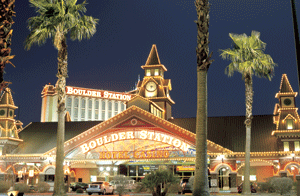
Moving his price target up two dollars to $57/share, Greff called the quarter “outstanding,” saying Station’s revenue and EBITDA growth “compare favorably” to Boyd’s in the same market (i.e., Las Vegas). “We think the LV Locals market is special and unique within gaming. The supply picture is bright (presently, there is still less capacity versus pre-pandemic), and demand continues to be boosted by a population influx from high tax states like [California], which is generating more jobs locally and increasing the local mix towards a higher annual income,” Greff enthused. He added that the influx of major sports teams added to this excitement, particularly with the Athletics slated to play 81 games a year (temporarily) next door to Station’s flagship, Red Rock Resort.
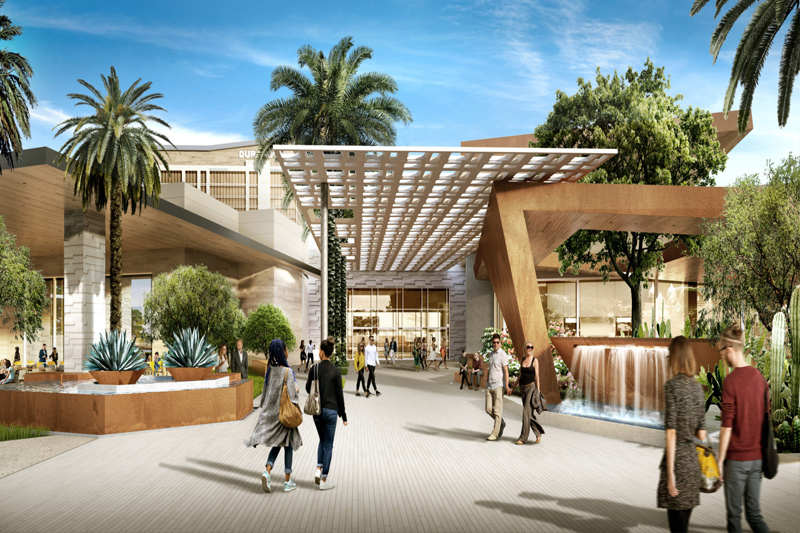
Greff raised his 2023 cash-flow projection for Station to $808 million, up from $768 million, increasing to $863 million next year, thanks to Durango, for which expects a 7.5% first-year ROI (Station anticipates 20% by Year Three). He thinks it will open on New Year’s Day but Station maintains that an autumnal debut is still in the works. “Incrementally, management noted that pending a strong opening of the property, there could be a potential Phase II (which historically results in strong project returns),” he added.
Santarelli seconded Greff’s enthusiasm, saying there were “no signs of a slowdown” in the Vegas-locals market. He reiterated his “Buy” rating, with a price target of $55/share. While he said the outcome was not a surprise, “the magnitude of the beat is likely to be well received … and the tone on the call was one of stability and confidence in both the market dynamics and the direction of the Company.” He speculated, based on recent stadium transactions in the Las Vegas Valley, that the stadium sale would bring Station $228 million (or $4 million per acre). None too shabby.

Lost in the Barstool Sports noise was a better-than-anticipated DraftKings 1Q23 earnings preannouncement. The company reported $770 million in revenue (Greff expected $702 million) and negative ROI of $222 million, where Wall Street thought it would lose $247 million. Predicting stronger customer retention and higher hold, DraftKings elevated its full-year revenue projection to $3.2 billion. The company expects little negative ROI for the next three quarters, putting its expected loss between $290 million and $340 million. Still, cash on hand will be down at year’s end from $841 million to $800 million. CEO Jason Robins still stands by his position that ROI will be positive next year and some analysts agree.
Following the earnings call itself, Greff wrote that “we see a path to continued increasingly efficient player growth and retention, accretive marketing, overall cost rationalizing, (likely still underappreciated) iGaming market share gains, and de minims capital structure risk … That said, we have a tough time on valuation,” he added. He boosted his price target to $18/share from a $16: “We see better Digital/OSB/iGaming values elsewhere, and for this reason we retain our (relative) Underweight rating.” Still, he projects positive ROI of $140 million next year and $600 million in 2025. Marketing expenses have been trimmed 20% in mature markets like New Jersey, 10% in comparatively immature ones.
“In recent quarters, DKNG has been garnering support as a beat and raise story, and it delivered another upside performance in the 1Q23, relative to guidance and Consensus, albeit against 1Q23 adjusted EBITDA expectations that had migrated lower in the period,” admitted DKNG skeptic Santarelli. He qualified that by saying, “we don’t see a meaningful read through as to what the results mean over the medium to longer term, given the wide range of outcomes and parameters around valuation.” He kept his target price at a lowly $15, well below where DraftKings currently trades.
The fixed was in on the suspicious University of Alabama baseball game and coach Brad Bohannon is out of a job. An investigation determined that two attention-drawing bets placed during the game were made at a time when Bohannon was on the phone and in contact with the bettors. He had scratched his scheduled starting pitcher and later put in a reliever who plunked the first guy he faced, then walked two more batters to force in a pair of runs. Geez, nothing suspect there—nor about the bets in question being placed all the way from Ohio, of all unlikely places. It’s more trouble that the Alabama baseball program doesn’t need. By the way, hitting the first batter up was the way Eddie Cicotte signaled to gamblers that the fix of the 1919 World Series was on. Coincidence much?
Not to be forgotten, Maryland casino winnings for April are in. Gross gaming revenues were up 2% to $175 million, powered by the two biggies. MGM National Harbor leapt 7% to a dominant $75.5 million but woebegone Horseshoe Baltimore toppled 13% to $16.5 million. Maryland Live was up 5.5% to an impressive $62 million while Ocean Downs slipped 4% to $8 million. Hollywood Perryville fell 11.5% to $7.5 million and Rocky Gap Resort slid 7% to $5.5 million.
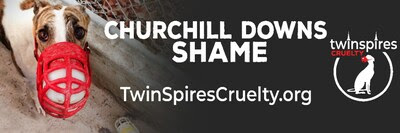
Churchill Downs CEO Bill Carstanjen is going to see a sign of displeasure—literally—at the Kentucky Derby. An airplane has been hired to circle the grandstand trailing a banner deploring CHDN subsidiary TwinSpires‘ continued promotion of dog racing, said to be the only leg propping up that despicable industry. 666 greyhounds suffered injuries at two West Virginia tracks owned by Delaware North last year, as the state continues to be the final bastion of demonic greyhound racing. “We believe there is reputational risk for any company that continues to align itself with greyhound racing,” alleged GREY2K USA President Christine A. Dorchak.
“We are especially concerned that TwinSpires is offering races from Agua Caliente on its betting platform. Caliente is a Tijuana-based dog track with no animal welfare standards that is owned by a controversial figure with alleged ties to organized crime.” Crime in Tijuana? Say not so! Still, if Churchill Downs and like companies don’t move to end dog races, maybe it’s time Congress (where a ban has considerable support) stepped into the issue.
