

Sheldon Adelson is worth $28 billion today. Which doesn’t sound so bad until you consider that he was worth $40 billion before the Wall Street  crash. That’s the literal price of owning 432,000,000 shares of Las Vegas Sands. Not that ill-fortune is crimping Sheldon’s lifestyle. He just put down $17 million on a pied-a-terre in Malibu, his ninth residence in the Colony gated community. Compared to the $138 million that Steve Wynn wants for his SoCal mansion, we’d say Adelson is a real bargain hunter. Speaking of the Wynn family, Elaine Wynn lost a cool billion in the stock market, bringing her wealth down to $1.4 billion. The Fertitta Brothers are now worth $1.6 billion apiece, which they’ll need as the fallout of a Las Vegas recession on Station Casinos would be dire indeed. But the really ill-advised tycoon may be Caesars Entertainment plurality stockholder Carl Icahn, who has seen his net worth wither from $17 billion to $13 billion. Bad timing on that Caesars move, Uncle Carl.
A “somewhat surreal” meeting between soon-to-be-ex-CEO Jim Murren and Donald Trump took place last week, according to industry consultant Richard Schuetz. He said that Murren “who is personally taking over $50 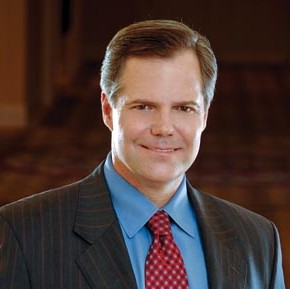 million out of [MGM Resorts International], went to the White House to meet a billionaire that bankrupted numerous casinos by not paying his lenders, to work on a plan to secure taxpayers’ money.” Also somewhat surreal were the priorities of the American Gaming Industry, which implored the Trump administration to summarily reopen the casino industry, health consequences be damned. We have to agree, though, that various forms of financial ill-health are cohabiting with Coronavirus. According to AGA figures, the 95% shutdown of the gaming industry is costing $74 billion in wages to front-line workers (who should be the top priority of any bailout), $41 billion in tax collections and $52 billion to casino-dependent small businesses.
Rep. Dina Titus (D) took up the cudgels for the industry, emphasizing to Speaker of the House Nancy Pelosi (D) that “any long-term relief package must include the travel and tourism industry and the millions of 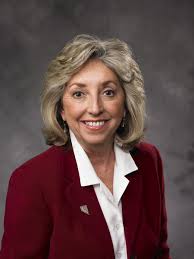 workers whose jobs depend on it,” according to Titus’s communications director. The Association of Gaming Equipment Manufacturers is also among the White House mendicants. It’s business as usual for manufacturers in Nevada during Gov. Steve Sisolak‘s quarantine but “When our customers shut down, they don’t have as much money to spend on buying anything … When we reach 30 days in Nevada, I don’t pretend to think you’re going to turn on the lights and there’s going to be a return to business as usual. It’s going to take some time,” said AGEM President Marcus Prater.
Gaming REITs may want in on the discussion, as they look at a possible, long-term loss of rent. Fortunately for them, they are protected from lease defaults. “They do have highly sophisticated lease structures, structured as cross-collateralized master leases (meaning all properties are under one lease, as opposed to multiple individual leases, essentially protecting  the REIT from the tenant picking and choosing to close bad assets),” Fundamental Income co-founder Alexi Panagiotakopoulos told Casino.org. However, by only lately diversifying out of the gaming sector, REITs like Gaming & Leisure Properties Inc. are being pummeled on Wall Street. “Amidst the coronavirus drawdown, and forced closing of nearly all businesses and real estate, the REIT sector as a whole was hit extremely hard, including gaming REITs, which were essentially thrown out in a ‘baby with the bathwater’ sell-off of all hotels/lodging, hospitality and experiential type operations and real estate,” said Panagiotakopoulos. “However, the selloff was too and far too fast.”
The good news is twofold. One, it’s a good time to get in on REIT stocks and, two, casino companies have $4 in cash for every $1 in rent they are obligated to pay. Whew!
Tribal-gaming interests, meanwhile, are reiterating their call for $18 million in government grants, arguing that health and education services are at risk during the shutdown. “Providing the means for tribal governments to continue paying all employees’ salaries and benefits will immensely help this country recover,” the National Indian Gaming  Association wrote to Congress. In addition, they want 26 weeks of loan and interest relief while they restructure debt. (For an example of a tribe that made all the right moves, look to the San Manuel Band of Mission Indians, even if CEO Loren Gill admits a 14-day closure is “somewhat arbitrary.” Some politicians, specifically Joe Biden, have called for a moratorium on private-sector stock buybacks.
Labor interests want priority in the proposed bailout, with Unite-Here President D. Taylor (pictured with Sen. Kamala Harris [D]) saying, “We have problems with unemployment. We have a crisis brewing on health care. We have a crisis on housing. We have a crisis on sick-leave pay. And, we’ll probably have a crisis on food stamps because if it’s that hard to do unemployment … The American worker needs to be at the table when we have discussions.”
So far that’s not been the case. The economic-recovery bill currently before the Senate includes businesses that haven’t been negatively impacted by Covid-19 and creates a slush fund that would be administered at the discretion of Treasury Secretary Steve Mnuchin, to  the tune of $500 billion. We seem to be headed for a repeat of the TARP fiasco of 2008-9. Meanwhile, virologist extraordinaire Dr. Anthony Fauci tries to talk sense about the pandemic, something that could cost him his job. The federal government’s response (and that of some media) to Coronavirus has been that when the news is bad, shoot the messenger. On a positive note, Las Vegas casinos are making lemonade out of lemons, donating foodstuffs to Three Square and other Sin City charities—too many to name. Station Casinos has opened three food banks, Las Vegas Sands has dissipated 35K hygiene kits and Wynncore has donated 96,000 pounds of food, while Treasure Island is bypassing charities and donating directly to the needy. And that’s just for starters. It’s a shining light in a dark time.
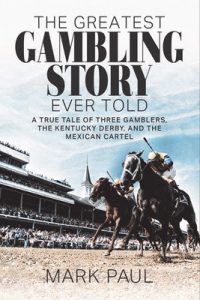
* While there are no casinos to visit and no sports upon which to bet, why not curl up with a new book? Just across our cyber-transom comes The Greatest Gambling Story Ever Told. It’s the tale of Winning Colors, the filly who won the 1988 Kentucky Derby. It’s also a cautionary story about how gamblers betting upon her found themselves in cahoots with the Mexican cartels. No word yet on whether this will become movie fodder like Awkawfina‘s Baccarat Queen or Dream Horse with Toni Collette and Damian Lewis. But with no Kentucky Derby to watch until September, this looks like a good investment of your spare time.
Jottings: Selective closures of the Macao border to foreigners have taken hold after a second wave of Coronavirus manifested itself. Tourists from China, Taiwan and Hong Kong are exempted … There’s at least  one silver lining for casinos in New York State. Proponents of mobile sports betting think their chances with Gov. Andrew Cuomo (D) are betting than ever, as the state faces a $6 billion revenue shortfall … Internet sports betting in Illinois requires an 18-month waiting period. FanDuel is circumventing that by buying Fairmount Park horse track. Clever … After a “dead cat bounce” last Friday, gaming stocks are on the comeback trail, although the fluctuations are too rapid to keep current. The only company not feeling any love in a volatile market is Melco Resorts & Entertainment, down 6% probably on the news of that Macao border closure.
