

In the end two, casino operators bent over, grabbed their ankles and took it hard from Gov. John Kasich (R), who can claim a near-unqualified victory — and in blistering time. With money and pilings already sunk into Ohio, neither Penn National Gaming nor Rock Ohio Caesars had what it takes to just walk away (or at least threaten to do so) in the face of a gubernatorial shakedown. Earlier this week, Kasich announced what might be called “Strickland Plus.”
 In addition to extracting heavy tribute from the four casinos in progress (ROC assented to $110 across 10 years, plus a $900 million minimum capital investment (an 80% increase on what was previously agreed) in return for a 10-year duopoly), Kasich okayed seven racinos — the latter a goal of ex-Gov. Ted Strickland (D, right) but one that the state’s Supreme Court thwarted. Predictably, there are few wet blankets who say the accord wasn’t usurious enough, wondering why a 50% tax rate on VLTs was taken off the table. Interestingly, the governor announced a $750,000 giveaway to manufacturer Thyßen Krupp the same day his big gaming bonanza was disclosed.
Penn’s 11th-hour bristling at the Kasich deal enabled it to extract the one concession it dearly wanted: the right to close down its tracks in Columbus and (especially) Toledo, and relocate its racino licenses elsewhere … like Youngstown or Dayton. The importance of these “portable” licenses is of obvious value to Penn, which would have been competing with suddenly redundant Toledo and Columbus casinos otherwise. One doubts, however, that employees of Raceway Park and Beulah Park will share the corporate enthusiasm. Caesars Entertainment didn’t make portability a specific condition of its cave-in to Kasich, although its Thistledown Park track, near Cleveland, is also redundant. (You can see how much corporate bet-hedging prefaced the constitutional amendment that allowed casinos into the Buckeye State.) Blue-sky revenue estimates postulate the addition of racinos putting as much as $800 million more into the Ohio casino industry. All this shuffling about of racino licenses could also open a constitutional barrel of monkeys, requiring the voters to arbitrate the casino issue yet again. At least the projected social costs could be far less than anticipated.
 Paying more for less. The price for conceding to Kasich’s demands is monetary in more respects than one. Penn and Caesars suddenly find themselves amidst what will be a greatly diluted market, although they will control seven of the 11 gambling venues, most of which will be strictly Class II (racinos will be allowed to have VLTs). However, they will have several new bedfellows, including Pinnacle Entertainment‘s River Downs track, as well as with troubled MTR Gaming, owner of Scioto Downs. Consequently, analyst Joseph Greff predicts a reduction of Penn’s casino investment, currently pegged at $700 million for two venues.
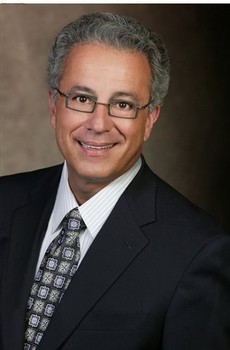 With two more tracks potentially up for grabs, operators such as Isle of Capri Casinos and newly active Boyd Gaming could soon be sniffing around Ohio, too. Why not? Even with a mandatory $200 million investment (including a $50 million entrance fee) and a 33.5% tax rate, one Wall Street analyst is already projecting 17% ROI for Pinnacle from River Downs. Give Pinnacle CEO Anthony Sanfilippo (pictured) kudos for his perspicacity, buying into Ohio at just the right moment. He also stands to recapture revenue lost from Pinnacle’s Belterra resort in Indiana, expected to be the biggest victim of casino gambling in Cincinnati. However … I put absolutely no credence in a Moelis & Co. report that projects ROI on Penn’s Columbus casino at 40% (or $140 million in cash flow) in Year One alone. They must be smoking some awful good crack at Moelis, which is not exactly an objective source. It has a financial incentive to highball the revenue projects since Moelis gets a $15 million-plus slice of the extra fees and taxes Kasich extracts. The alacrity with which Penn and ROC folded, however, may mean a short lifespan for Moelis’ extremely “george,” taxpayer-funded $10K/weekday retainer.
Aside from Kasich and Moelis, the big winners are WMS Gaming, Bally Technologies and International Game Technology, into whose lap have fallen literally thousands of machine sales — meaning that Christmas came six months early for the beleaguered manufacturing sector. As for operators, the next time a state governor attempts a Kasich-like protection racket, they can thank Dan Gilbert, Gary Loveman and Penn’s executive team for having set a shameful precedent of surrender in the face of thuggish threats.

Did you find any Kasich poison pills involving labor unions and casinos in Ohio David? Kasich pushed through SB5, which decimated union rights in Ohio. It’s going to go on the ballot in Ohio and get overturned most likely. I don’t trust Kasich…
From what I’m able to glean amid the press coverage, guvmint interference is limited to telling HET and PENN how much they have to spend on construction. (Ditto the racino operators.)
[…] that Penn National Gaming and Rock Ohio Caesars have waved the white flag to Gov. Jon Kasich’s monetary demands, work is resuming at their once-stalled Ohio casinos. […]