
Last weekend’s flip-flop by the Justice Department‘s stance on the Federal Wire Act has spurred a fair amount of chin scratching in the gaming industry. Global Market Advisors notes the immediate implication: “The action, which at best can be described 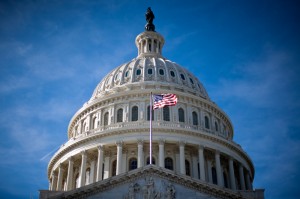 as reversing a reversal, raises several concerns for the gaming industry, especially for online gaming that occurs in the states of Nevada, New Jersey, and Delaware, with active startups underway in Pennsylvania.” Mobile gambling (legal in Nevada), DFS and even lotteries may be affected. In the inciting memo, Acting Assistant Attorney General Steven Engel wrote, “While the Wire Act is not a model of artful drafting, we conclude that the words of the statute are sufficiently clear and that all but one of its prohibitions sweep beyond sports gambling.” Engel’s memo, write GMA analysts, “only raises further questions on how responsible operators should act in the current environment.”
The Wire Act is a legacy is of Robert F. Kennedy‘s tenure as attorney general and formerly applied to all forms of gambling except horse race wagers. “It is important to note that the internet did not exist in 1961 as it does today. In addition, the Wire Act itself does not specifically discuss how it may apply to other forms of gambling. As such, the law has been open to interpretation as to whether it prohibits internet gambling,” GMA resumes. In 2011, then-Attorney General Eric Holder reversed the Department of Justice’s longstanding interpretation of the Wire Act in responses for clarification from New York and Illinois, which wanted to initiate interstate lottery sales. Sens. Harry Reid (D) and Jon Kyl (R) also chimed in. (We erred yesterday in attributing the Engel memo to the direction of ex-Attorney General Jeff Session, who promised to review the Wire Act, then recused himself from the issue. Sorry, Jeff.)
GMA “believes that today’s decision can only lead to one of two real outcomes: either an official court interruption of the Wire Act as it relates to the modern world, or legislation that would be enacted at the federal level … the federal government should 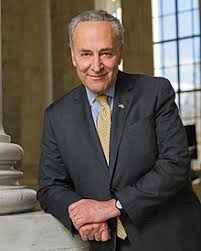 not govern by executive order or interruption through memo. It is time to actually legislate policy and let the courts reach conclusions on the laws that are on the books.” Congress might tuck Wire Act reform into the sports-betting legislation currently being pushed by Sen. Charles Schumer (D). While GMA thinks it is imperative for the gaming industry to present a united front, Sheldon Adelson‘s obstreperous opposition to Net betting presents a formidable obstacle. That’s not the only problem: “While some have suggested the implementation of federal guardrails, this may ultimately interfere with state sovereignty over their existing gaming regulations.”
GMA concludes, “The memo brings current operations into question, and it potentially hinders each state’s ability to regulate their own market effectively. Ironically, this interpretation of the Wire Act may result in expanding the illegal gaming rather than reducing its presence, which is certainly not the result intended by Congress when it 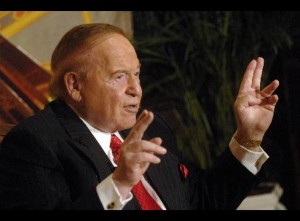 passed the Wire Act.” Cameron McKnight of Credit Suisse takes the sunny-side-up view, writing, “we see limited impact from the DOJ’s opinion, and expect it to be challenged in court relatively quickly. Our experts believe that pure intra-state sports, poker or real money wagering is unlikely negatively impacted, though there’s likely some latent uncertainty from the DOJ’s opinion.” He thinks intrastate Internet betting is in the clear, interstate lotteries are free from danger and the opinion might “be a catalyst for overarching federal legislation around sports betting.” McKnight cites a Washington Post interview with an anonymous DOJ functionary who says “the change here will have some impact, but it doesn’t mean that large swaths of gambling that were once legal are now illegal and vice versa.”
McKnight cites expert opinions that interstate sales of lottery tickets might be “impact” but intrastate sales are in the clear. Powerball and MegaMillions are thought to be safe, since they were incepted before the 2011 Holder decree: “Moreover, our experts noted that multi-state jackpots are structured such that an individual customer is buying a 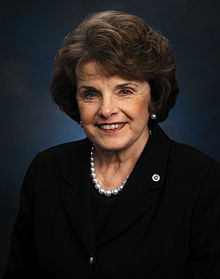 ticket in a specific state’s lottery, not buying a ticket in a joint lottery. Finally, the Washington Post noted that the DOJ’s intent is not to up-end long-standing gaming products.” Pooled liquidity of online poker, however, may be under a cloud. Also, even more banks may balk at processing online-gambling transactions. Not only does the Engle memo give extra ammunition to Schumer, two buzzards are circling Internet gambling in the form of Sens. Dianne Feinstein (D) and Lindsey Graham (R). They may feel empowered to pounce. Both senators sit on the Judiciary Committee, whose hearings on the nomination of William Barr for attorney general may well give us a clue as to which way the wind is blowing.
* Capitol Hill is all-abuzz with the possible censure of Rep. Steve King (R). Back during the Bush II administration, King proposed a 30%, non-rebatable, federal sales tax on all gaming-related purchases, a direct stab at the casino industry. If King goes, it will be good riddance to bad rubbish.
