

That’s what the leading gaming powers in California are now that the Supreme Court has scotched the Bradley Act. If National Indian Gaming Association Chairman Ernest Stevens is correct, Internet gaming is so 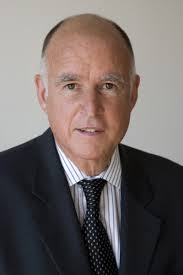 yesterday in the Golden State and sports betting is where it’s at. And if, as studies show, the black market for sports betting is as high as $400 billion, that’s prime territory for all the major players in California, whether they be tribal casinos, card rooms or horse tracks. It’s not like California politicians haven’t been trying: In the last six years, four sports-betting bills were introduced but none ever made it to Gov. Jerry Brown (D). Assemblyman Adam Gray (D) is taking a different tack this time, calling for a constitutional amendment, which would require a popular referendum.
If Gray’s proposal passes, the Lege would lustily set tax rates, as well as address such concerns as whether sports betting would be Web-based or not. DraftKings says yes, issuing a statement that it “will be able to harness our proven technology to provide our customers with innovative sports betting products … the addition of online and mobile sports betting holds the potential to generate billions of dollars annually for cash-strapped state governments.” That’s the kind of talk politicians like to hear. (Similar sentiments were uttered by FanDuel.)
Characterizing sports betting as “casino-style games,” their sole purview, California Nations Indian Gaming Association Chairman Steve Stallings said, “Legalization of sports betting should  not become a back-door way to infringe upon that exclusivity.” However, horse-track operator Stronach Group is already pushing hard for sports books and lobbyists for card rooms have also leapt right in: “The decision provides a pathway to help eliminate illegal gambling occurring outside of gaming facilities and create an open, transparent, and responsible industry with fair consumer protections for fans who seek to enhance their sports-watching experience.”
The Pechanga Band of Indians fired a warning shot across the card rooms’ and tracks’ bow, saying that sports betting was a “potential amenity” to casino. And if any attempt to breach tribal exclusivity is made, the indigenous peoples have a deep war chest with which to fight back. Further complicating matters, tribal compacts would have to be renegotiated to reflect the altered landscape. “There was gridlock over Internet poker, so I shake my head, wondering whether the state  gaming authorities and tribal gaming authorities can actually agree on something. I wouldn’t necessarily bet on it,” says gaming lawyer Kate Lowenhar-Fisher. Even the players unions for the major sporting leagues are trying to get a piece of the action, stating that “the athletes must also have a seat at the table to ensure that players’ rights and the integrity of our games are protected.” Unfortunately, with the major leagues using the word ‘integrity’ to justify skimming sports-book proceeds, the unions’ language takes on a hollow ring.
Las Vegas oddsmakers, meanwhile, are taking the potential threat to their $249 million bankroll rather casually. “To duplicate what Las Vegas does is very hard to do,” warns the Westgate‘s Jay Kornegay, who runs the biggest sports book in America, so he ought to know.  Given the convergence of big-ticket sports events and spikes in Las Vegas tourism, Kornegay’s sanguine stance is understandable. Some don’t get it. Clueless Wynn Resorts CEO Matt Maddox likens his sports book to his buffet: a low-margin amenity he grudgingly supplies to an expectant public. (One hopes this clown is out of a job and soon.) Don’t worry, Matt: With at least $150 billion in black-market sports betting coming out of the shadows there will be plenty go around.
* Lawrence Ho has a lot of irons in the fire. He’s breaking ground on City of Dream Mediterranean, on Cyprus, June 8. Not content to wait for the casino to open in 2021, Ho will throw open the doors to temporary casinos this summer. (Ho is something of an expert at this, 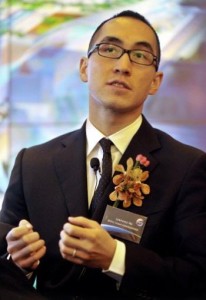 thanks to his Mocha Club slot parlors in Macao.) COD Mediterranean will cost Ho and his joint-venture partners $652 million … a drop in the bucket compared to the over $10 billion Ho is prepared to spend in Japan. Speaking of which, he’s so gung-ho (pardon the pun) on getting approval from the government that he’s even promised to move Melco Resorts & Entertainment HQ to Nippon if he gets the nod. “City of Dreams Mediterranean will showcase our ability to customize our integrated resort development in a way that makes the integrated resort appropriate for the individual market,” CFO Geoffrey Davis pointedly told a journalist. Melco’s lease, which expires in 2047, entitles it to one Cypriot megaresort, three slot parlors and one satellite casino.
In a related note of low comedy, Sociedade de Jogos de Macau made its own pitch for the Japanese market, promising to bring its “integrity in gaming.” That’s a good one. Tell me another, Stanley Ho. But seriously, the Japanese government was candidates who understand the dynamics of the integrated resort and who can get the job done in a reasonable time frame, not sluggish grind-joint operators. The SJM candidacy pits one of Stanley Ho’s sons, Arnaldo Ho, against the more-celebrated Lawrence. May the best son win.
* Net neutrality had a victory in the U.S. Senate, courtesy of breakaway lawmakers like Sen. Susan Collins (R) and Lisa Murkowski (R). Thanks, ladies. We’ll remember you with gratitude when it’s re-election time. Now it’s on the House of Representatives, which will be harder nut to crack. Still, if you want to keep S&G and your other favorite reading out of the “slow lane,” with its dial-up speeds, it’s worth a phone call or two. I’ll keep you apprised of developments as they occurred.
