


With the discreet closure of Tacos El Cabron, splashy Resorts World Las Vegas finds itself down one restaurant—and happy to be so. Evidently in their haste to get everything on line, Resorts World management didn’t fully perform their due diligence on Tacos El Cabron, which turned out to be partly owned by convicted felon David Stroj. This came to light as part of a rupture between Resorts World President Scott Sibella and gambler Brandon Sattler. The latter’s scattershot accusations included the assertion that he and Sibella “probably had sex with multiple women at the same time.” Probably? Well, did they or didn’t they? If we’d participated in an orgy with a casino president that’s something we’d remember, for better or worse. Such roundhouse swings by Sattler only further reduce his credibility and increase the (good) chances that Sibella will be cleared by the Nevada Gaming Control Board.
Sibella & Co.’s official position on the taco kerfuffle is, “In the instance of Tacos El Cabron, Resorts World Las Vegas conducted thorough background and due diligence checks as we do with all of our tenants, and nothing untoward was found. However, if we, along with gaming regulators, determine that there is a hidden interest of any kind that was not previously disclosed, we will act immediately to ensure full compliance with all gaming authorities.” As Vital Vegas author Scott Roeben puts it, “The abrupt closure … certainly seems to qualify as ‘acting immediately,’ with a strong whiff of ‘oopsie.'” Now Resorts World just has to hope that the rest of l’affaire Sattler goes away as quietly as the taqueria did.

Penn National Gaming has clearly decided that one U.S. sports betting platform is better than two. As of July 1, theScore will stop taking Yankee wagers (which only affects four states), the better to concentrate on the emergent Canadian market. After all, Penn is heavily and notoriously allied with Barstool Sports, its U.S. sports betting vehicle of preference. Since Barstool is licensed in three times as many states as theScore, the math is inarguable. In the words of theScore COO Benjie Levy, “With theScore Bet launched and thriving in Ontario, and as we approach a major undertaking this summer with the launch of our proprietary risk and trading service, the timing is right to focus our US efforts on marketing Barstool Sportsbook and our Canadian efforts on marketing theScore Bet.” Penn will, however, continue to integrate the Barstool and theScore platforms, aiming for an autumn 2023 consummation—just in time for football season.
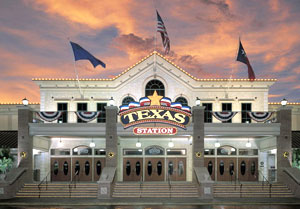
Don’t plan on visiting Texas Station or Fiesta Rancho until June 5 of next year—and maybe not even then. Station Casinos has again postponed the reopening of these two Covid-19 casualties. Having exported as much as 94% of their business to other Station properties, the question of their resumption ought not to be “When” so much as “Why.” There doesn’t seem to be much money left for them to make and they’d have to rebuild customer relations that have lapsed for 3.5 years.
They can keep their gaming licenses if they operate as “Trailer Stations” one day each quarter, but that’s not good enough for some residents for whom the casinos were a second home. They also fret that the ripple effect of two closed casinos will further blight North Las Vegas. Lamented Andrew Leavitt, a dispossessed customer, “When I was a kid my parents usually had late shifts and would get out at a later time. Not everything is open at that point where you can go to dinner, but Texas Station and Fiesta were.” Not anymore. Besides, Station might be eying a big real estate score by removing the gaming entitlements and selling the properties outright. It feels little incentive to do otherwise these days.
Our Atlantic City bureau has been busy. It reports that a casino career fair, evidently intended to drum up scabs in case of an impending strike, was a flop. “It was a very large room and almost empty. All the casinos had tables set up. A spokesperson from Bally’s said he expected to see 200 people lined up when they opened up, but there were no lines at at. TV featured two people who were surprised to have been offered jobs on the spot. They both accepted them.” That’s too little, too late for overburdened A.C. casino workers. Local 54 President Robert McDevitt is threatening a mid-June strike vote, which we fully expect to pass. Brace yourselves, Boardwalk customers.
The game isn’t worth the toss for some of the major players in the New York State sports betting scene. Of course, it’s their own fault for having plunged into a cutthroat market with a 51% tax rate. “The house cannot continue to play if it is always going to lose,” wailed BetMGM CFO Gary Deutsch, while most of Caesars Digital‘s half-billion-dollar 1Q21 loss was chalked up to the Empire State. Bally Bet is steering clear altogether, calling the heavy promos/high taxes scenario “insane.” (We can’t argue.) Snorted Bank of America analyst Shaun Kelley, “It’s not rocket science on the numbers. Anyone who knew gaming knew they weren’t going to make money.” Penn National CEO Jay Snowden even said as much, yet stupidly blundered forward.

DraftKings lamely predicated its acceptance of the sky-high impost on the expectation that it would be lowered in an act of political benificence. (Why?) It also devoured its own DFS business in the process. Gov. Kathy Hochul (D) has been taking victory laps this week over the mammoth tax haul she and predecessor Andrew Cuomo engineered. They knew pigeons when they saw them—and took Big Gaming to the cleaners. The latter doubled down on the craziness with things like Caesars’ matching $3,000 bonus. If you lost the whole $6K enchilada, Caesars still had to pay $3,060 in taxes. An anonymous gambling executive called it “the most insane thing I’ve seen in 20 years in this industry.” Right now there’s a lot of wishful thinking going around that New York will lower taxes next year, even though it has no incentive to do so.
As Kelley concludes, “Once the money is coming in the door, it’s very hard to go back.” Or, in Hochul’s words, “I am committed to upholding responsible and effective gaming policies that will move the industry forward and continue to drive our state’s economic growth.” That doesn’t sound too promising.
Jottings: Unexpected winners in the Chicago casino derby are FanDuel and DraftKings. As Bally’s Corp. has no sports betting presence in Illinois, they’ll be able to run rampant at least until the temporary Medinah Temple casino is opened, maybe longer … $414 million might seem like nothing to sneeze at but it’s dreadful for Macao. That was the meagre amount of casino winnings last month. The central of government of China appears to deem Macao’s economy acceptable collateral damage of its “zero Covid” regimen … The Virginia Lege continues to block a popular vote on the Urban One casino intended for Richmond. Meanwhile, the temporary Norfolk iteration of the eventual Headwaters Resort & Casino got the regulatory green light. It will be a “teaser” with 625 slots but no table games … Although the main event still lies ahead, Florida‘s Seminole Tribe lost another appeal of the thwarting of its efforts to offer sports betting in the Sunshine State … Finally, it doesn’t look good for sports betting in Massachusetts this year. Speaker of the House Ron Mariano (D) isn’t giving ground on his insistence on more problem-gambling money and legalized wagering on collegiate sports. Fortunately, conference committee meetings have yet to begin.
