

Deputy Attorney General Rod Rosenstein received a smackdown from a federal court. Judge Paul Barbadoro ruled that not only had Rosenstein failed to convince him that New Hampshire‘s online lottery 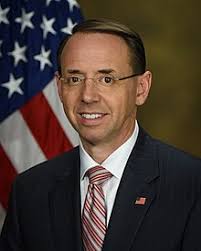 wasn’t covered under the new interpretation of the Federal Wire Act (more sweeping than the original interpretation), the Department of Justice was at least given the option of filing further briefs in the case. The DOJ is taking a momentary ‘hands-off’ stance towards state lotteries “until the Department concludes its review.” If Rosenstein concludes that online lotteries are at liability, they will have three months to come into compliance, possibly losing much lucrative, interstate business along the way.
According to Global Gaming Business, “Barbadoro said the DOJ would have been better served if the memo said New Hampshire’s lottery would never be challenged under the opinion when ruling against dismissing the case.” The New Hampshire Lottery Commission would like a declaratory ruling to that effect, even an outright invalidation of the Rosenstein opinion. Barbadoro was not of that inclination, as he believes this case is headed all the way to the Supreme Court. Nor is New Hampshire fighting alone. The state of New Jersey has filed a Freedom of Information Act request to see if Rosenstein was acting under the untoward influence of Sheldon Adelson when he narrowed the Wire Act. Is the pope Catholic?
* A moment of silence, please, for former Ocean Casino Resort owner Bruce Deifik, who died in an automobile wreck, aged 64. Deifik did what Glenn Straub could not, bringing Ocean off the scrap heap of Atlantic City casinos. The circumstances of Deifik’s death are somewhat bizarre, with his car swerving across two lanes of traffic to smash into a utility pole, killing its driver. The “single-car, low-speed auto crash” remains under investigation, perhaps to see whether Deifik’s fatality was brought on by a sudden medical event. (Could it have been suicide?) In one respect, Deifik was lucky: He was on the verge of having his New Jersey gaming license revoked over charges of sexual harassment. Now his family will be spared that indignity.
* As reported earlier in this space, Puerto Rico Gov. Ricardo Rossello is looking toward sports betting (and e-sports and Internet gambling) to turn around the hard-hit U.S. colony, still struggling to recover from Hurricane Maria two years ago. If you’ve got 23 minutes, Rossello will explain the change in policy.
* If you’re like me, you’re encountering a tax hike this year. One company that is probably paying less taxes than any of is MGM Resorts International, gaming’s top tax dodger, having received a $12 million refund on $648 million in domestic income last year, for an effective rate of -2%. Beat that, John Q. Public.
* Chipotle is putting a serious wager on the future of e-sports, developing a Chipotle-branded tournament. It also partnering with e-sports mover and shaker DreamHack, sponsoring lounges at Atlanta and Dallas DreamHack tourneys. The best prize, if you win, is that you can for a year at Chipotle, a sentiment that has to appeal to the wallets of gamers. “We expect esports viewers to grow by a total of 52.5% between now and 2023, reaching 46.2 million,” reported eMarketer, and those are the customers-to-be that Chipotle is far-sightedly trying to cultivate. The Chipotle/e-sports relationship came to Las Vegas last weekend with the Rank S Combine. The company is choosing branding itself with e-sports in preference to spending the money on traditional advertising. Will it work? Only time will tell.
* Marketing gambling to kids finally went too far in the United Kingdom. Candy giant Mars was ordered to pull a number of M&M machines that dispensed candy in the style of a slot machine, complete with spinning-reel symbols. You could even buy one for £33. The offending machines were on display at M&M’s World in London’s Leicester Square. “The normalisation of gambling for children can have dangerous effects later on in life and we would like you to reconsider having such an item in your store,” wrote a bipartisan group of members of Parliament. Mars, after a few demurrals, responded that “Whilst this product was neither designed to normalise gambling nor to appeal to children, we have listened to the concerns raised and have decided to remove it from our store.” Good on them.
