

Without pointing any fingers of blame, the Coronavirus pandemic has laid bare a feeble testing response and an inability to get a vaccine before the public until year’s end at earliest (which we should have been expecting all along). It’s also unleashed a virulent strain of social Darwinism, as people like Las Vegas Mayor Carolyn Goodman (I) present their constituents as sacrificial offerings to a ‘reopened economy.’ We turn the 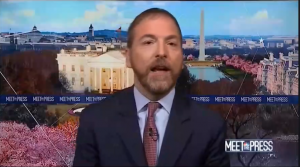 microphone over to NBC News anchor Chuck Todd, who had this to say last Sunday: “It’s against this backdrop that some of the nation’s governors are taking the risky step of opening their states for business. Behind that decision is a brutal calculation, that the unemployment, the hunger, the depression and the social dislocations of a stalled economy are worse than the certainty of an even more—larger death toll from COVID-19 as businesses reopen. Health care experts acknowledge the necessity of getting people back to work, but warn that moving too early could invite a second wave, with disastrous consequences.”
We’ve lost household income to the health crisis, so these words aren’t written without sympathy for the myriad casino workers forcibly idled by the pandemic, watching their severance pay dwindle. But can we realistically go back to a world where nightclubs and pool parties are king and queen, and in which players crowd around the craps table, elbow to elbow and high-fiving each others after a good roll?
Now, “On the always busy, always noisy, never sleeping Las Vegas strip, you can now hear birds chirping,” reports The Associated Press. Complained septuagenarian Elvis impersonator Chris Morehouse, “It’s  like the end of the world.” With one-third of the state’s jobs based in tourism (the price of a too-late move toward economic diversification), we’re looking at $7.7 billion in lost wages, although that’s a worst-scenario, predicated on another six weeks of lockdown, which would put an incredible burden on the Silver State’s already-overwhelmed unemployment system. Not helping are Nervous Nellies like Goodman, who is predicting the death of Nevada‘s tourism industry unless a panic-driven reopening, unrestrained, is executed forthwith. Business will return. It always does. It just may take longer this time. As Gov. Steve Sisolak (D) put it, “We will rebuild our economy. Las Vegas will continue to thrive. But I can’t do that if I lose more people.”
Maybe the questions we’re asking are the wrong ones. Yes, when will Mirage dispatcher Kimberly Ireland be able to work again? But why is she having to support her daughter during the latter’s maternity leave? Why is
 anybody in the world’s richest country having to go unpaid during maternity? Even Ireland says it’s too soon to go back on the job. “Everybody wants to get back to semi-normal,” she told The AP. “I just don’t think it’s safe.” Even when facing foreclosure, Mandalay Bay waiter Victor Chicas says, “Life is more important than anything else. You’re not going to buy life with money.” Tell that to Goodman. Economist Brandy Little shows a better grasp of the underlying issue than does Her Honor, namely that the real question is whether the rest of the world is going to have the money to indulge in Sin City when it does reopen. That’s the $1 billion/month query.
Assuming that Phil Ruffin can make good on his May 15 reopening date for Treasure Island (which would require a two-week decline in  Coronavirus cases in Nevada), he’ll be facing dietary room rates, down 54% for the following week, with an ADR of $115/night, -59% midweek and -44% on weekends. Las Vegas Sands has the worst of it, -68% on weeknights and -47% on weekends. MGM Resorts International has no stated plans to be open May 17-23 but, if it were, would be off 61% and 43% respectively. Caesars Entertainment looks better, -49% across the board, while Wynn Resorts takes a -50% hit on weekdays but only -26% on weekends. Given the uncertainty surrounding when the Big Four will reopen, perhaps Ruffin can upsell his room inventory.

No need to sugarcoat the facts, we are where we are because the leader of the free world decided to ignore the advice of medical and intelligence experts, in a futile attempt to deceive the stock market and voters… There is more than ample evidence that shows this. Had we shut down and implemented social distancing in February tens of thousands less would have died, and we would be way better off economically. Unfortunately he still lies about the facts, and he stupidly thinks cash strapped states can afford to bid against each other for expensive coronavirus testing supplies. This is not some reality TV show, and I am not a member of his cult or a blog writer trying to toe a political discussion line, so I can tell it like it is, its scary bad… Nevada relies on tourist money, the feds need to step up to the plate, when the states start to have to lay off fire fighters, police officers, and medical front line workers, its going to look real bad that we are bailing out giant corporations that buyback their own stocks…
The only advice Pres Trump ignored from his experts was when he banned travel from China, while Pelosi was parading with the Chinese in San Fran. Had he shut the country down in Feb he would have been condemned by both parties, and rightly so. Compare FL and NY and see that the shut down times did not increase the number of deaths per population. Instead of being better off, this country would have gone under by now. We don’t need tax money going to prop up casinos. We do need to allow all businesses to open up and use their ingenuity to protect their employees and their customers as needed.
Jerry: The POTUS ignored his own Presidential Daily Briefings throughout January and February, and he ignored a detailed brief from his economic advisor Peter Navarro in January. In early February my wife and I cancelled my mid-March trip to Las Vegas for my 60th birthday, the writing was on the wall already. Had the POTUS not been so concerned with the stock market and his re-election he would have at least began getting protective gear for the hospitals and testing supplies together. South Korea and the USA both announced their first cases on the same day, they now have a total of 244 people dead, we are at 60,000 and climbing… And comparing New York with Florida ignores the population density, which is obviously a huge factor in the transmission of COVID-19…
Maybe if Trump hadn’t been fighting his trumped up Impeachment trial he could have spent more time on the forthcoming pandemic. I never realized that the president was the only one who could order PPE for all the hospitals in the country. Of course China had already been cornering the world market of PPE before then. CDC was in charge of testing and they blew it, but Trump has stepped in and solved the PPE, ventilator, and testing issues for this country and others. He has done a remarkable job, while Democrats and their media partners complained and published falsehoods.
Um Jerry, Trump was playing golf throughout the impeachment process, and if you are saying he is only competent enough to do one thing at a time, he hardly seems qualified for his job. The federal government should have taken over the PPE procurement, instead they let the states bid against each other, and FEMA ended up hijacking some of what the states were forced to get for themselves… Have a nice day, I completely realize I cant penetrate the right wing bubble, my own mother agrees 100% with you, and we talk to each other daily…
Mike, I like your Mother.
We knew there was common ground to be found.