

Chicago‘s permanent casino could take “months or years” to achieve, even if Mayor Lori Lightfoot (D) says “I’m hoping we can get [the site selection] done  relatively soon, so we can start the process.” Casino booster Sen. Terry Link (D) is also thinking positive, saying, “It could happen fairly quickly. If all goes according to plan, you could see gambling at a temporary site (for as long as 24 months) in less than a year.” Ah, yes, ye olde temporary casino. Chicagoans might look to the example of Detroit where all three companies were allowed to open temporary facilities at sites of their own choosing, on the understanding that they would relocate permanently to the waterfront. In the end, nobody moved, even if MGM Resorts International and (eventually) Greektown outgrew their temporary spaces into something permanent—but no closer to the river. Unfortunately for Windy City casino fans, Lightfoot has been exquisitely vague about where she’d like the casino to go, slowing what she claims to want to be a “relatively soon” resolution.
There’s also some question as to whether the eventual developer will deploy all the 4,000 gaming positions available: They come at a price of $30,000 each. That’s on top of a $30 million licensing fee, so you can why Springfield solons and Gov. J.B. Pritzker (D) had dollar signs dancing in their eyes. However, one should caution that Link and others are citing Rivers Casino‘s $440 million 2018 gross as the norm instead of (as it should be) an outliner. You can take the casino out of politics but you can’t take the politics out of casinos.
* Down in Florida, the $1.5 billion expansion of Seminole Hard Rock Hollywood, with its guitar-shaped hotel tower is getting most of the ink. 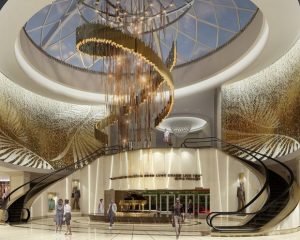 However, Seminole Hard Rock Tampa‘s $700 million makeover may be almost as noteworthy. Interest will focus on the new atrium, at the center of which will be a 24-karat gold leaf-plated 1928 Kimball Piano grand piano once owned by Elvis Presley. The gaudy keyboard, worthy of Liberace, will be embraced by a pair of curved escalators, leading up to the second-floor, 2,000-seat event center, scheduled to host at least 60 entertainment acts per year. Outside, 20 cabanas, and 700 lounges and daybeds are deployed on a three-pool deck. (Las Vegas, look to thy laurels!) If you’re feeling fatigued from the sun, you can head inside and get a java jolt from new Constant Grind.
Florida’s largest casino floor will get even larger: 245,000 square feet of slots (5,000), table games (179) and poker (46 tables). A VIP-gambling salon is also being added, sitting atop the new hotel tower. That’s pretty impressive but 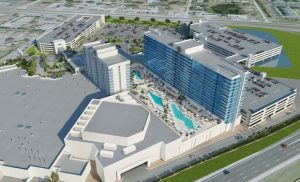 Hard Rock International CEO Jim Allen is more enthused about the Hollywood property. “The guitar tower will attract casino players and other visitors from throughout the country and around the world,” he raved. “It will put South Florida on the map as a world-class gaming destination, and it will have a huge economic impact on Florida. The gaming industry will never be the same.” Hyperbole? Yes, but we’ll excuse an excess of paternal pride, given the circumstances.
* Black-market gambling will continue to flourish in Wyoming, lawmakers have failed to form a state gaming commission this Lege. In addition to four tribal casinos, the Cowboy State is home to 400 illegal slot machines, a situation legislators seem singularly disinclined to grapple with. That’s surprising, because it means they’re booting as much as $4 million in tax revenue ($7 per resident). With the coal industry in decline, it behooves Wyoming to find new sources of tax dollars.
State Sen. Ogden Driskill (R) has tried to get his colleagues to put their arms 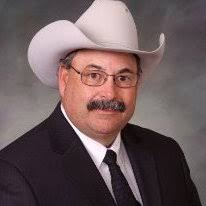 around the slot issue, without success, meaning that the problem will only continue to worsen. “My prediction is we’re going to come back next year with nothing passed,” Driscoll warned, “and we’re going to be dealing with something between 800 and 1,200 machines … It’s getting harder and harder to slow that down.” Video gambling might come under the remit of the Pari-Mutuel Commission or Wyoming Lottery, but so far the political will is not present.
* A self-confessed casino newbie is sent to review Encore Boston Harbor and loves what she sees and experiences inside the “scintillating copper monolith” on the banks of the Mystic River. Or, as Roberta Baker says of the “bright and happy” slot floor, “After several minutes I felt electric, as if I’d stuck my pinkie gently into a light socket. It made me think of supposedly the world’s longest candy counter, on Main Street in Littleton, N.H., with all the identical jumbo candy jars containing the world’s brightest and most varied types of sugar, and everyone loading their sampling bags before their annual dental checkups.” Backhanded praise, maybe, but a memorable image nonetheless.
* Citing fears of undergoing credibility crises like those that afflicted the tobacco and alcohol industries, leading British gambling firms are upping their commitment to problem-gambling treatment from a lilliputian 0.1% of profits to 1%, or $75 million a year. Companies involved are William Hill, Ladbrokes Coral, Paddy Power Betfair, Skybet and Bet 365, all of whom hope  to stave off higher taxation by dint of being proactive. “The industry is on a precipice … The fear is that we face a ban on touchline advertising or football shirt sponsorship,” said an industry source. In addition to contributing more money, the five companies promise to review their advertising and include more gambling-safety measures. The number of gambling addicts in the U.K. is estimated at 430,000, with an at-risk population of two million.
“We will monitor closely the progress of these new measures and encourage the wider industry to step up. The government will not hesitate to take further action to protect people from gambling related harm,” warned Secretary of State for Digital, Culture, Media & Sport Jeremy Wright. GambleAware CEO Marc Etches took a more positive tone, saying, “We welcome this initiative by the leading operators as it’s essential there is sufficient funding to provide for treatment and support for both problem gamblers and for those who are ‘at risk’—particularly the young and vulnerable.”
In other British news, does anyone remember the “super casino” (not so “super”—smaller than Sam’s Town) that was booted about among several British cities before the idea got squelched. It’s back and targeted for Blackpool. Politician Jake Berry is pushing it as a “once in a generation” chance to revive the erstwhile resort city. Berry took aim at the legislative bunghole, saying, “So far I’ve had a discussion with the leader of Blackpool Council and I have been speaking to the council to see if it is possible to unbung the legislation which still remains on the statute books.” Perhaps what voters and House of Lord peers thought absurd 12 years ago is an idea whose time has come. Others say no, Internet gambling has rendered it anachronistic. As Blackpool council member Tony Williams put it, “While I welcome any investment into the town I actually think this may not have legs.”
