

Pot or gambling? That’s the choice Florida Gov. Rick Scott (R) faces in newly discovered documents from 2014, in which the Poarch Band of 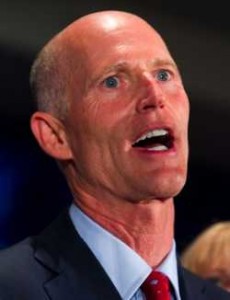 Creek Indians seeks a casino on a one-acre parcel near Pensacola in return of $1 billion in payments to the state, spread over five years. What’s more, the Poarch Band would surrender four parimutuel licenses in holds in the Sunshine State. But if it doesn’t get a casino, the tribe proposes to grow marijuana on the site. Pete Antonacci, Scott’s general counsel at the time, asked the perfectly reasonable question of whether one could build a casino on a single acre, to which the tribe replied that there was “absolutely no limitation or minimum acreage requirement in federal law that would restrict a Tribe’s authority to either engage in Class III gaming or to enter into a compact.”
Antonacci replied that negotiations were premature and the Poarch Band threatened to open Class II gambling on the site, with no revenue-sharing for the state. And there the matter pretty much remains, while the Poarch Band seeks an advisory opinion from the Interior Department. This is just one of many issues bedeviling the Scott administration as it seeks to pass a new compact with the Seminole Tribe in the Legislature.
State Sen. Joe Negron (R, below) supersized the compact in committee, turning it into a veritable Christmas tree for gaming interests. Among 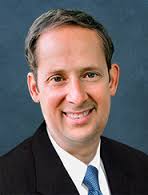 Negron’s ornamentations were a lower tax on slot machines (30% instead of 35%) and a buyback provision for gaming permits not in use. That’s an even more aggressive expansion of the compact than took place in the House, where a modest expansion of South Florida gaming was added, and offering slot machines was decoupled from the mandatory running of horse and dog racing. The Florida Greyhound Association trotted out former Lt. Gov. Jeff Kottkamp to say that Floridians “never contemplated that these racetracks would be converted to casinos. … It ignores the history of Florida.”
Negron’s drastic upsizing of the compact, meanwhile, drew the opposition of one of the compact’s midwives, state Sen. Florida Senate Regulated Industries Committee Chairman Rob Bradley (R, left) took the unusual step of writing to all committee members, warning 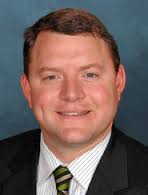 them that Negron’s free-for-all could cause the compact to fail and open the door to litigation in return for only “a fraction of what [taxpayers] receive from gaming operations in the present arrangement.” In other remarks, Bradley said, “We have a lot of strong personalities on this committee, so the fact we were able to get a bill out says a lot.” In his own defense, Negron said that the reduction on slot-machine taxes would be offset by the revenue generated from his proposal to allow slots in six additional counties.
Negron’s dangled a lot of goodies in front of gaming interests. It will be interesting to see which of them he has to sacrifice to get the compact past the considerably less-expansive-minded House.
* How do you the horsey set to agree to live with i-gaming even if they’re not participating? Offer them $60 million in free money, that’s how. But there’s a big hurdle to this California proposal. The $60 mil would be contingent on i-poker revenues hitting an astronomical $400 million/year threshold. Industry experts estimate that, at peak, California would still be at least $40 million shy of that number Also, a hard-line faction of California tribes continues to hold out for a “bad actor” clause that would keep PokerStars and other “Black Friday” violators out of the Golden State.
The vast bulk of the horseracing lucre would go toward fatter purses, with jockeys getting a pittance (2%) of the outlay. Except for a per-hand  “transaction fee,” online casinos would collect no revenue from poker. Even so, a union lobbyist conceded that the proposal was “probably a pretty good deal.” The Pechanga Band and its allies, however, still represent a formidable obstacle. Some tribes are also chafing at how daily fantasy sports legalization raced through the state legislature, which Morongo Band of Mission Indians Chairman Robert Martin called rewarding DFS operators for breaking the law, simply because they’re popular. So is online poker but we question whether racetracks will ever see a dime from its legalization in California.
* Las Vegas tourists can have a perfectly good time and never set foot on the Las Vegas Strip. So contends the New York Times, after a bargain-hunting expedition returns with positive reports on — among other places — the California Hotel, Pinball Hall of Fame, Arts Factory and craft-beer dispensary Hop Nuts Brewing. It’s an entertaining read and you’ll learn a thing or two, even if you already live here.
