

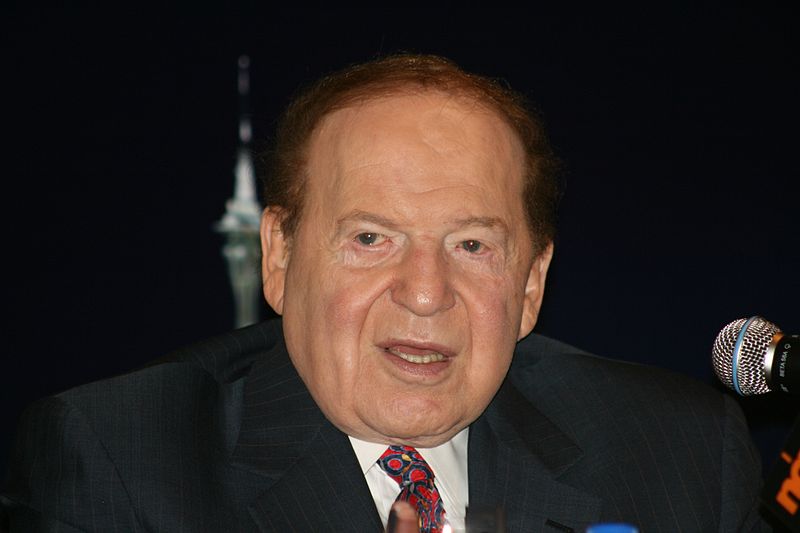
 In case you hadn’t heard, Sheldon Adelson is a pretty rich fella. A run-up in Las Vegas Sands stock over the last two days has put $2.1 billion extra in his pocket. This, inevitably, has sparked further discussion of his political influence, especially as the Supreme Court continues to loosen the limits on campaign donations. That’s music to every politician who wishes he had Adelson’s ear. Personally, I hope most of them have more self-respect than Ohio Gov. John Kasich (R), who groveled last weekend, “Hey, listen, Sheldon, thanks for inviting me. I don’t travel to these things much, but this was one that I thought was really, really important. God bless you for what you do.” More power to Adelson if he can provoke that manner of sycophancy.
Success only seems to encourage Adelson’s boorish manners. Govs. Scott Walker and Chris Christie got snubbed outright, and Adelson sicced his goon squad on a reporter who had the temerity to ask him a question. Adelson’s omnipresence will only continue to grow as Las Vegas draws nearer to hosting the 2016 Republican National Convention. When you look at the infrastructural issues instead of the “Sin City” ones, it makes a lot of sense. Between buses and the Las Vegas Monorail, the transportation is there to get delegates to the Las Vegas Convention Center — and there’s no shortage of hotel rooms within easy reach.
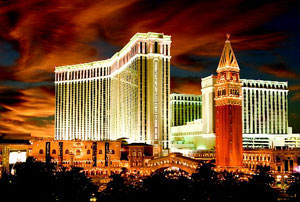 On a less-controversial front, Sands has started talking about the abortive St(ump) Regis tower again, breaking radio silence on that topic. Unfortunately, Sands President Michael Leven wasn’t very helpful, saying, “We’re going to do something. We just don’t have the answer.” Having studied the timeshare market, Leven is pretty sure he’s not going that route anymore. Sensing some pressure from Clark County to do something with the tarp-covered stump, Sands is likeliest to build it out as a hotel tower. There’s also the question of monetizing the $600 million investment that’s just sitting there. Alas, it remains a question without a clear resolution.
Then there’s the bee in Adelson’s bonnet that is Internet gambling. Dr. David Schwartz proposes a federal study, which might punt the issue into 2019. Schwartz cites an interesting precedent: the 1974-76 Commission to Review the National Policy on Gambling. Quoth Schwartz, “the commission concluded that states were qualified to choose for themselves their level of gambling, and even cautioned the federal government not to ‘hinder’ state efforts to legalize it.” That’s a precedent which seems very pertinent at this moment.
 Speaking of Chris Christie, his office has the bad habit of overestimating New Jersey tax collections. This is causing some to hasten to pronounce the state’s Internet gambling industry a bust. Already, $126 million has been trimmed from the CRDA fund and that’s probably not the end. Cooler heads, though, counsel patience. “It’s the beginning of the beginning, and its hard to draw long-term conclusions. There is a degree of confidence that month-on-month growth is sustainable and will probably accelerate in the next few years,” says GamblingCompliance Executive Director James Kilsby.
For one thing, major financial institutions still balk at processing payments, forcing consumers to find more time-consuming alternatives. (Like traveling to Borgata to cash in your winnings.) Looking on the bright side, Kilsby says “I haven’t seen any reported instances of players outside the state gambling. And I haven’t heard any reports of underage gambling, fraud, or money launderers.”
