

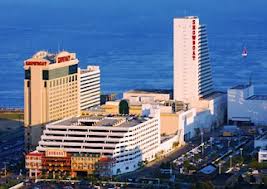
 Leaving aside the human effect, in cold business calculus, Caesars Entertainment‘s closure of the Showboat Atlantic City makes sense. At least that’s what Mayor Don Guardian is saying echoed by Wall Street. “The closure makes financial sense for Caesars and is a positive for the oversupplied Atlantic City market. Showboat has about $50 million in labor costs and pays about $15 million in property tax (although Caesars is appealing Showboat’s $625 million assessed value). Caesars will likely recapture most of the Showboat customers at its three other resorts in Atlantic City,” read a Fitch Ratings investor note.
This verdict is echoed by other bond analysts, like UBS’ Srihari Rajagopalan, who said, “You are seeing the market right-size, which is a positive.” It’s hard to argue against the proposition that a leaner Boardwalk would be better positioned to compete against Pennsylvania and New York, not when the revenue pie was being sliced so thinly (Borgata always excepted).
After a Pollyanna-like initial burst of optimist, Guardian’s rhetoric soon lost its smiley-face tone and had taken on the tenor of cool realism. Facing the potential loss of 25% of his city’s casino capacity, he said, “Although it is sad today, it’s part of the transition that Atlantic City needs to have. There is pain as we go through this transition, but it’s critical for Atlantic City to realize we are no longer the monopoly of gaming on the East Coast. If you build more and more casinos and don’t increase the amount of people coming to them, you’re sharing that wealth.” Guardian thinks that the market will self-correct and the ‘right’ number of casinos will be determined by market forces, presumably when Atlantic City bottoms out.
 Midsummer surprise. Although in both location and $480 million budget its project made a lot of sense, Penn National Gaming has lost its appetite for Philadelphia. The withdrawal was chalked up to city fathers’ stated preference for a downtown casino, and Penn would have been out by the city’s sports stadiums. The presence of four other casinos in the area also played into Penn’s decision. “The market potential in Philadelphia is less today as a result of the ongoing gaming saturation in the mid-Atlantic region, as well as continued softness in the economy,” said CEO Timothy Wilmott in a prepared statement.
Penn had the novel concept of teaming with a local nonprofit and giving it two-thirds ownership. We’ll never know if that business plan would have been viable. By withdrawing now, Penn can focus on its Plainridge Race Course, in Massachusetts, and on winning the casino referendum in November.
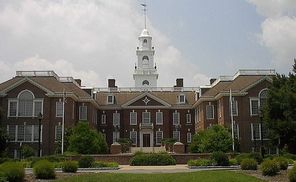 Not so fast … a bill to bail out Delaware‘s racinos has landed in the hopper of the House Gaming & Parimutuels Committee, which happens to be chaired by bailout opponent, Rep. Charles Potter Jr. (D). House Speaker Pete Schwartzkopf (D) his support, but Potter is unmoved: “We have more dire needs than the casinos. Our infrastructure is bad. We need money for education.”
The racinos are not helping their case by refusing to rule out layoffs, even if financial relief comes from the capitol. House Minority Leader Daniel Short (R) is also somewhat disingenuous, characterizing the bill as a tax break, when that’s one thing it isn’t. It looks like the racinos will get their money but it’s not, as Schwartzkopf says, a slam dunk.

Gary Loveman is the fault behind this closing. When PA/MA/NY opened their doors to gambling, he jumped (not high) into the fray. He did not care about what these new casinos would mean to AC. Didn’t he realize that the AC market would slowly evaporate due to these new casinos? What did he expect, a couple million new players? He is and always will be an IDIOT.